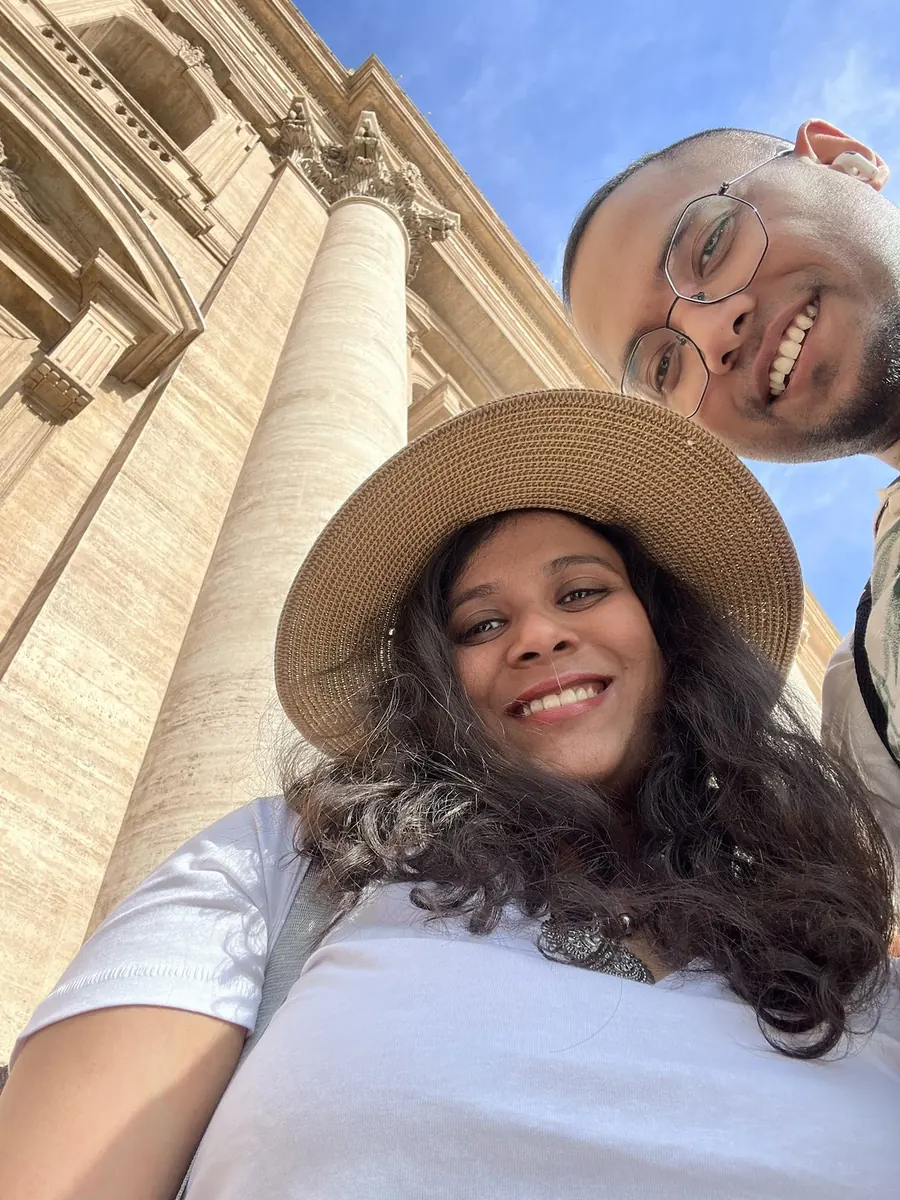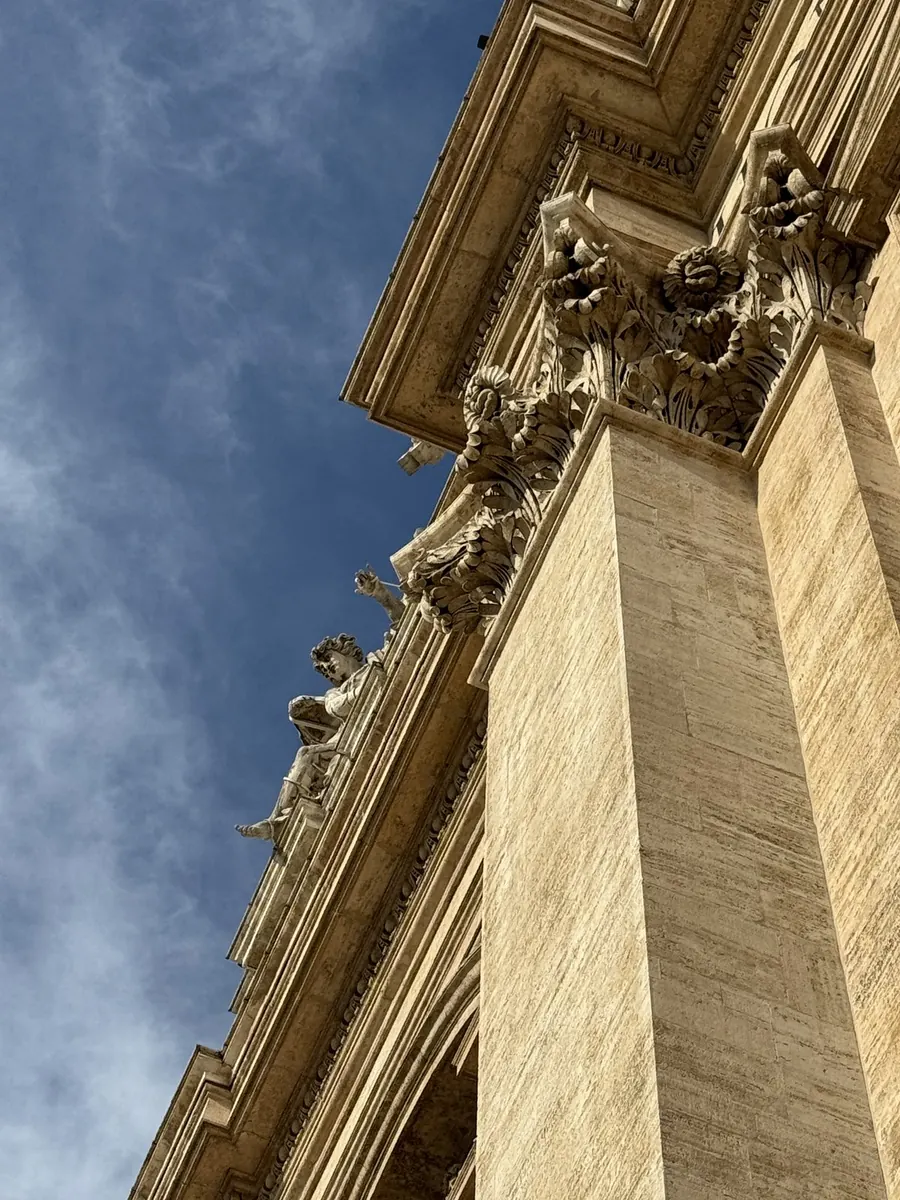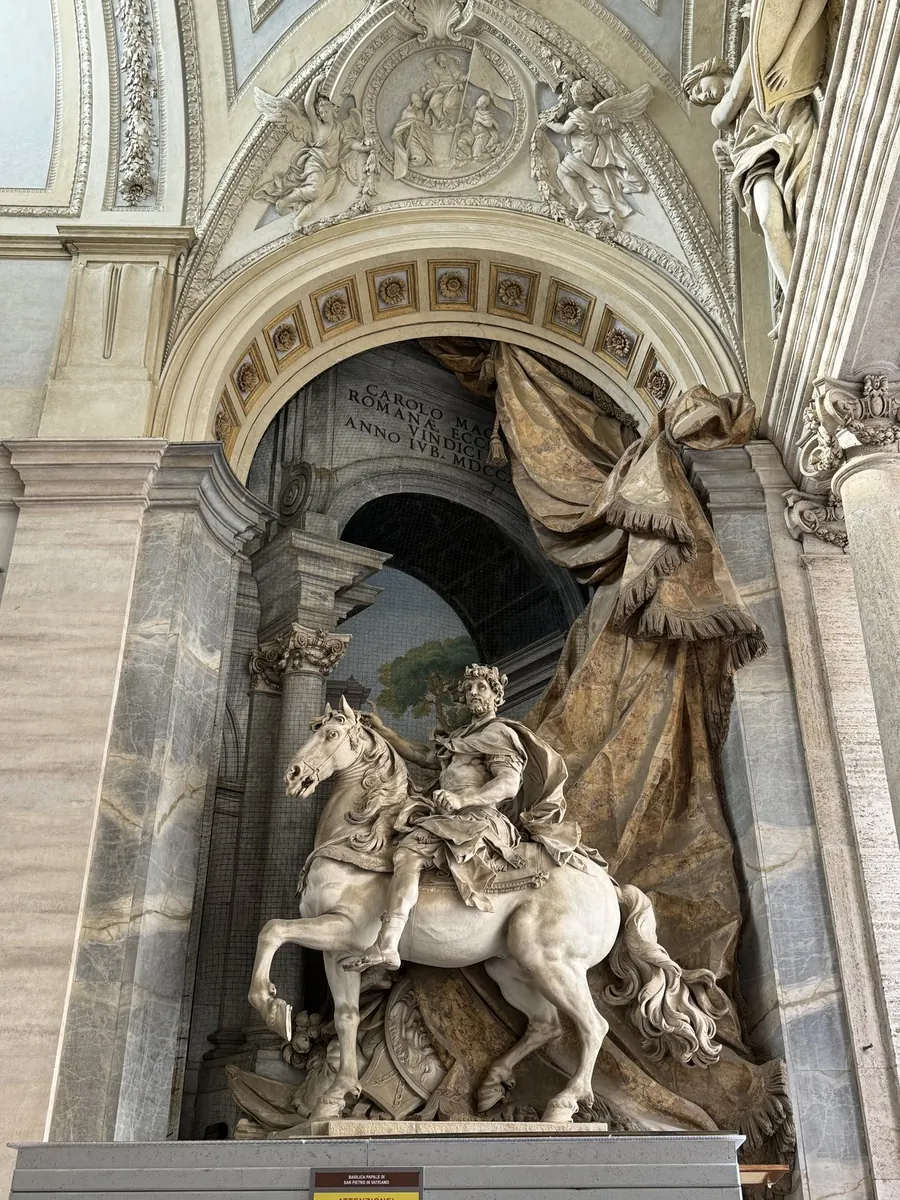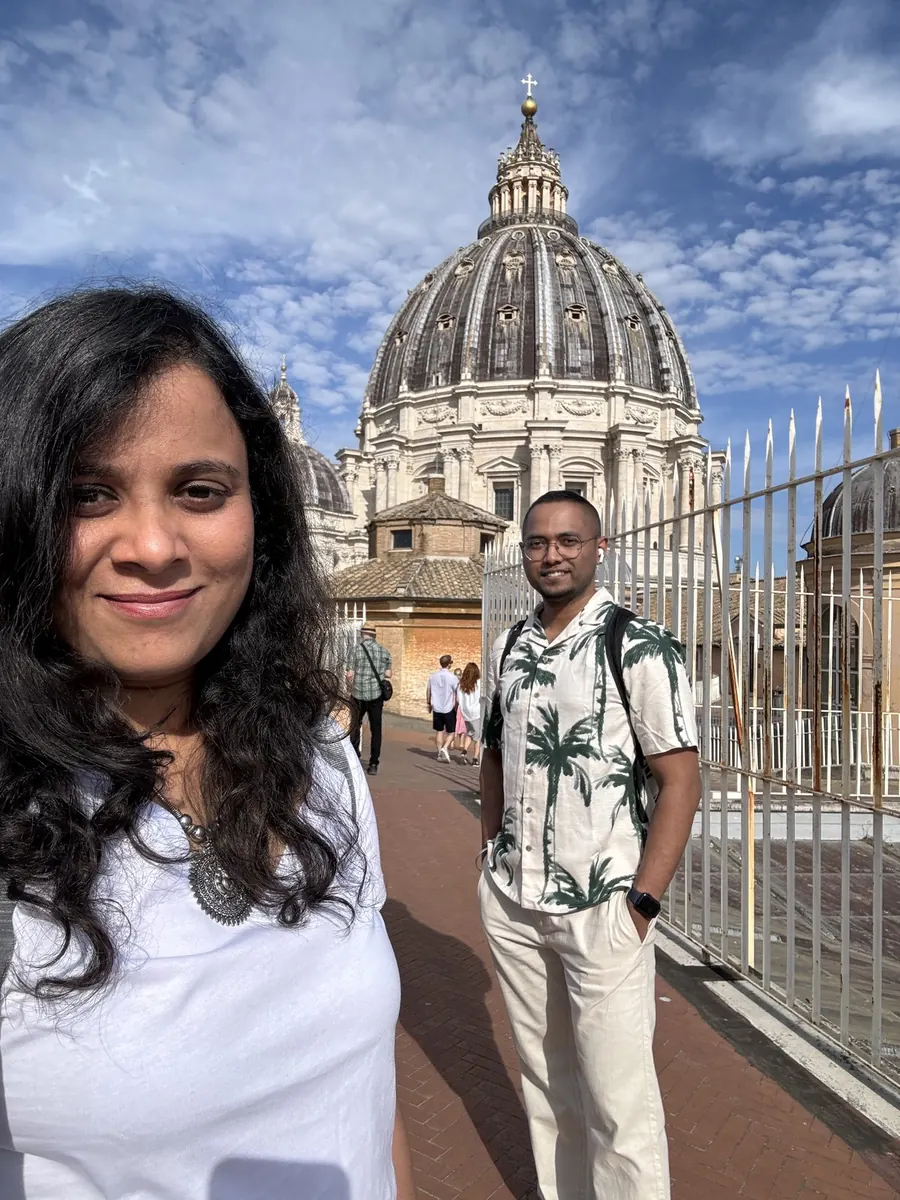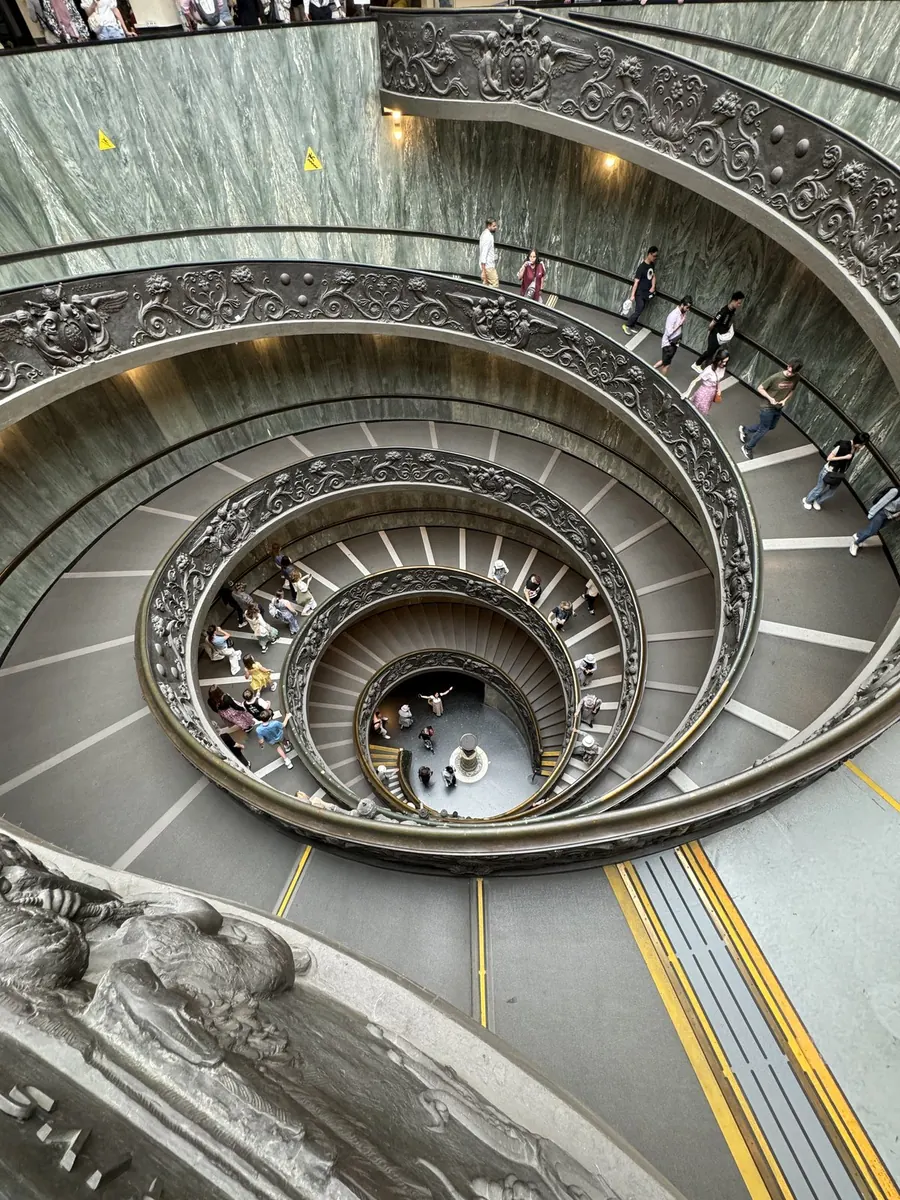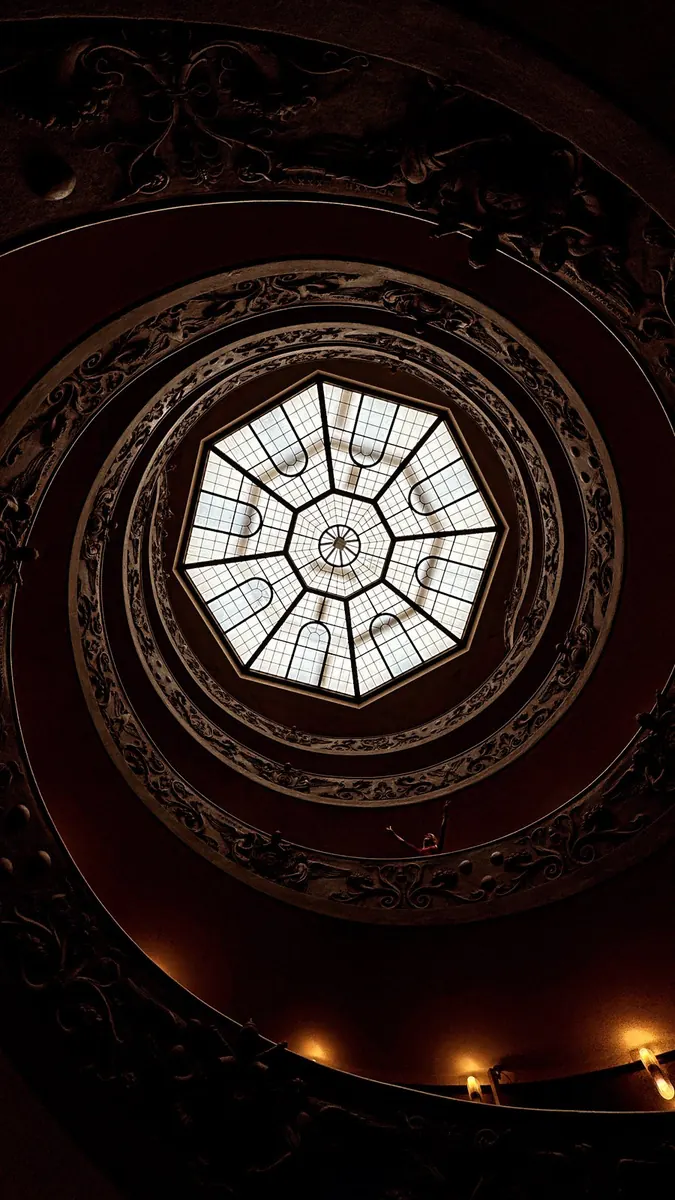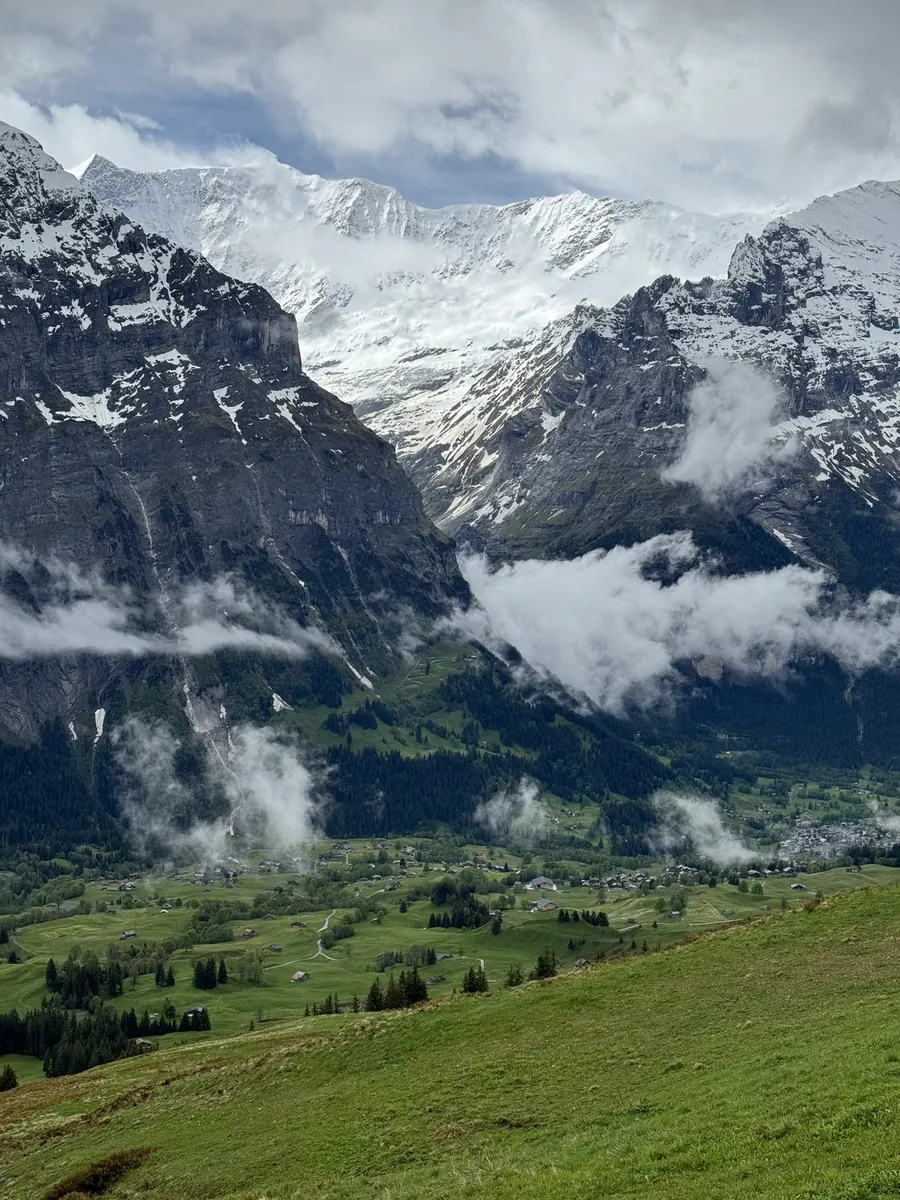
First time in Europe, and I had a movie playing in my head. You know the one. Golden light, cobbled lanes, a violin somewhere, every street beautiful, a little dreamy, perfectly in order. I live in American cities, which are big and tidy, and I’d always figured America borrowed its good looks from the Europeans who built it. So I was going to the original. The director’s cut. Full-strength charm.
That movie lasted about forty minutes in Rome. The real thing turned out to be better, because it was alive, and loud, and a little bit mad, and weirdly familiar. More on that shortly.
I’m also the kind of person who plans a holiday down to the platform number. For this one I set 1 AM and 2 AM alarms for ticket releases, hunted award seats like a man possessed, and built a day-by-day plan with backup plans for the backup plans. So this post comes in two flavors: what these places actually feel like when you’re standing in them, and the “if you go” notes I wish someone had slipped into my pocket.
And my travel partner: Arsha, my wife, the most low-maintenance, high-enthusiasm co-traveller a planner could dream of. Her entire travel philosophy fits on a postcard: keep it cozy, keep the snacks coming, Binu will sort it out. When a plan collapses, she doesn’t panic. She gives me one calm, trusting little look that says “Plan B, chief, whenever you’re ready,” and waits for the rabbit to come out of the hat. (So far, the rabbit has always come out. The pressure is adorable.)
Our division of labor is very clear. I bring the planning, the meticulous calculations, the weather forecasts, the tickets, the organization and the communication. She brings the vibes. (Which is why, in this story, she goes by Miss Vibes.) And a trip needs both.
All planning and no vibes is just a very efficient spreadsheet.
All vibes and no planning is a lovely story about missing your train. Together, we get a trip like this one.
Her one weakness: she can be sweet-talked. “It’s just a small walk” has taken her up a surprising number of mountains. And once she’s up there, she becomes the happiest person on the trail. Keep an eye on that, because it comes back in a big way.
We did the whole trip without a rental car. If it had rails, a cable or a propeller, we rode it: high-speed trains, regional trains, the Metro, electric bikes, city buses, postbuses, cable cars, gondolas, a cogwheel train and a lake boat. Eleven days, and I never once had to find parking.
Landing in Milan, Moving to Rome
Thu, May 23 – Fri, May 24 · New York → Milan → Rome
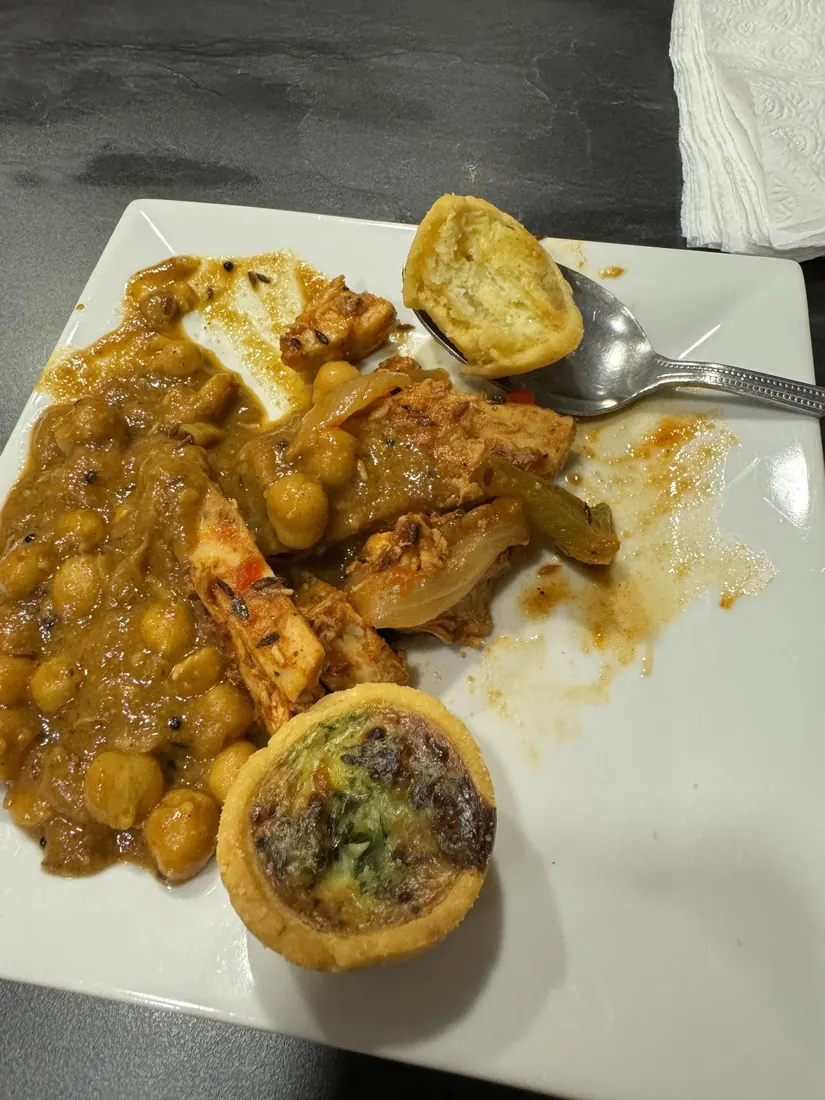
The trip really started the evening before. We left from JFK on Thursday, May 23, with two suitcases (one of them very pink) and a quick stop at the lounge before boarding (thank you, Priority Pass), which turned into a sumptuous dinner: curry, chickpeas and a tiny spinach quiche, eaten like it was my last Indian meal before Italy. (It was not. Italy turned out to be very understanding about curry.) By 9:55 PM we were buckled into our seats, grinning at the camera like two people who had no idea what they’d signed up for, and Emirates flight EK206 was due to leave at 10:20.
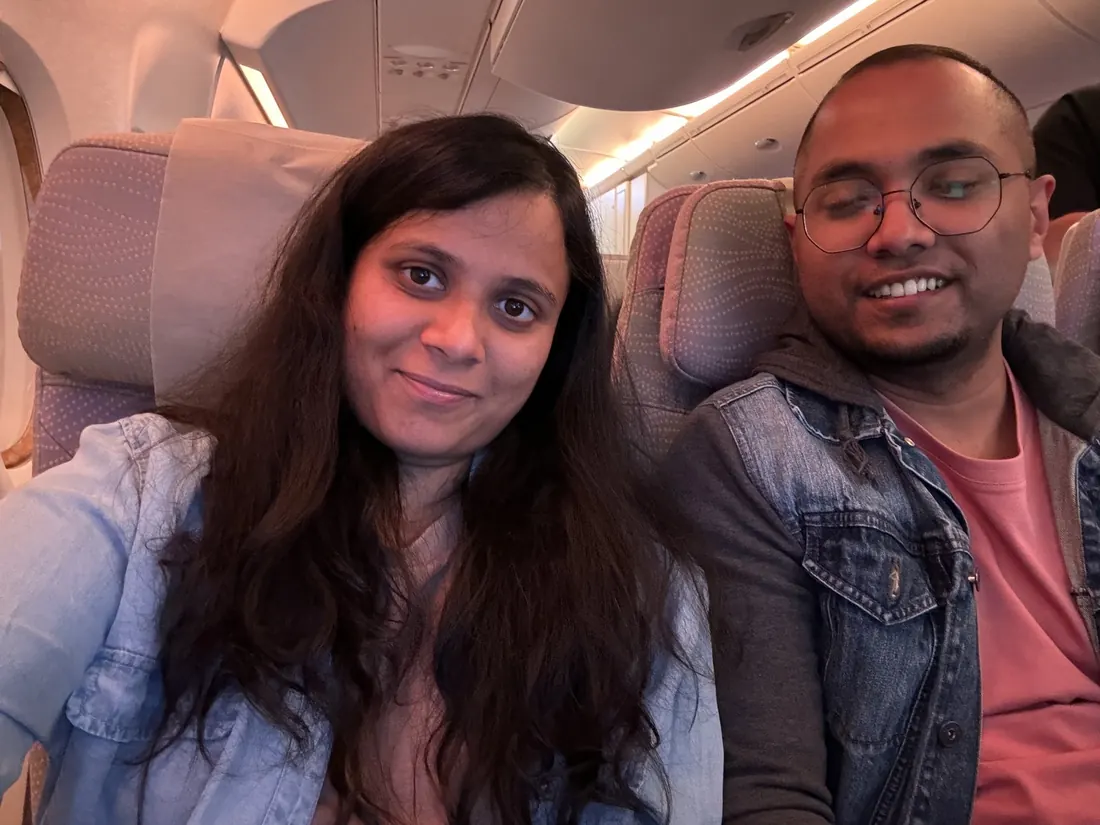
We touched down in Milan at noon on the dot, a little crumpled and entirely thrilled. And the flight in had a bonus: the route goes right over Switzerland, so Arsha held her phone to the window and filmed the Alps, white and enormous and ridiculously close. We had no idea we’d be walking around in them within the week. I got goosebumps just watching the clip later.
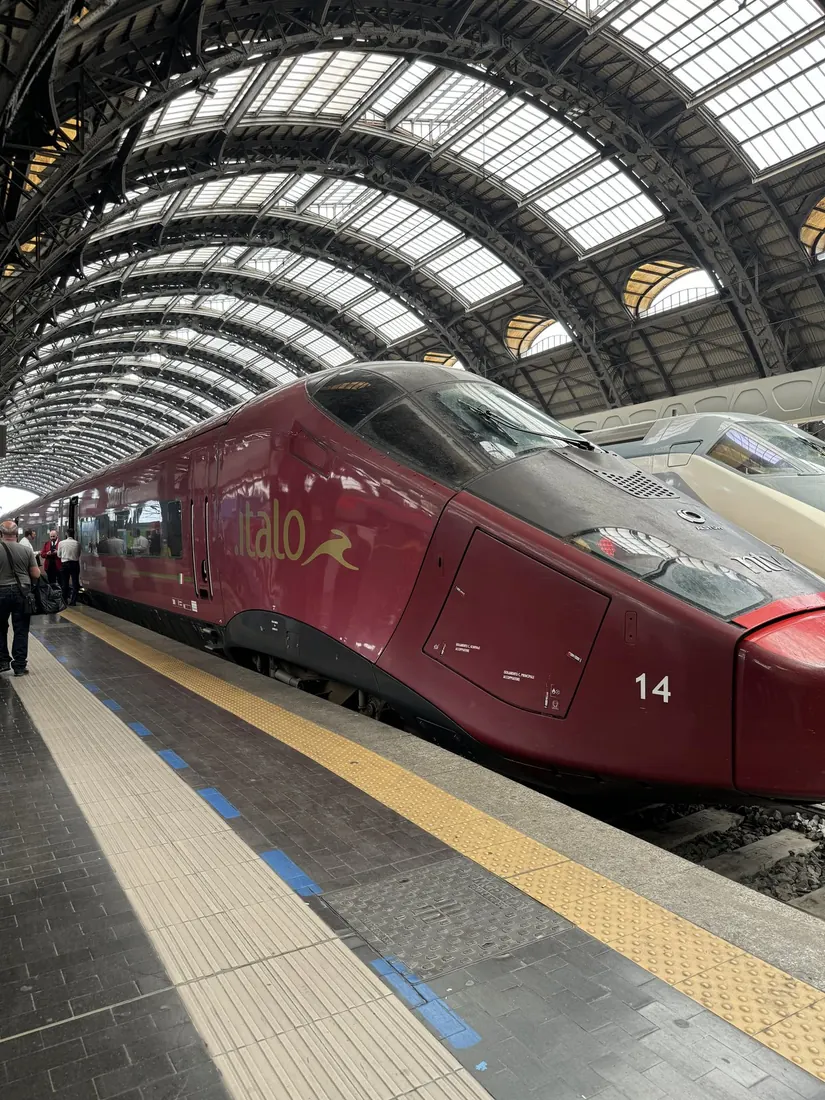
Then Milano Centrale. Take a station, add the ambition of a cathedral, and you’ve got it. It’s a terminal station, so all the lines just stop at the end of the hall, with trains lined up like they’re waiting for a race. We never even stepped outside Milan. We hopped on a red Italo high-speed train and flew at about 250 km/h straight to Rome’s Termini. A red bullet. Arsha was smiling out of the window like a kid on her first train.
And then Rome.
I stepped out expecting the movie. What I got:
A city that looks the part and behaves like India.
Make no mistake, it’s gorgeous. But it’s gorgeous with elbows. People walk like they have somewhere important to be and you’re slightly in the way. No “excuse me,” no personal space bubble, just a friendly squeeze. Pickpocket warnings everywhere, so I walked with one hand on my bag and a big grin on my face. And the cars! A zebra crossing in Rome isn’t a promise, it’s a suggestion. If they have to go through you, they will.
My theory: when a city has had a few thousand years of history, it has also had a few thousand years of entropy, and entropy’s love led to chaos. But… I loved it. It felt strangely like home, as if it were wearing a very expensive Italian jacket.
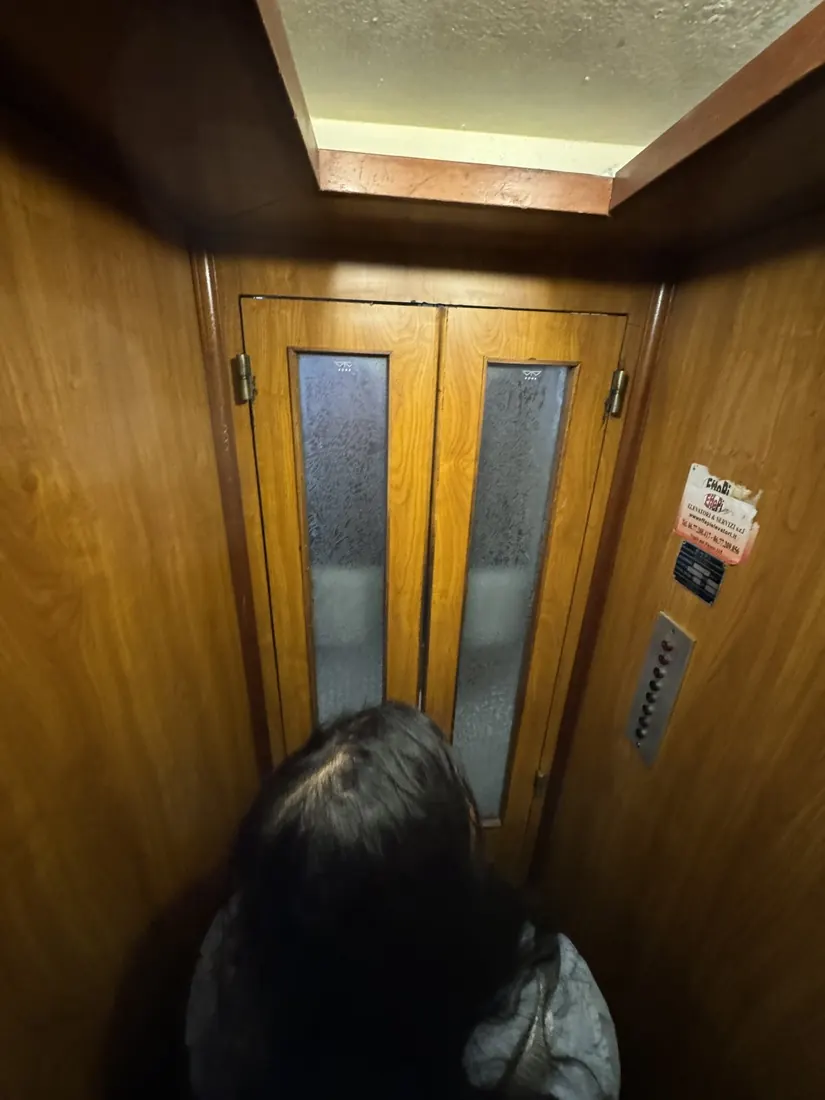
We rolled into Roma Termini a little after 5:20 PM, and I pressed my face to the window like the tourist I was. A short Metro ride from Termini got us to our stay near Porta San Giovanni, on a street that looked like every Roman postcard minus the filter. The building had an elevator I can only describe as a polite wooden cage: folding doors, room for two if one of them agrees not to breathe, and a rattle that says I have seen things. Arsha eyed it like a ride at a fair.
The room was bright and tidy, with a window onto the neighborhood. We allowed ourselves a few minutes of “let’s just sit for a second,” and then Rome called.
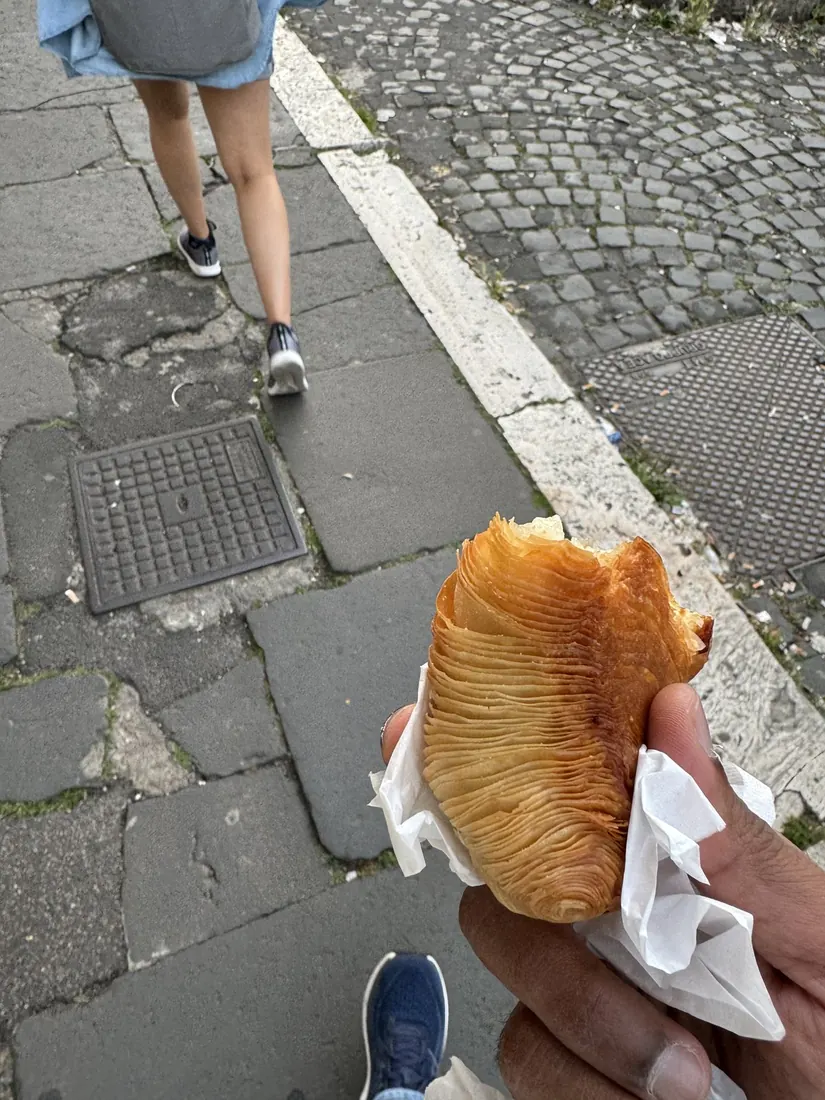
We dropped our bags, freshened up, and hit the streets. First stop: a bakery, and our first Roman snack: a sfogliatella riccia, the iconic shell-shaped pastry from Naples, a hundred paper-thin layers of crisp pastry folded into a clam shell around sweet ricotta. It looked like a work of art. It tasted like a lesson.
Lesson: never judge a pastry by its looks. When in doubt, Google.
Before the Colosseum, though, there was a walk I’d nearly left out of the story. From the hotel we went through the old Aurelian Wall at Porta San Giovanni, a gate people have been strolling through for about 1,700 years, and straight into the huge square of San Giovanni in Laterano: an ochre palace, a basilica with a skyline of saints on its roof, and in the middle of it all an Egyptian obelisk, the tallest standing in Rome and more than 3,000 years old. It was just standing there in the evening light, as if nobody had told it that it was in the wrong country.
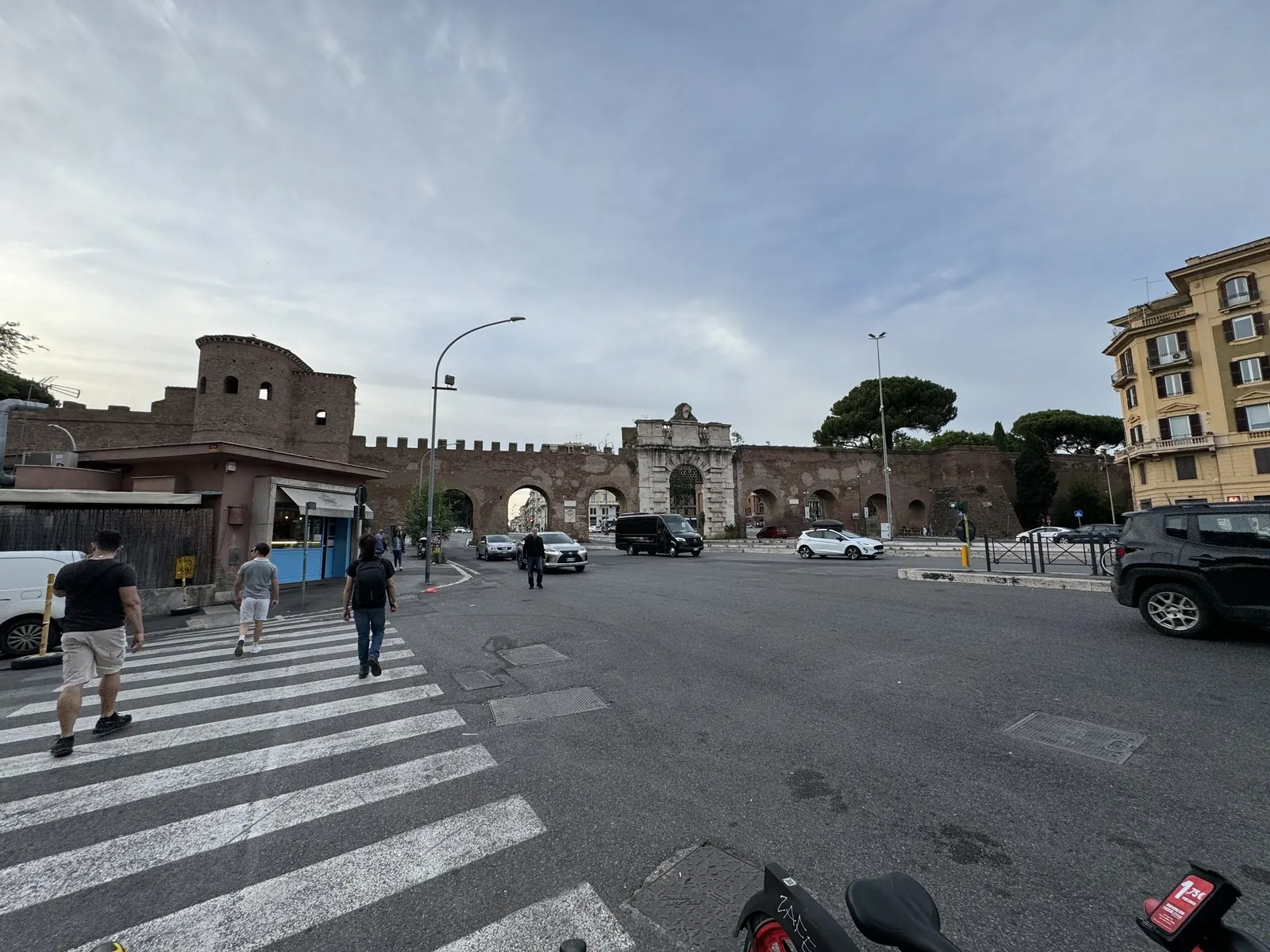
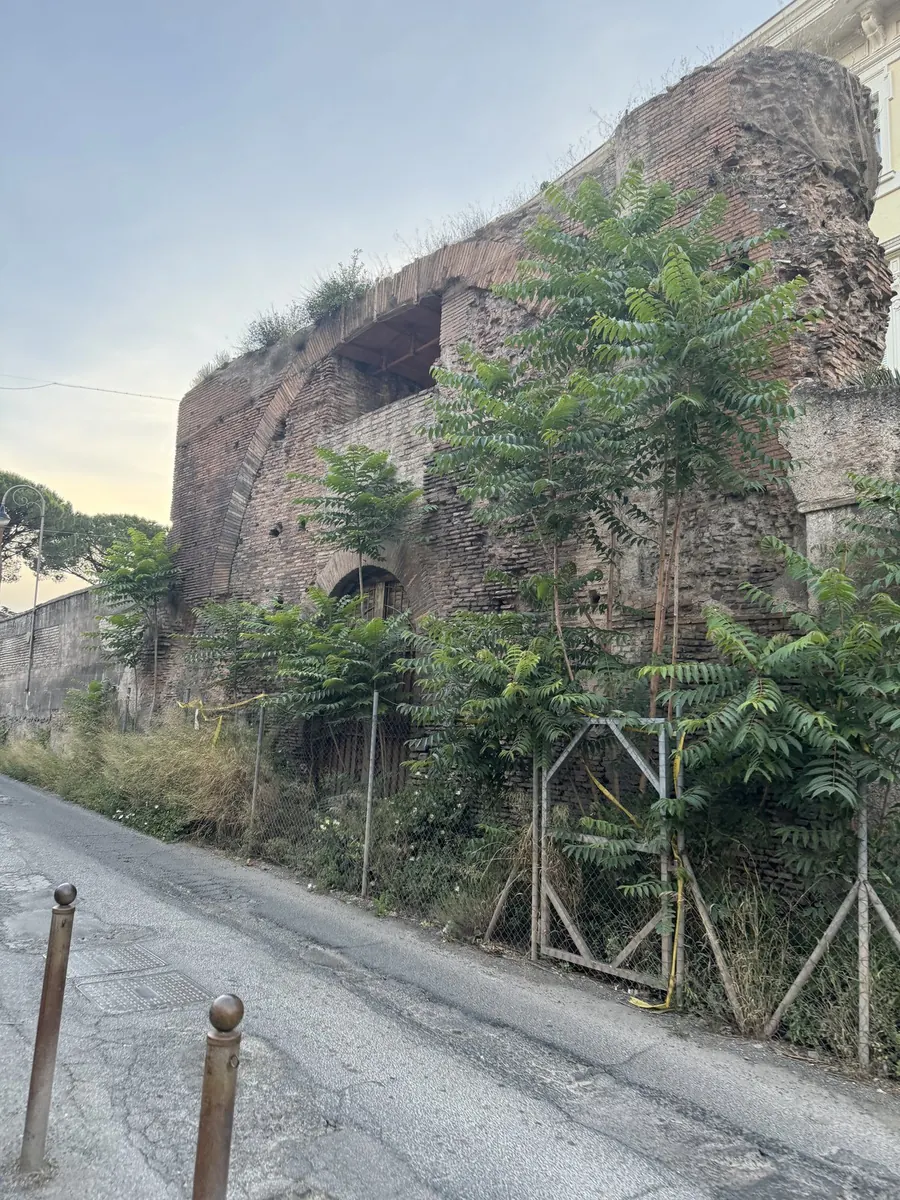
Then came a stretch of ancient wall and brick arches, where Arsha did her “is this normal?” face. (In Rome, yes. Entirely normal.) That’s the thing about this city: the best moments weren’t on my spreadsheet.
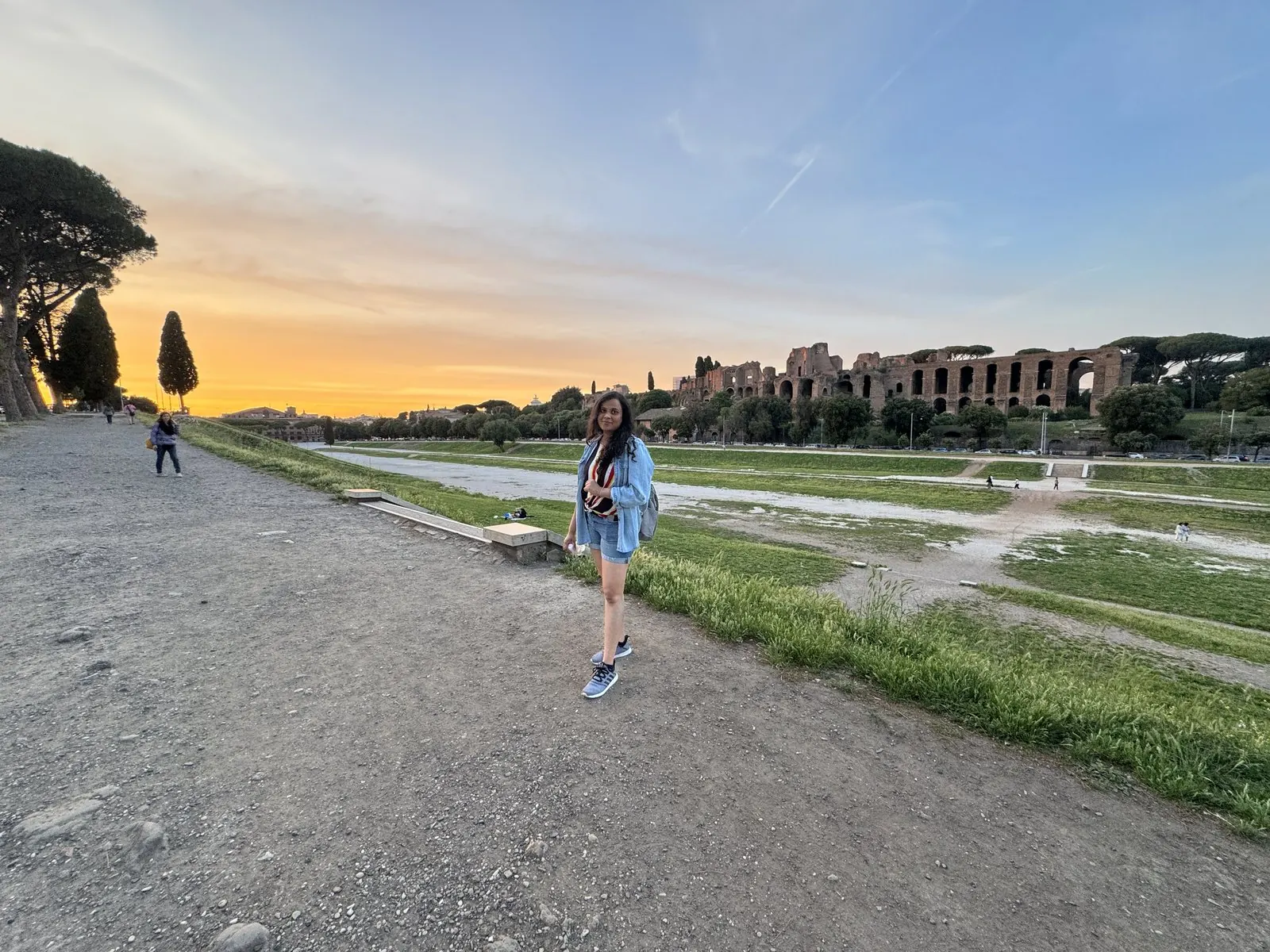
Then we just walked. Rome is made of piazzas, wide open squares around every other corner, so we drifted from one to the next with our mouths slightly open, and then climbed Aventine Hill. On the way up, the Colosseum waves at you from the distance. You pass the Circus Maximus, where Romans once watched chariot races, which is basically a huge field now, but you can feel the noise that used to be there. Arsha posed in front of it.
And now the real reason for the climb: a keyhole.
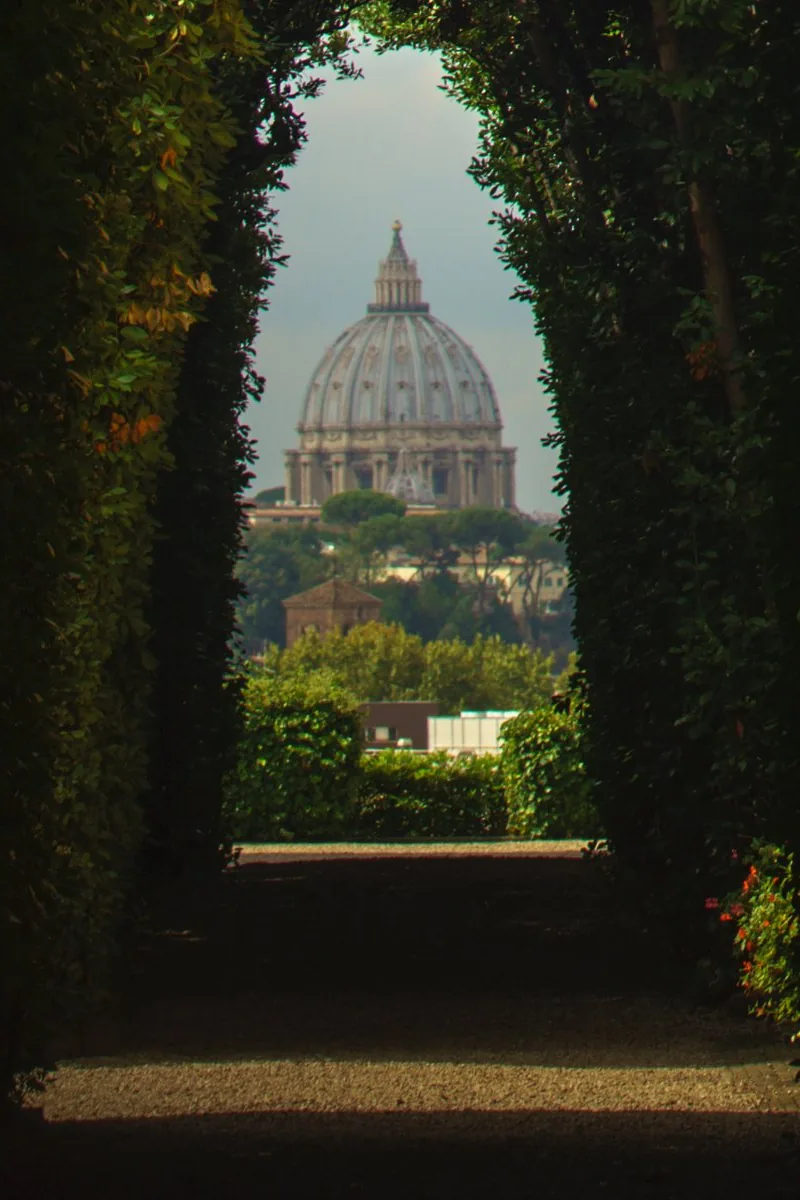
There’s a famous rose garden up there (closed by the time we arrived, sadly), and next to it a plain closed door facing a tree-lined avenue. Put your eye to the keyhole and the dome of St. Peter’s sits perfectly framed at the end of it, like Rome is showing you a secret. I tried to capture it on my phone, and it came out dark and soft, partly because people were waiting behind me, and partly because I don’t think it can be captured. Some views are a secret between you and the keyhole.
Photo through the keyhole: Galen Crout, CC0, via Wikimedia Commons
We arrived around sunset. The queue was only six to eight people: a few couples, some older folks, one family, everyone politely waiting to peek through a hole in a door, which is a very special kind of happy crowd. The walk up had been a bit longer than I’d planned for, but on vacation, I’ll walk anywhere, and so will Arsha.
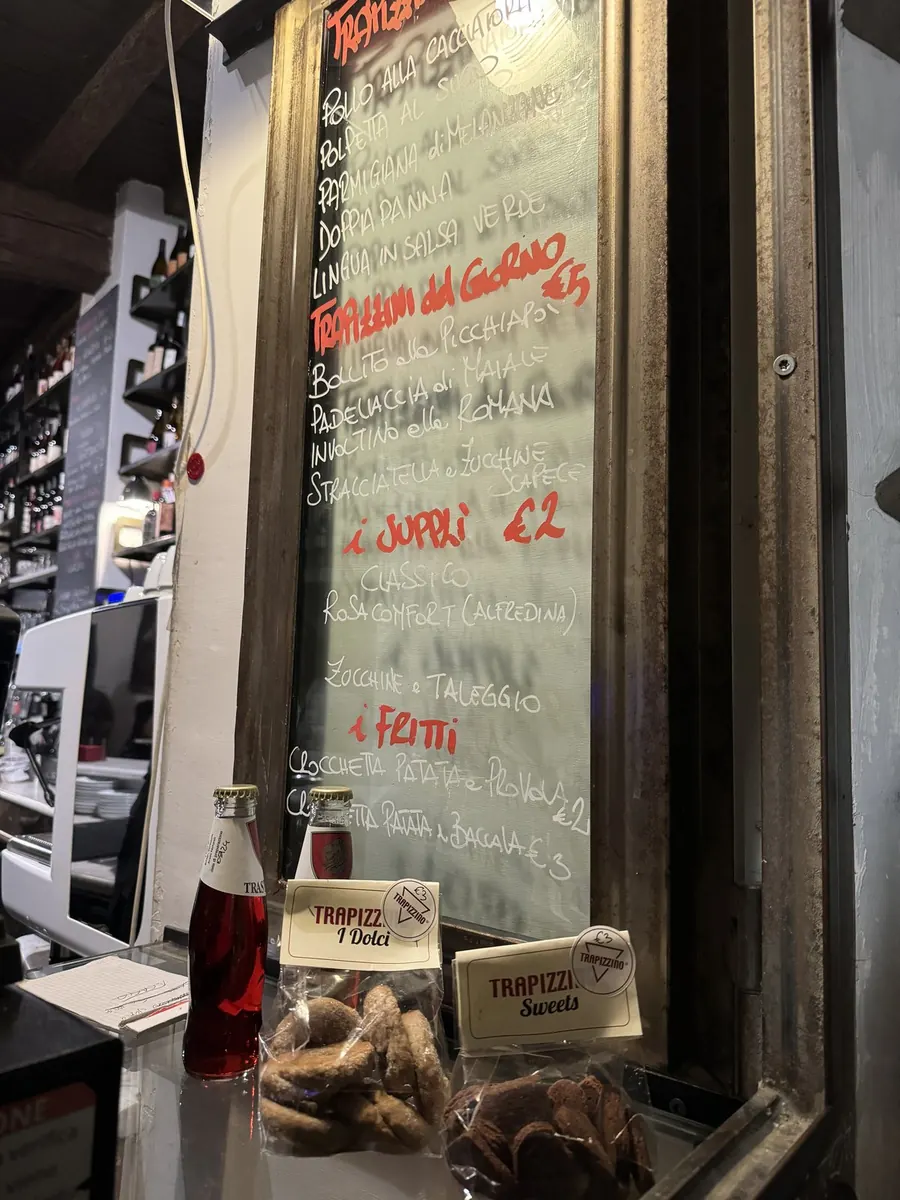
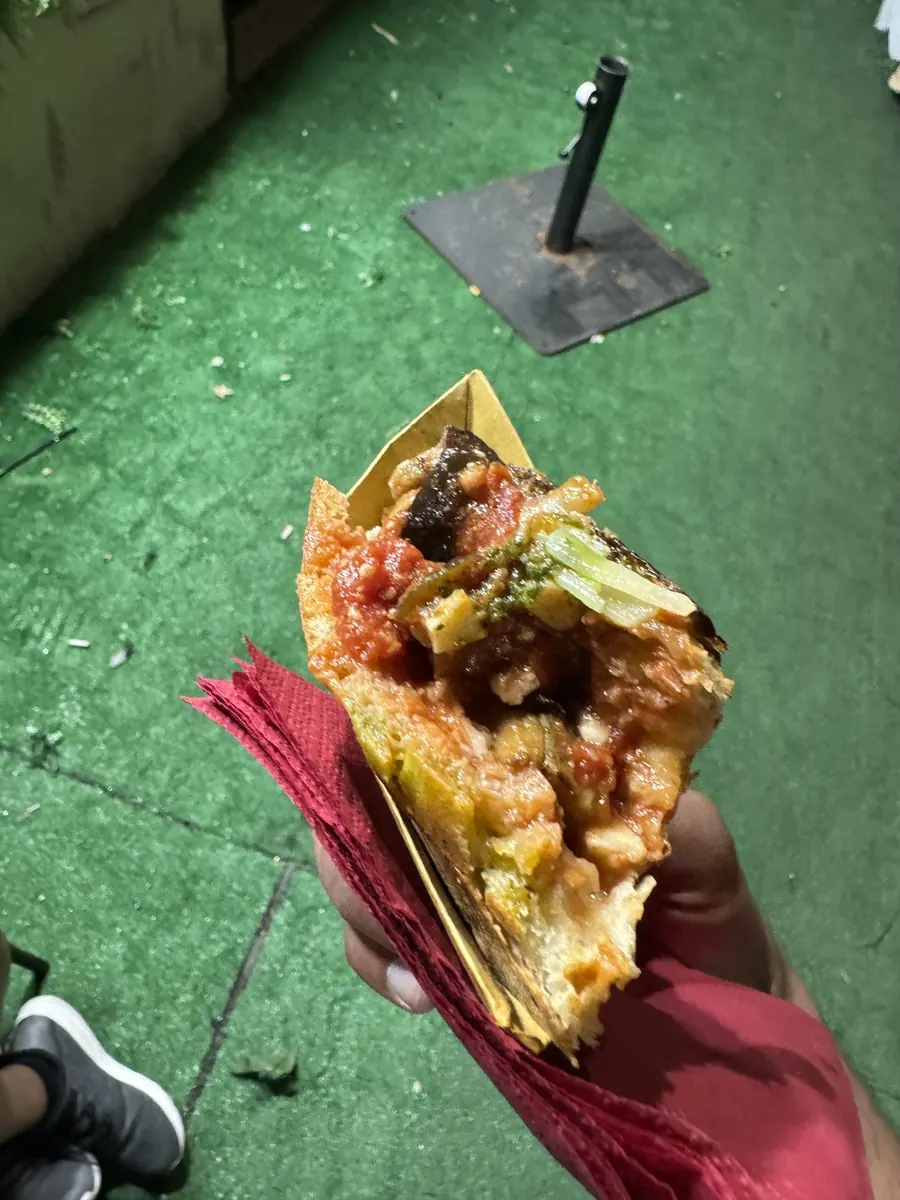
Then, across the Tiber to Trastevere, whose name literally means “beyond the Tevere.” It used to be the working-class side of town and is now Rome’s food playground: narrow lanes, buzzing little places, good vibes in the air. We started with a Trapizzino (pizza dough folded into a pocket and stuffed with something delicious), and then came the moment that changed my life.
Supplì.
A fried rice ball, crunchy on the outside, a core of melted cheese inside. It looks like a cutlet. Everyone says it’s Rome’s parippuvada, and it’s… not at all like parippuvada, but I understand the instinct. I ate it, closed my eyes, and quietly decided it was my favorite food in Rome. (Spoiler: it stayed that way for the whole trip. We hunted down supplì at a ridiculous number of places over the next few days. Some had pasta inside, and those are also dangerous.)
A field guide toSupplìfive sightings, one obsession
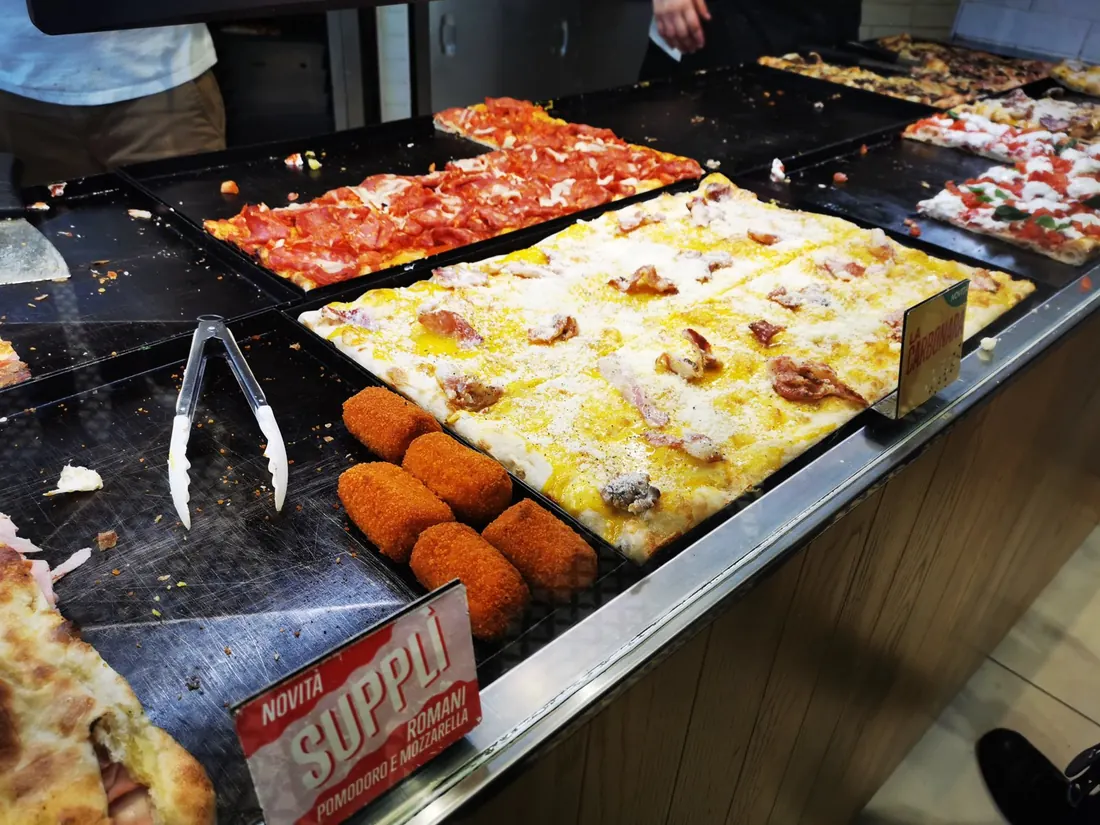
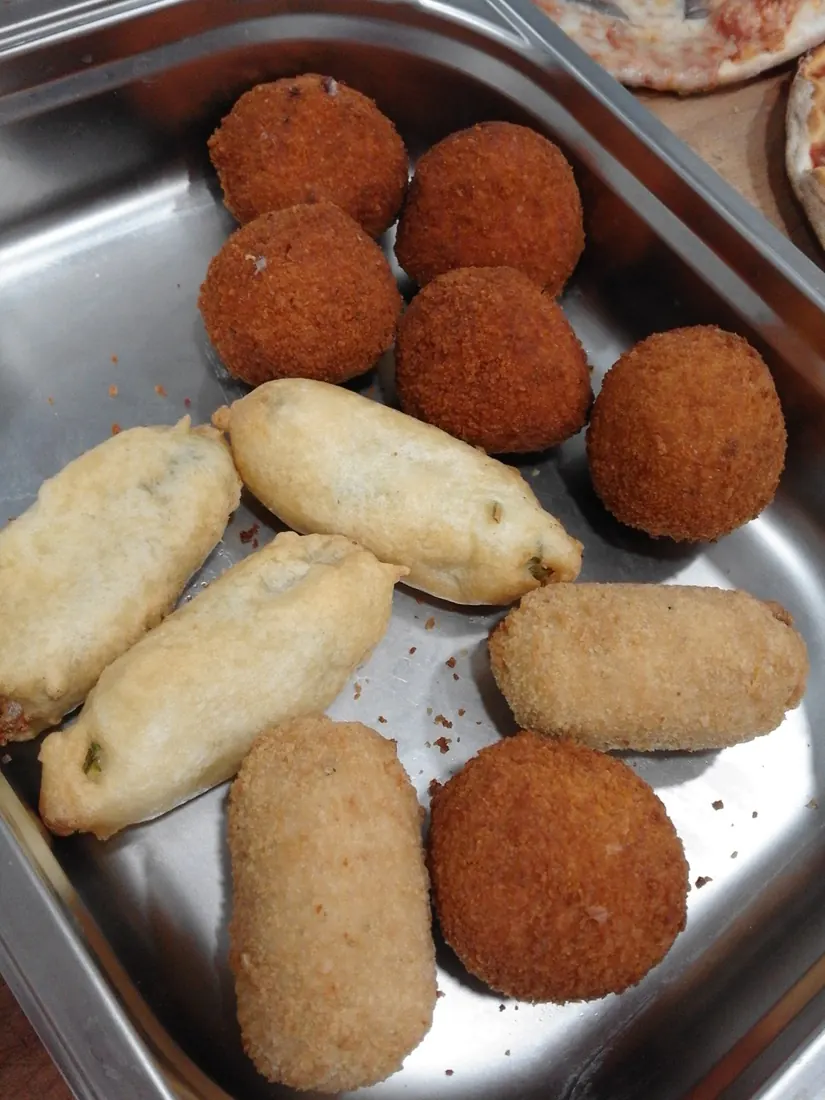
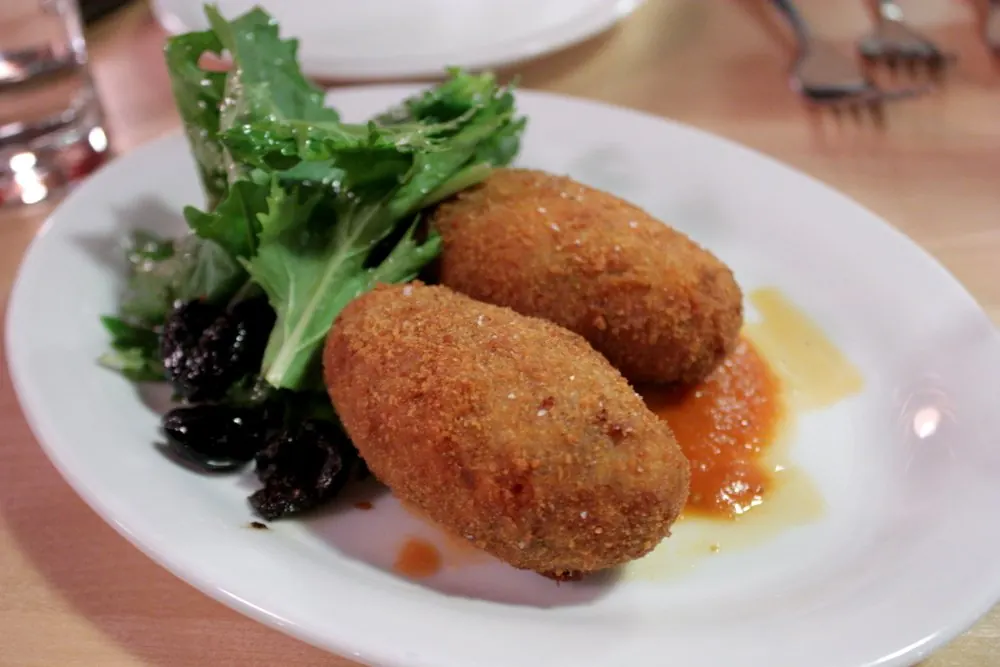
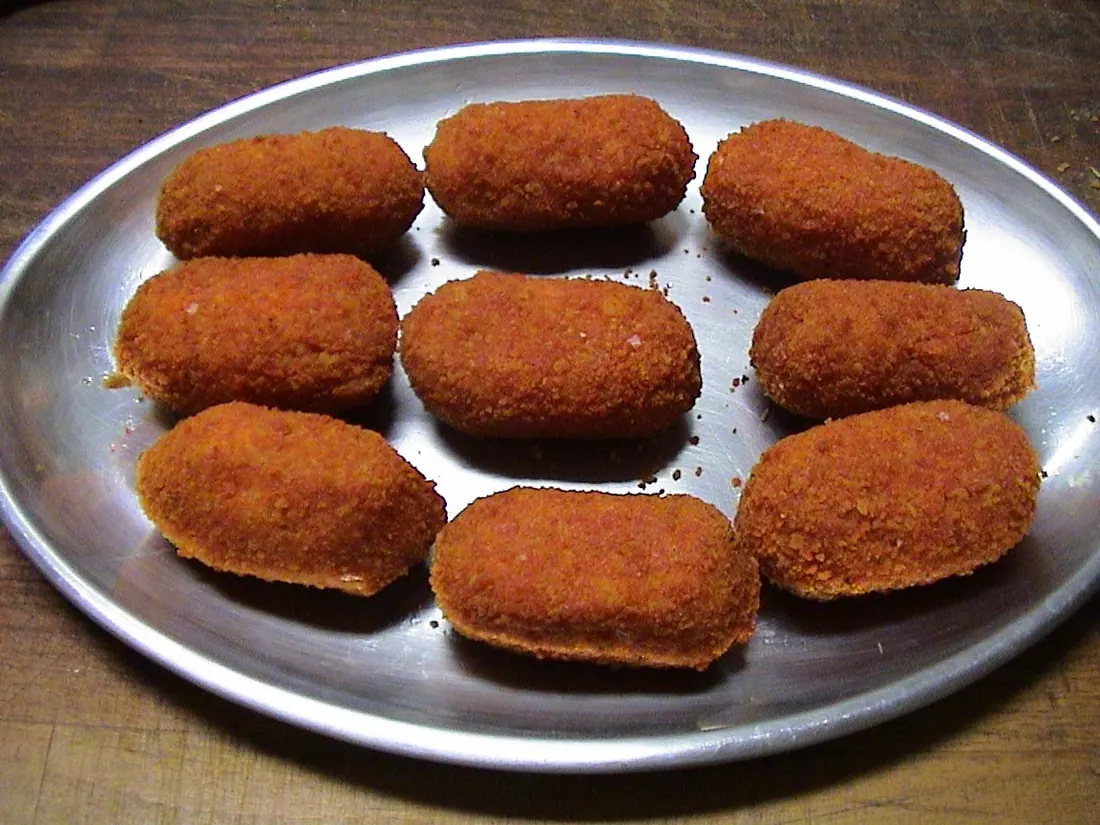
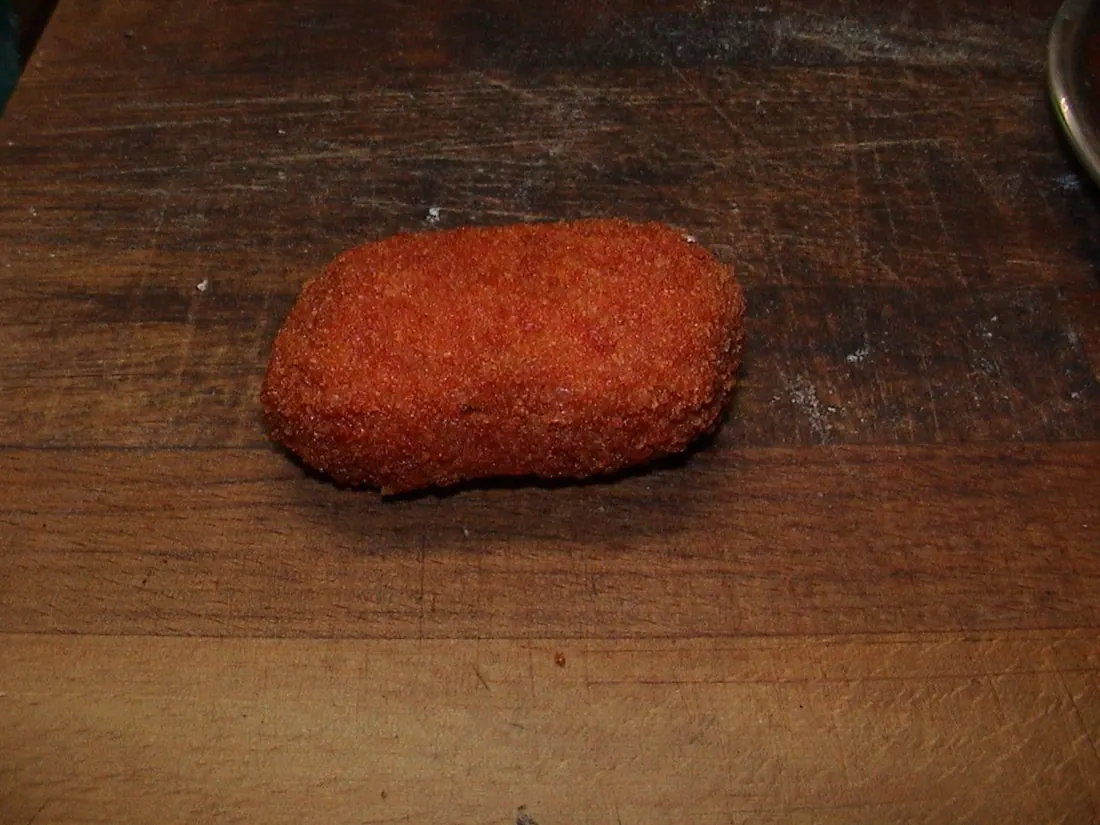
Rome's parippuvada?
Not at all.
But I get it.
Photos via Wikimedia Commons: Saggittarius A (CC BY 4.0), Nicholas Gemini (CC BY-SA 4.0), Krista (CC BY 2.0), FrederikBianko (CC BY-SA 3.0, two).
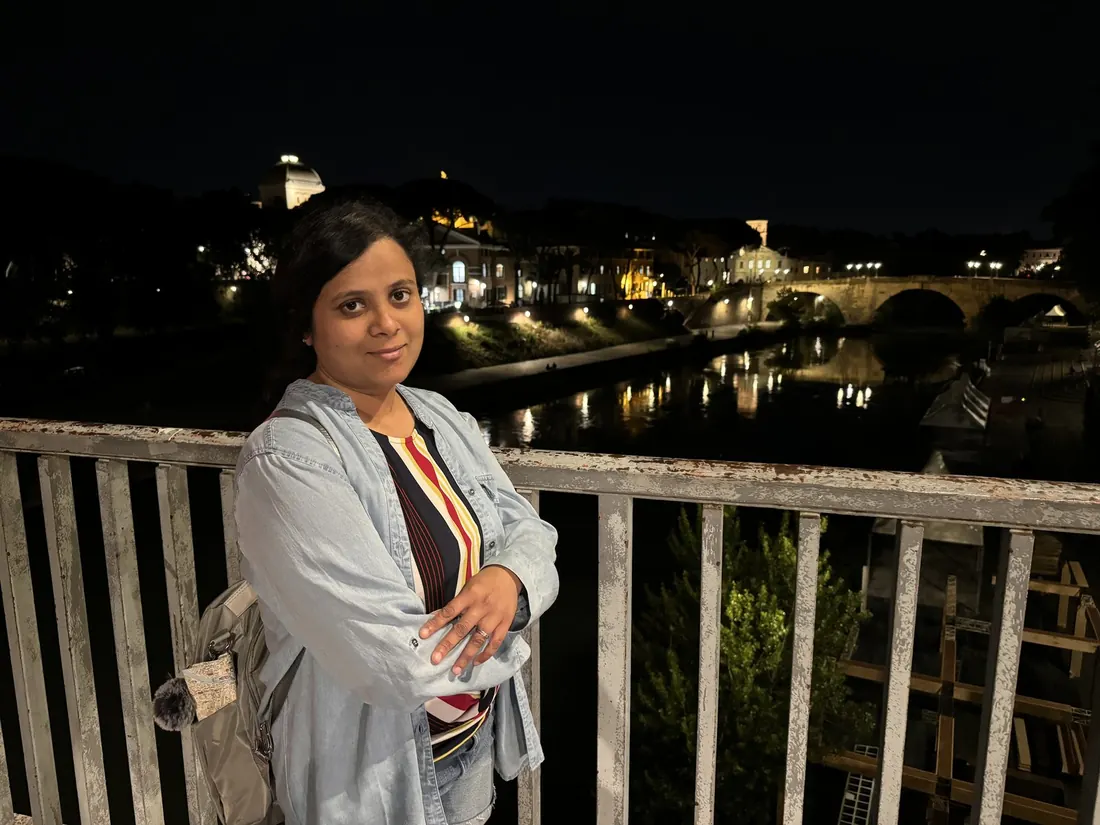
After dinner, the bus never came. We waited. We waited some more. In the end we rented electric bikes through Uber, barely pedaling, the motor doing the work, and rode home through Rome at night, right past the front of the Colosseum, lit up like it was waiting just for us. I filmed it. I’m pretty sure I was laughing the whole ride. A missing bus turned into one of the best rides of the trip.
And that was Day 1. Technically it was “Day 0,” but who’s counting? (Me. I’m counting. I have a spreadsheet.) Our legs were done, and the real walking marathon was about to begin tomorrow.
Popes, Pillars and a Malayali Auntie
Sat, May 25 · Vatican City
You walk into Vatican City, an entire country inside a city, and the first thing you learn is how small you are.
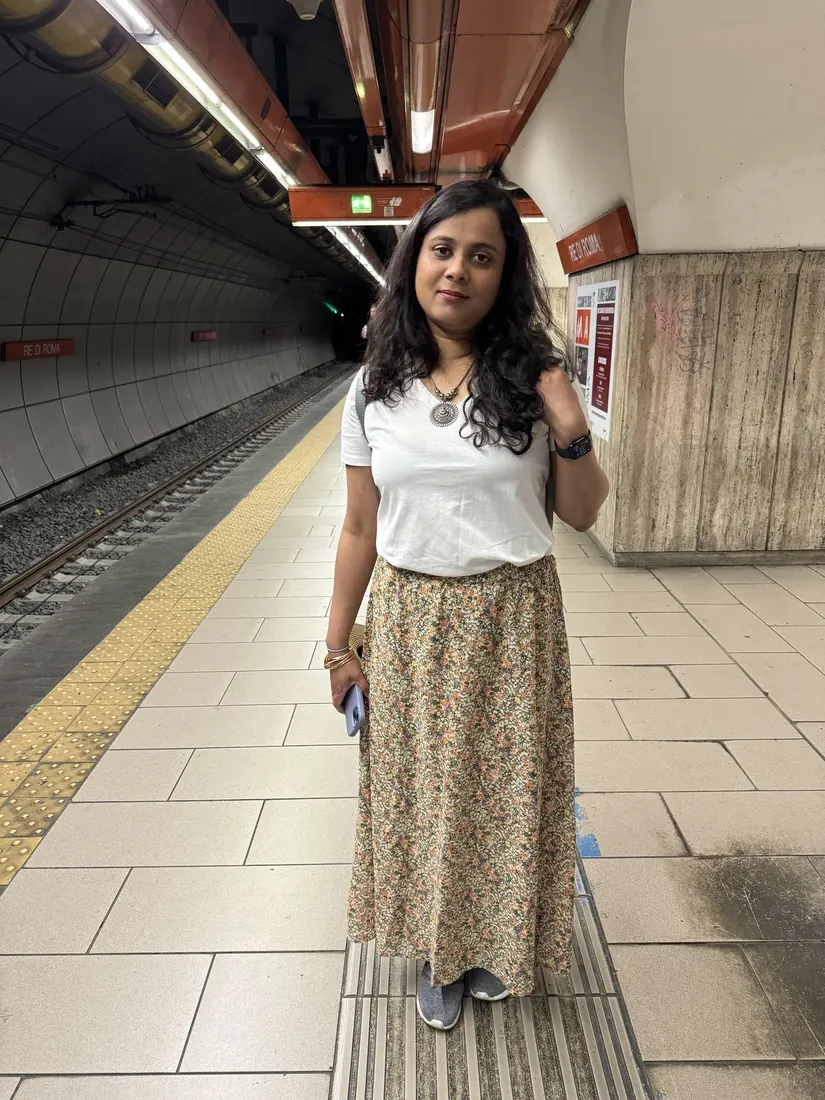
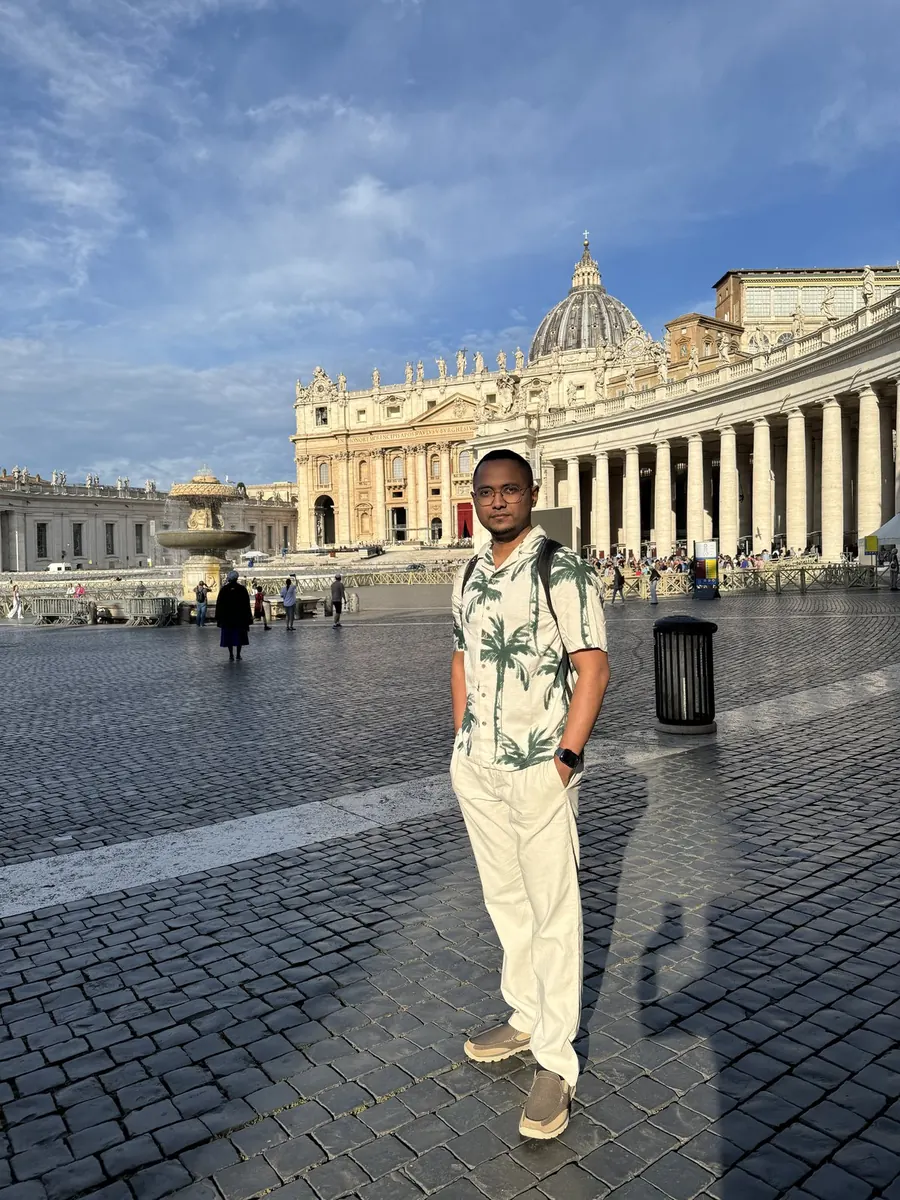
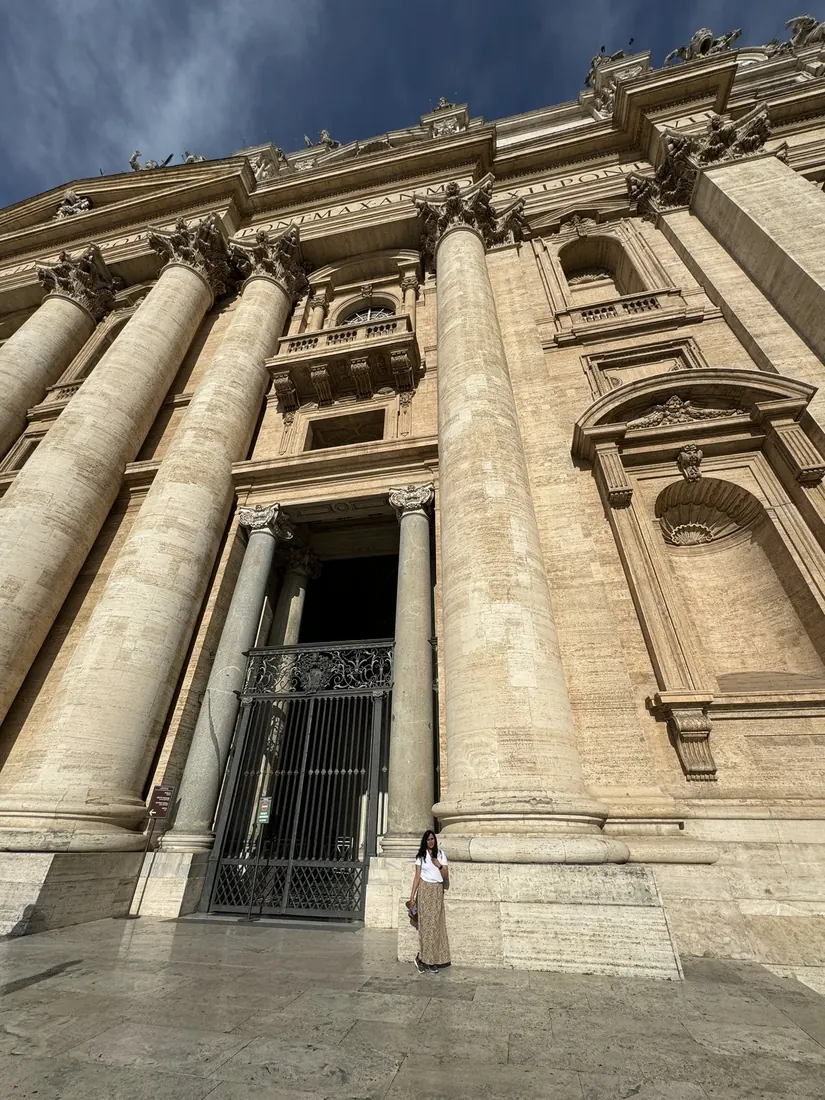
We did it the sensible way: Metro Line A from San Giovanni, leaving around 7 AM, with Arsha doing her best “I am awake, I promise” pose on the platform. The reward for an early start was St. Peter’s Square at a quarter to eight, long morning shadows across the cobbles and almost nobody in it. By ten the square would fill up with tour groups. At 7:48 there was just us and a very large colonnade.
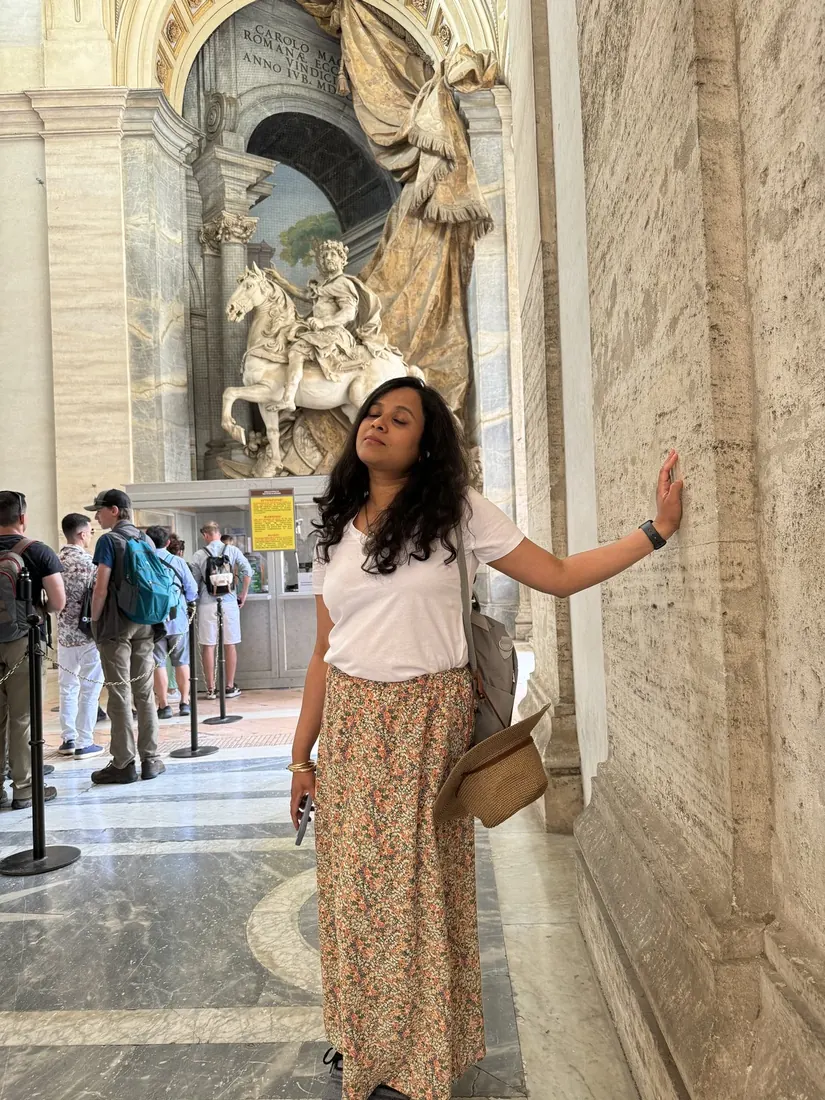
St. Peter’s Basilica doesn’t need a ticket, which is why every tour group on earth is there. We went early, and it paid off: hardly a queue. On the way, we grabbed cappuccinos to go from an Italian café, and I understood the hype with the first sip. The shot, the foam, the proportions, all perfect, and you drink it walking around like a local. Best coffee-and-stroll combination.
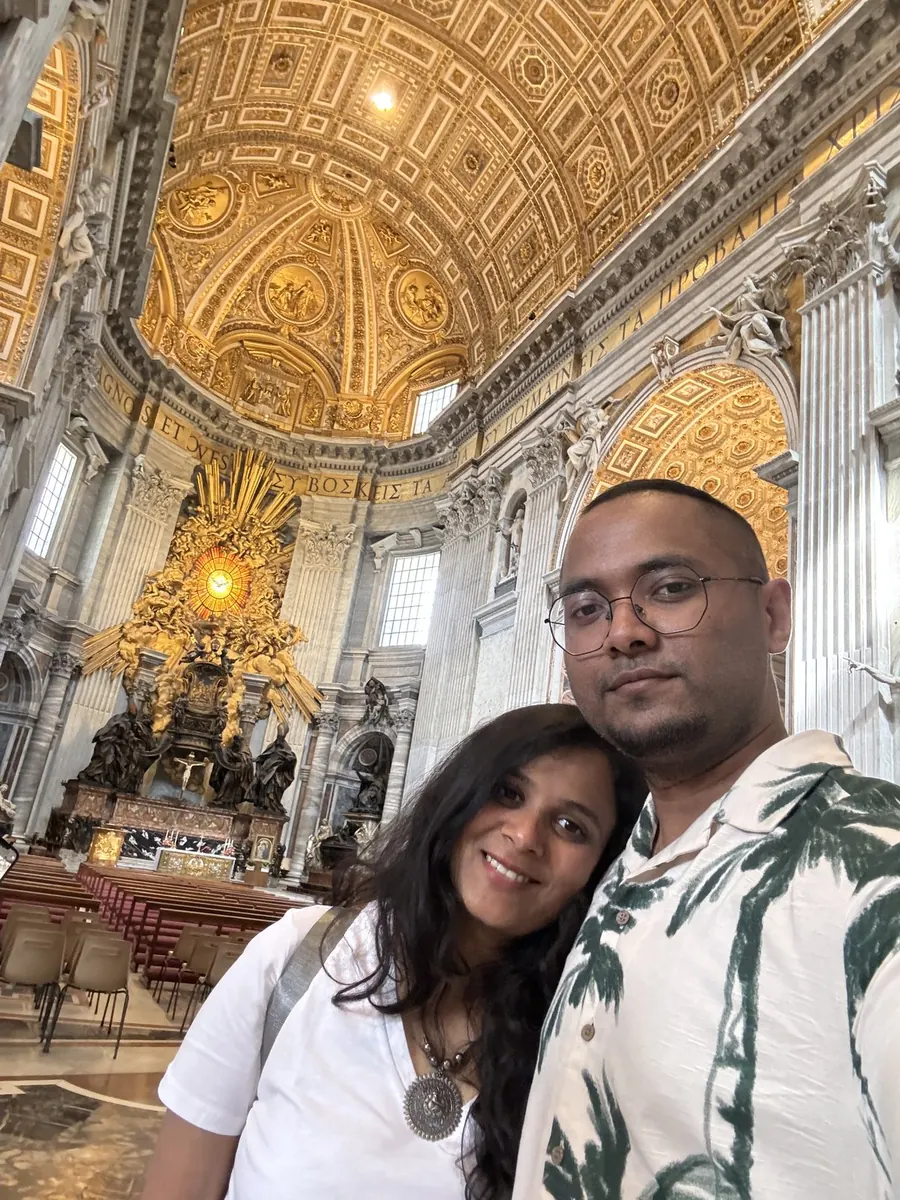
Inside, the basilica plays a trick on you. It looks like a decently large, very elegant church, until you see a human standing next to a pillar. I stood Arsha at the base of one for scale. She practically vanished. The pillar is the size of a small mountain.
And you can’t visit this place without climbing the dome. About 800 steps. Halfway up, the stairs let you out onto an inside balcony right at the base of the dome, high above the altar, and the gold-and-blue Latin lettering around the dome, which looks like normal writing from the ground, is made of letters taller than a grown adult.
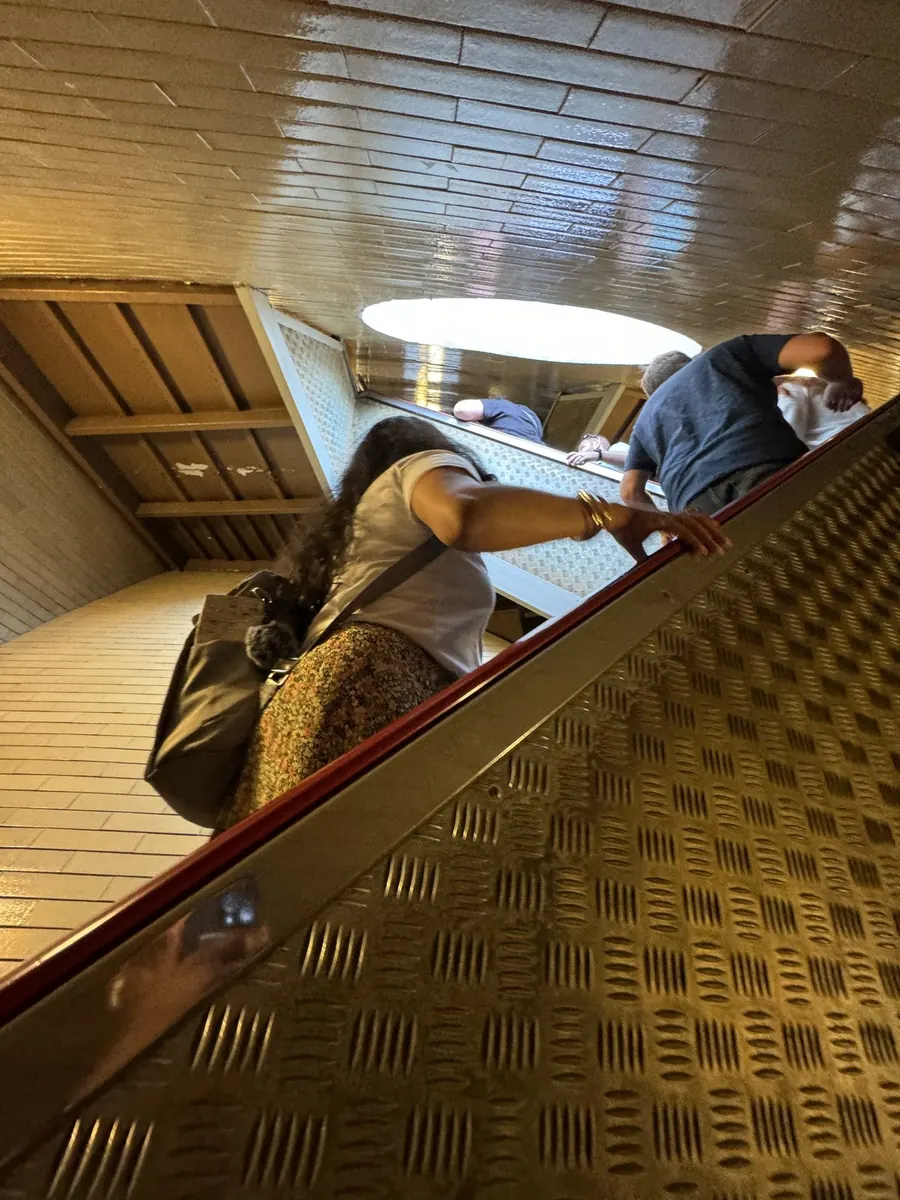
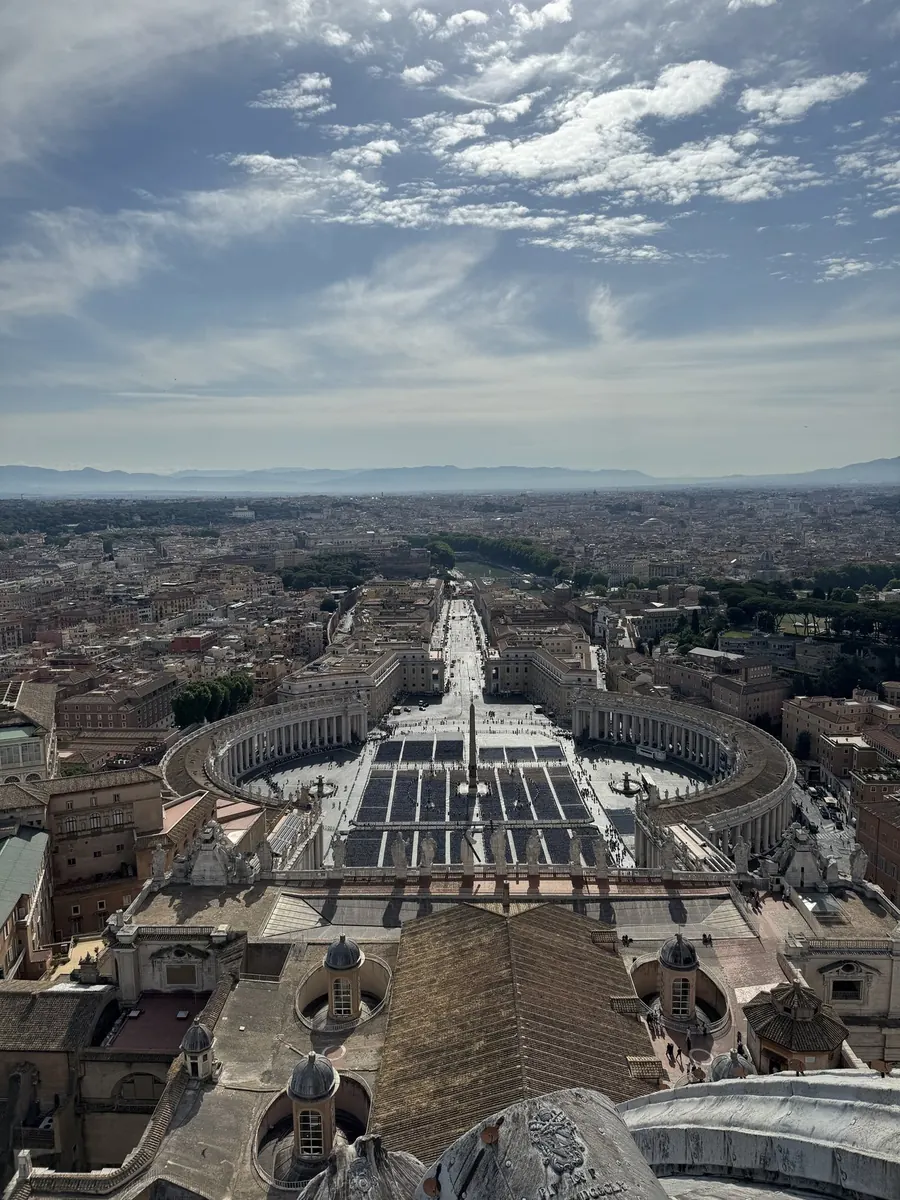
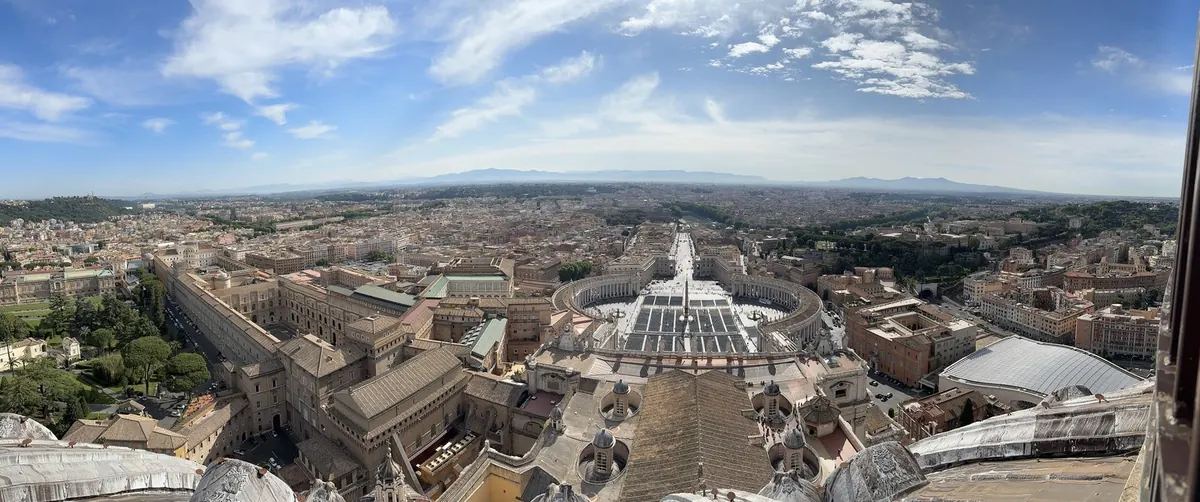
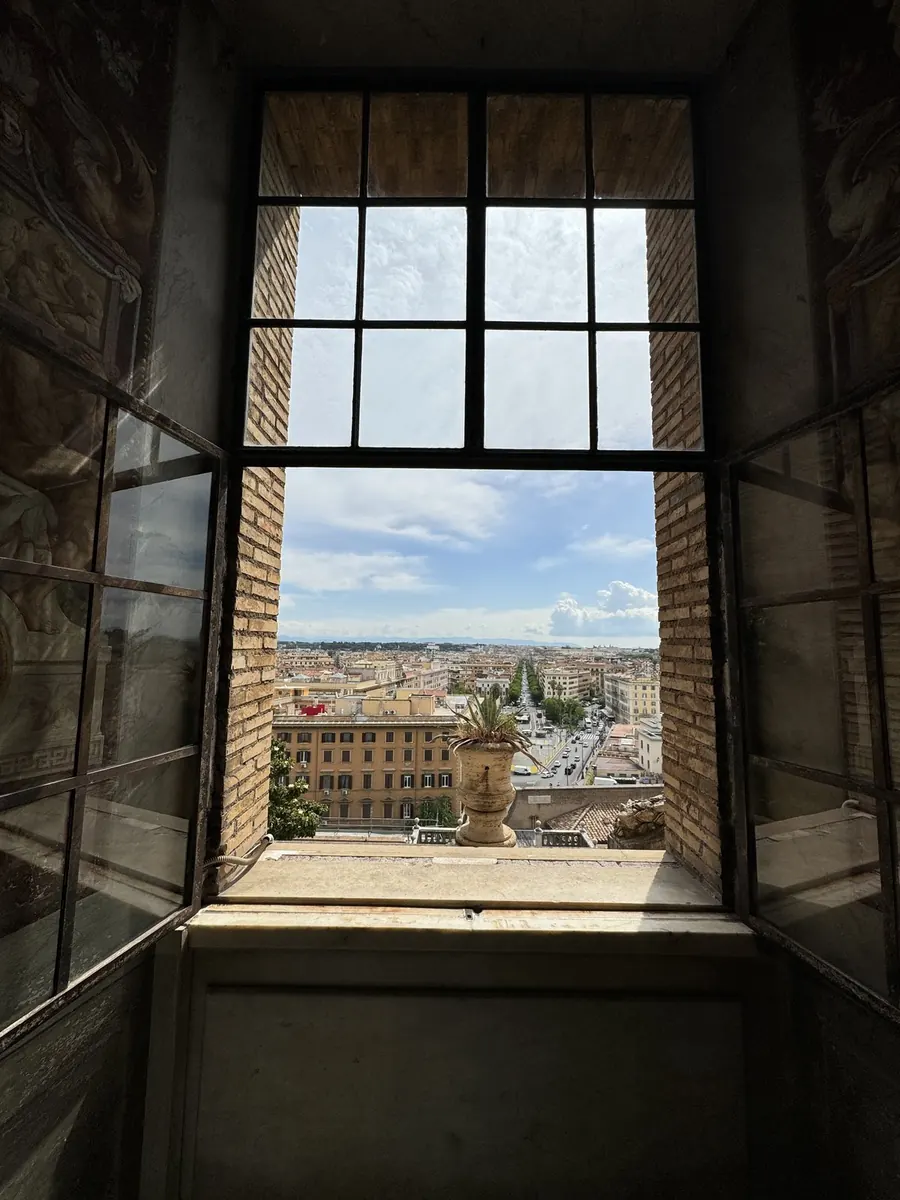
Then you keep going into the gap between the dome’s two shells. The walls lean in, the passage narrows, and you go single file, a little hot and a lot excited. (Pro tip: do not do this with a giant backpack. Travel light, always.) Then you pop out on the rooftop terrace and, ta-da, all of Rome is at your feet. Worth every one of those 800 steps.
~800steps up the dome, one way
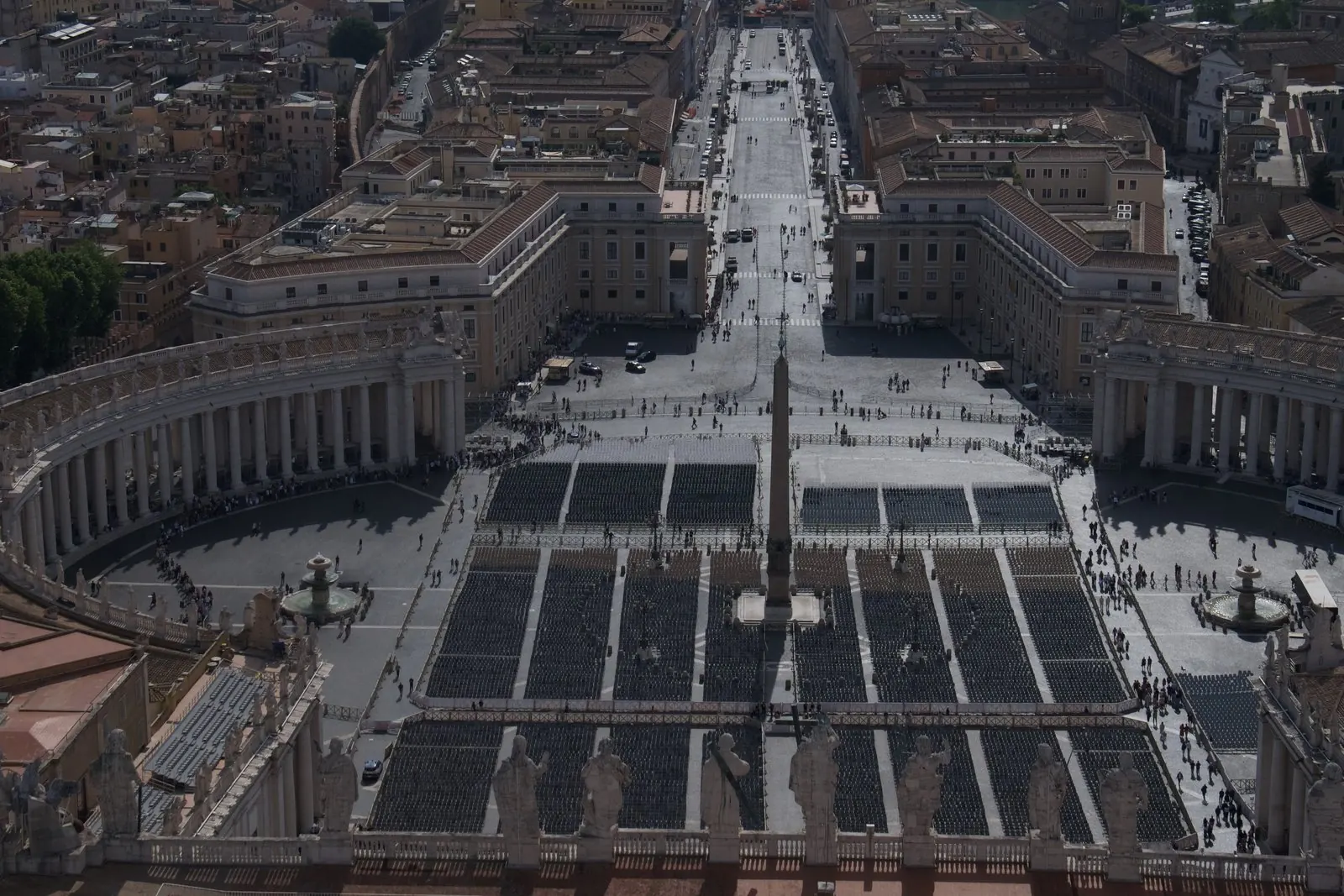
One more secret from St. Peter’s: most of those giant “paintings” aren’t paintings. They’re mosaics, made of millions of tiny colored pieces. From close you can see the tiles. Step back and it’s an oil painting.
And then, behind glass in a side chapel, the one sculpture that stopped me in my tracks: Michelangelo’s Pietà. He carved it when he was about 24, and it’s the only piece he ever signed (look for the name on the sash across Mary’s chest). My brain kept insisting it was soft: the folds of the robe, the weight of the arm, the calm on her face. It is marble.
It is marble that has forgotten it is marble.
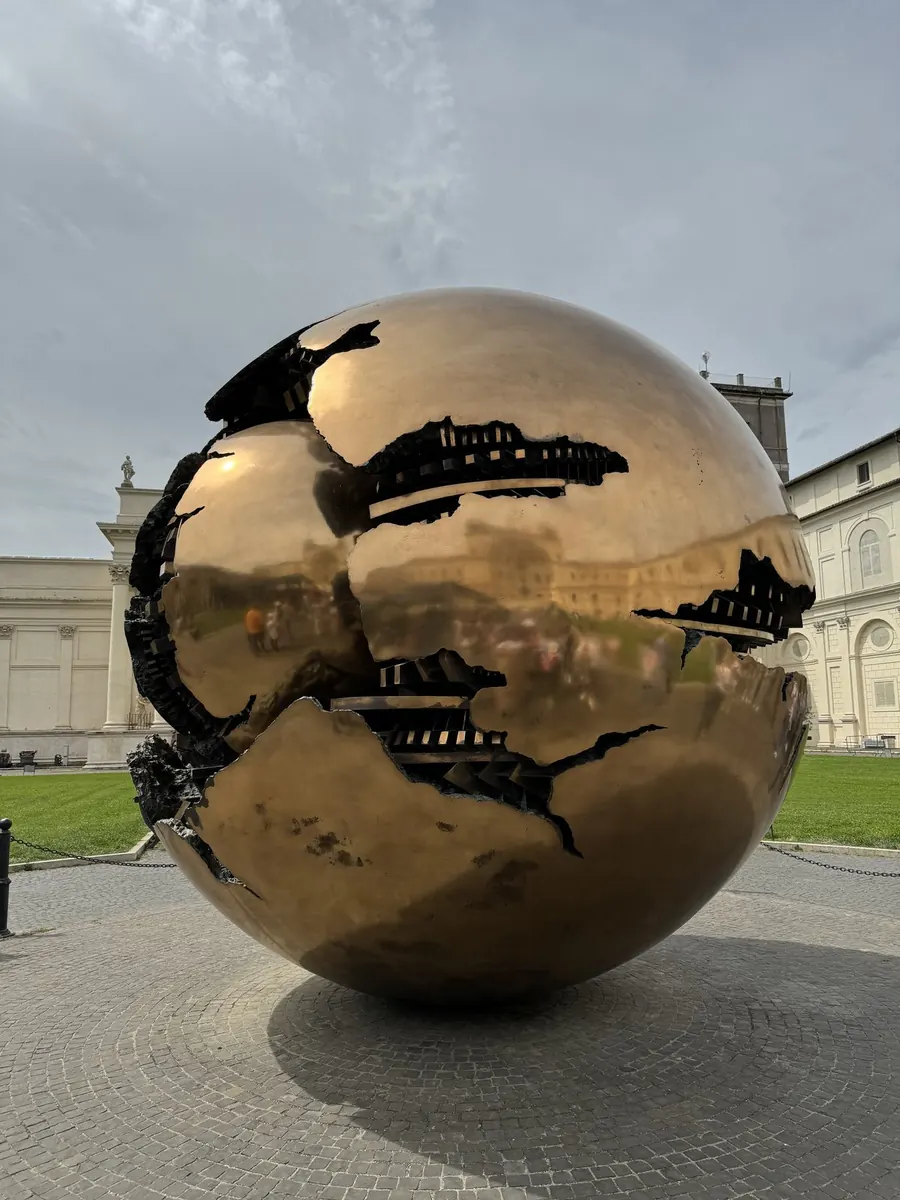
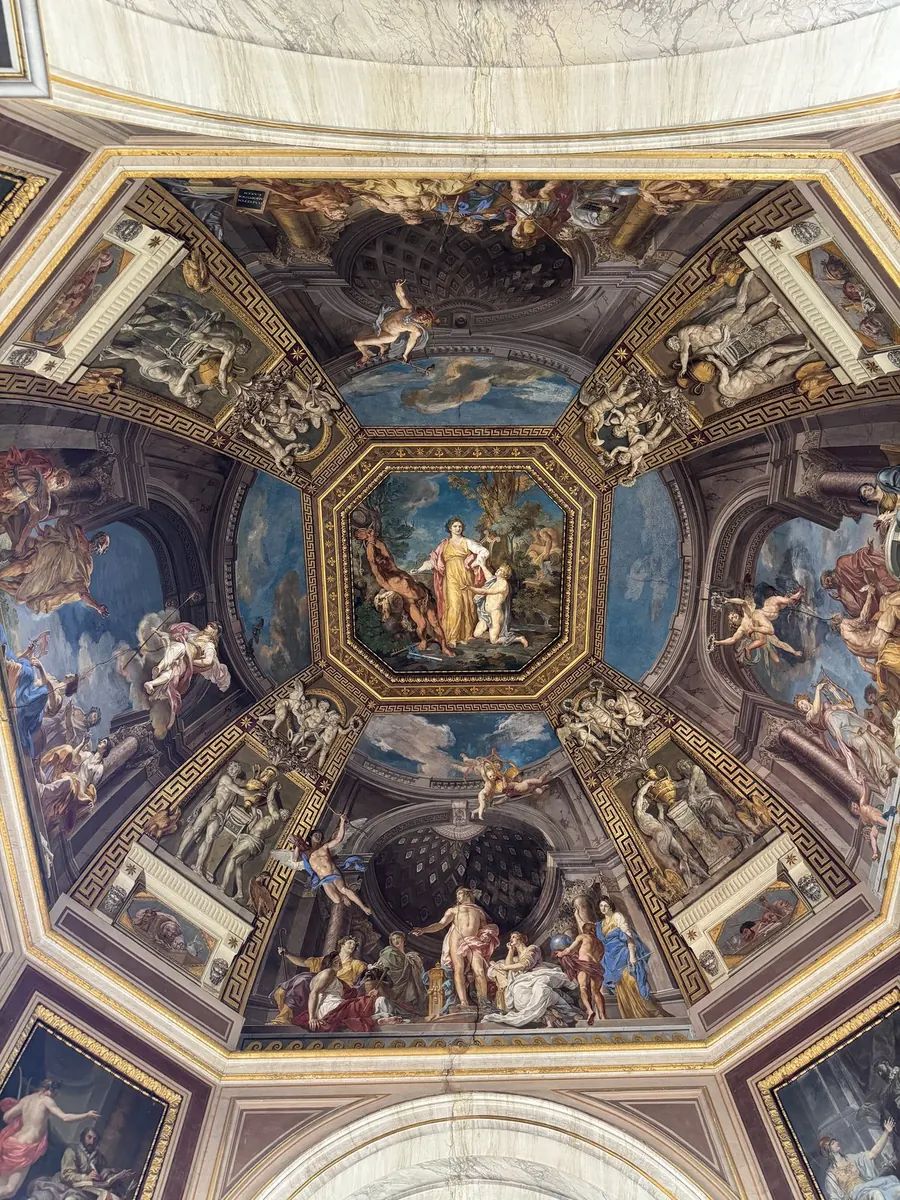
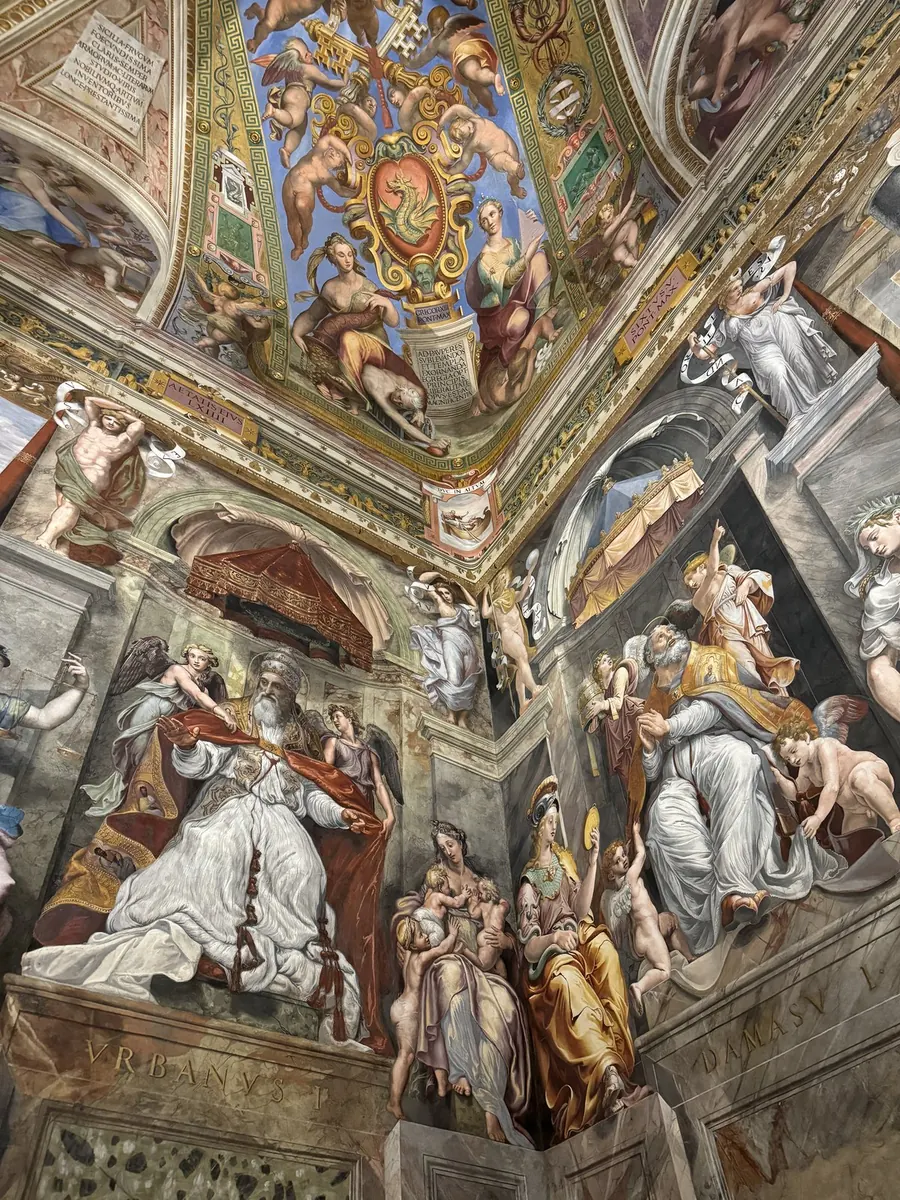
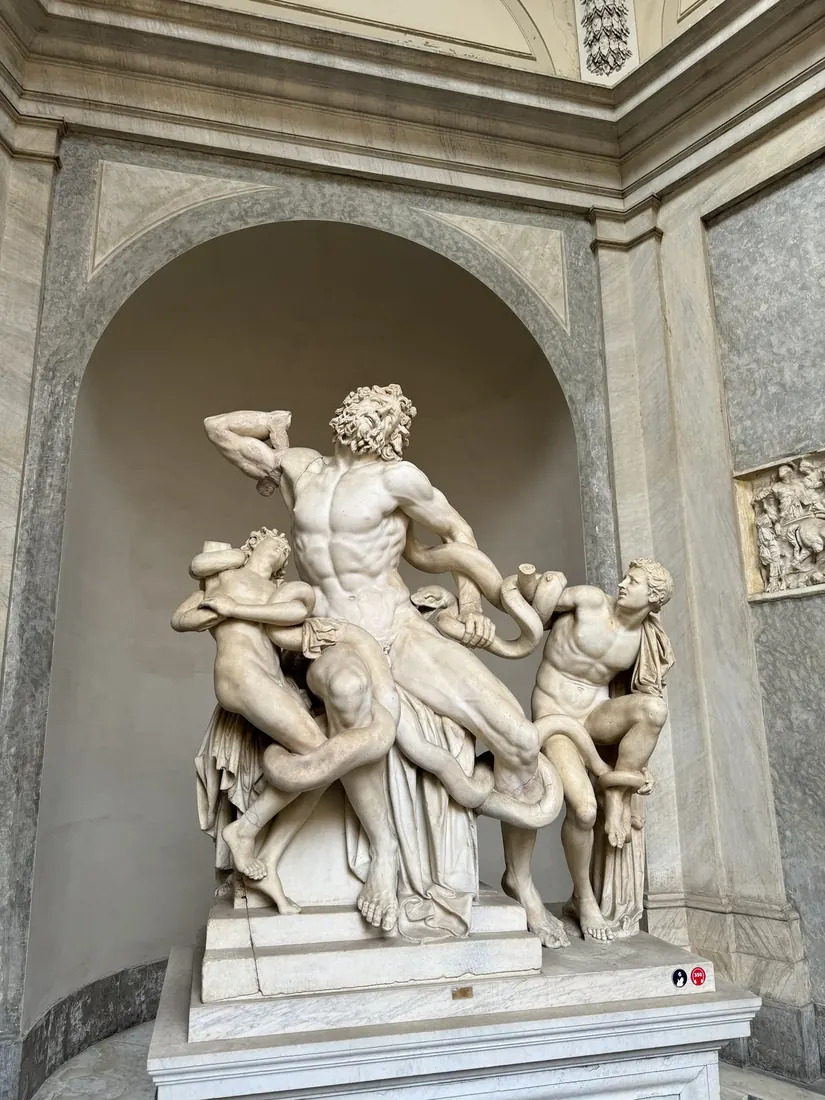
By about 11 we were at the Vatican Museums, which started life as the Popes’ private art collection. Imagine being able to hire Michelangelo and Raphael. We took an audio guide, because otherwise you’d wander for hours with a happy, lost face. Highlights: the Laocoön statue (you can see veins in the marble, in marble), the Gallery of Maps, tapestries that look like photographs, and the Raphael Rooms, painted floor to ceiling.
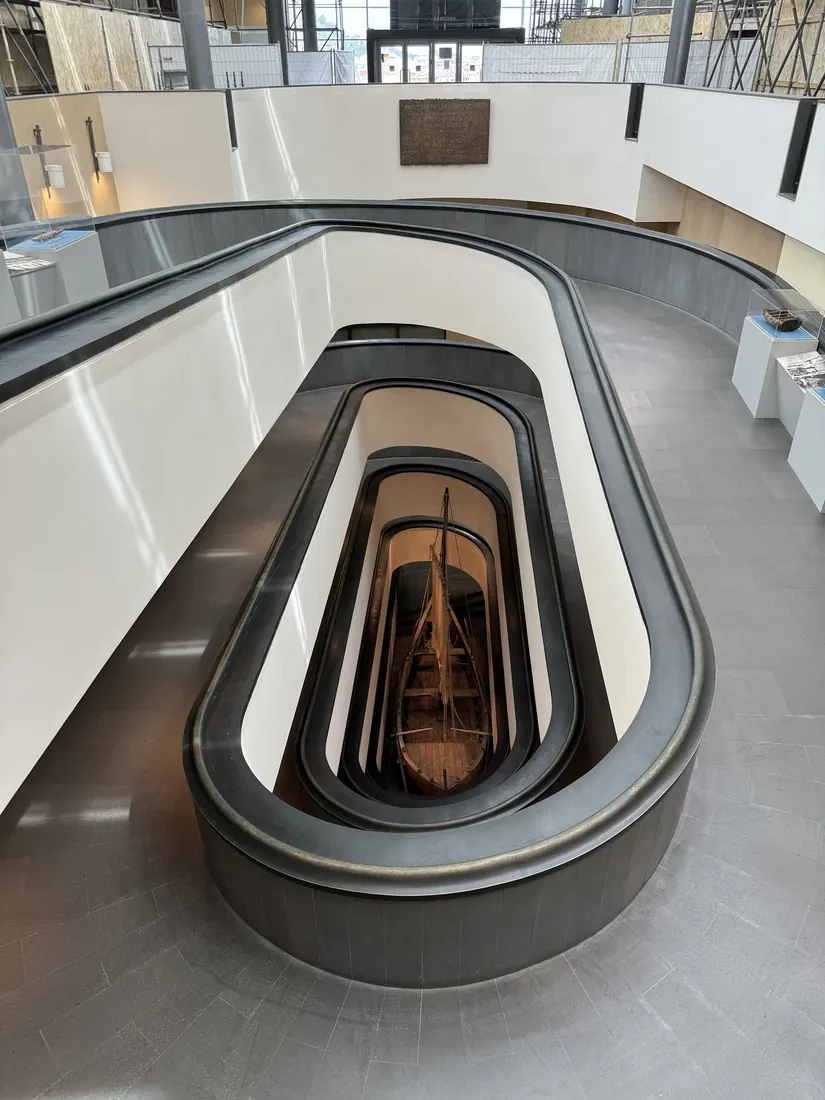
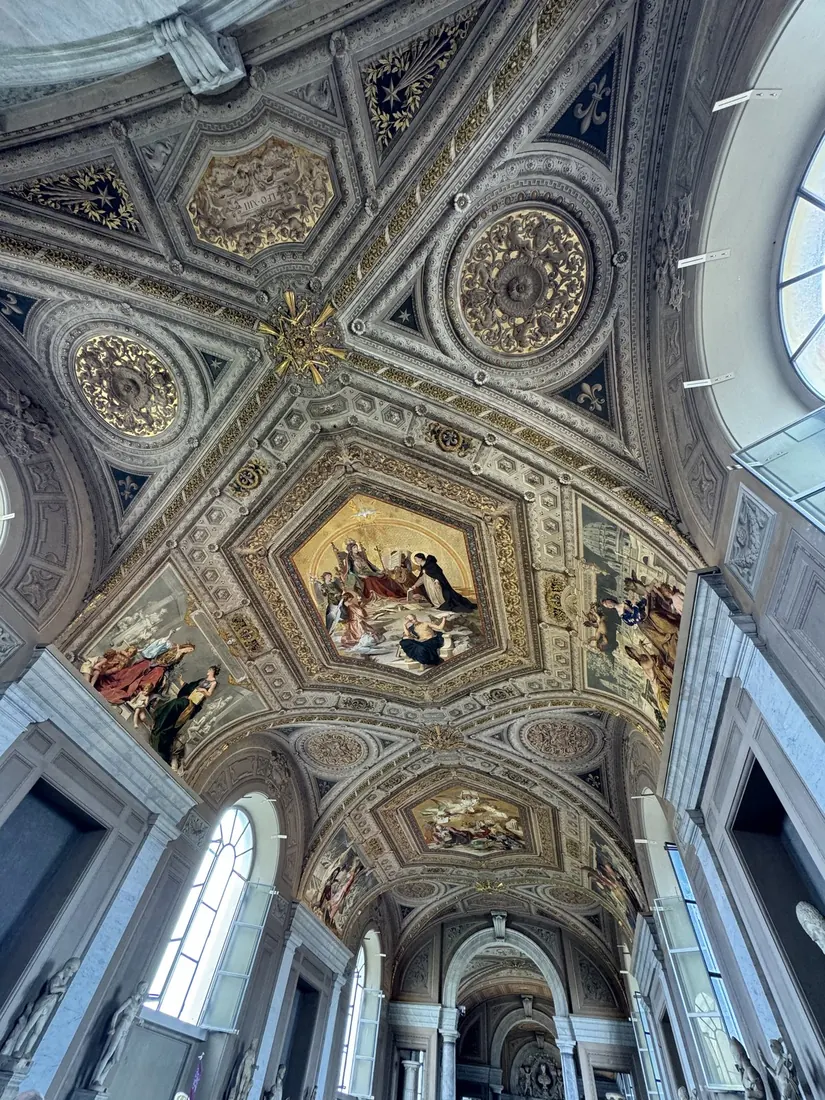
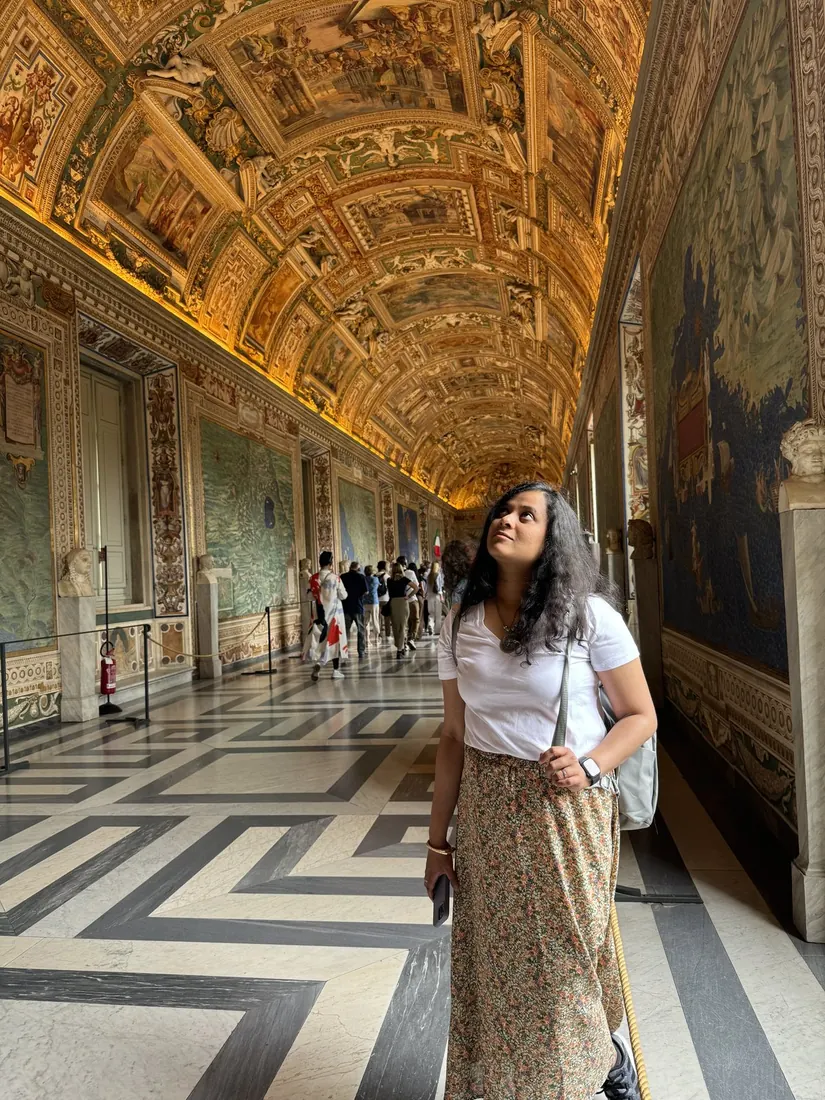
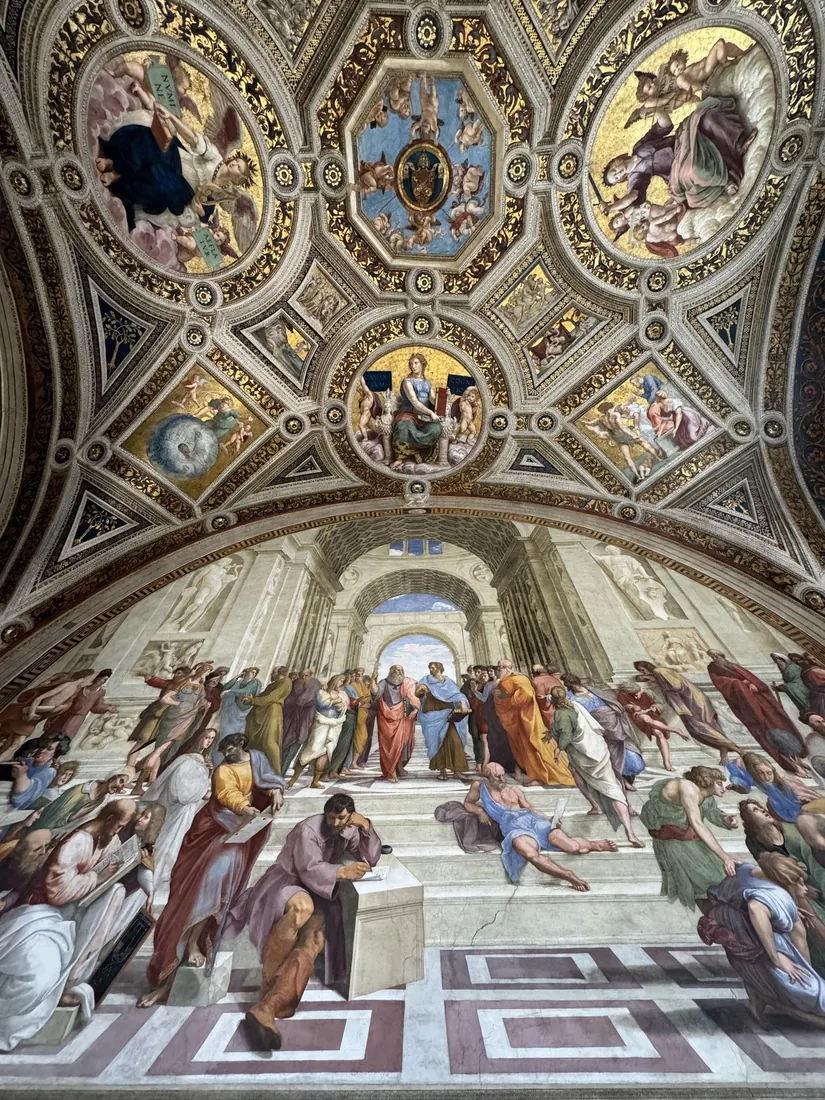
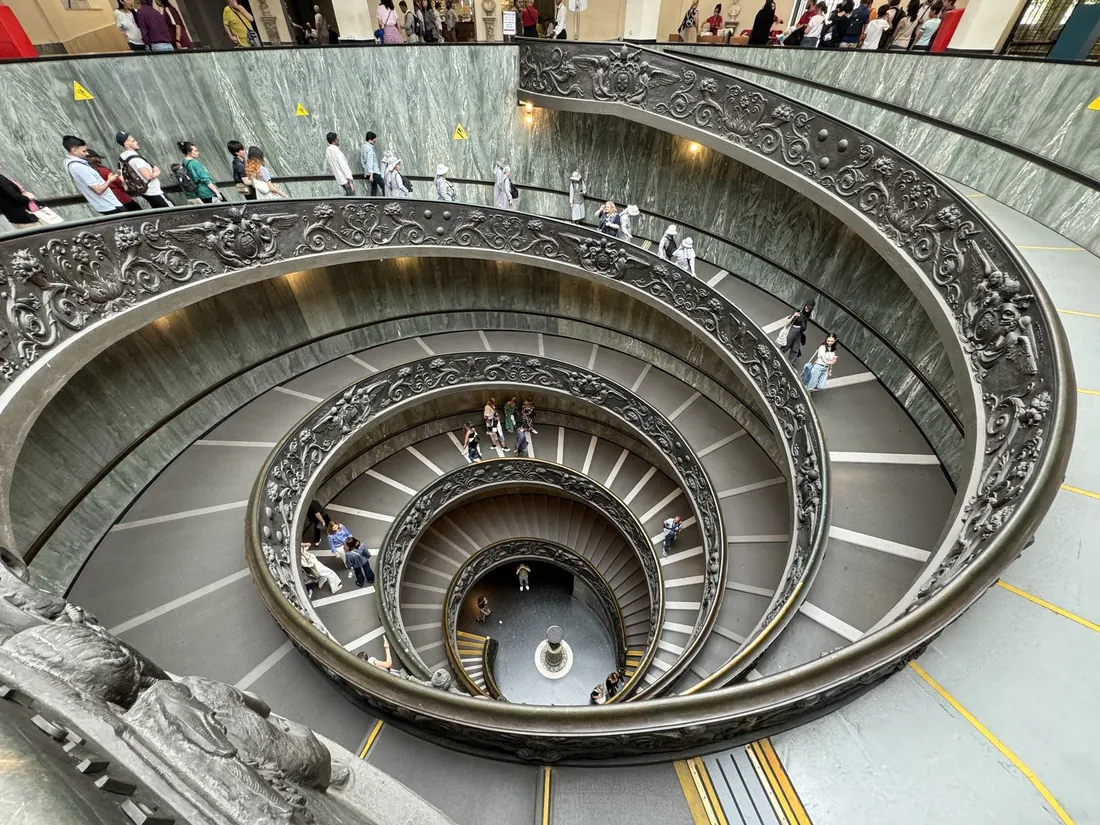
And then, the Sistine Chapel. No photos allowed, which, honestly, helps. After all those rooms of art, you step in, look up, and your brain just says “okay, wow.” It’s one thing to see it in books, another to stand under it. The thought that kept coming back: this was made hundreds of years ago. Where I’m from, a 100-year-old building is ancient. Here I’m looking at something that’s older than the idea of my country. The skill, the scale, the sheer nerve of it, mind-blowing.
Michelangelo reportedly saw himself as a sculptor, and the Pope more or less talked him into the ceiling. Thank you, Pope.
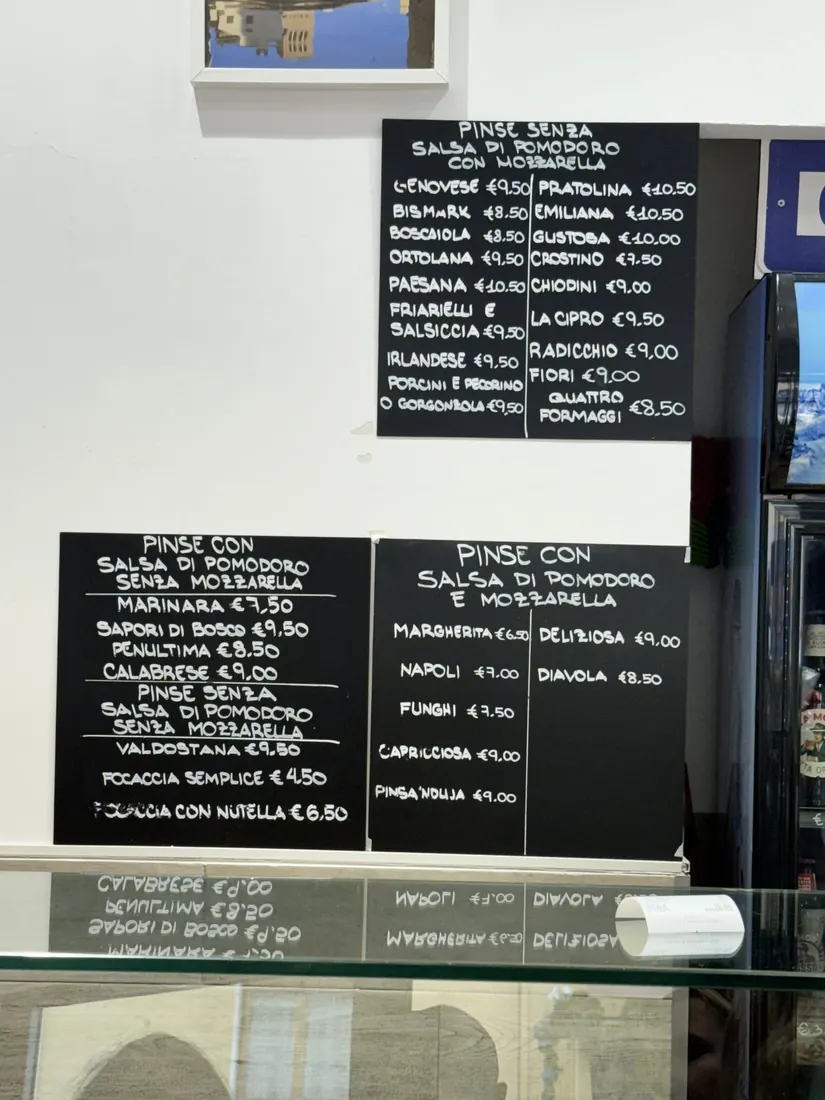
After the Sistine Chapel, lunch was a short walk from the exit: Bonci’s Pizzarium, a pizza-by-the-slice counter with a blackboard of Roman pinsa and pizza al taglio, the kind of place where you point, they cut, and everyone eats standing up. (Ask me what we ordered and I’ll draw a blank; whatever it was, it vanished.) Best lunch for a man whose feet had just walked through the Vatican.
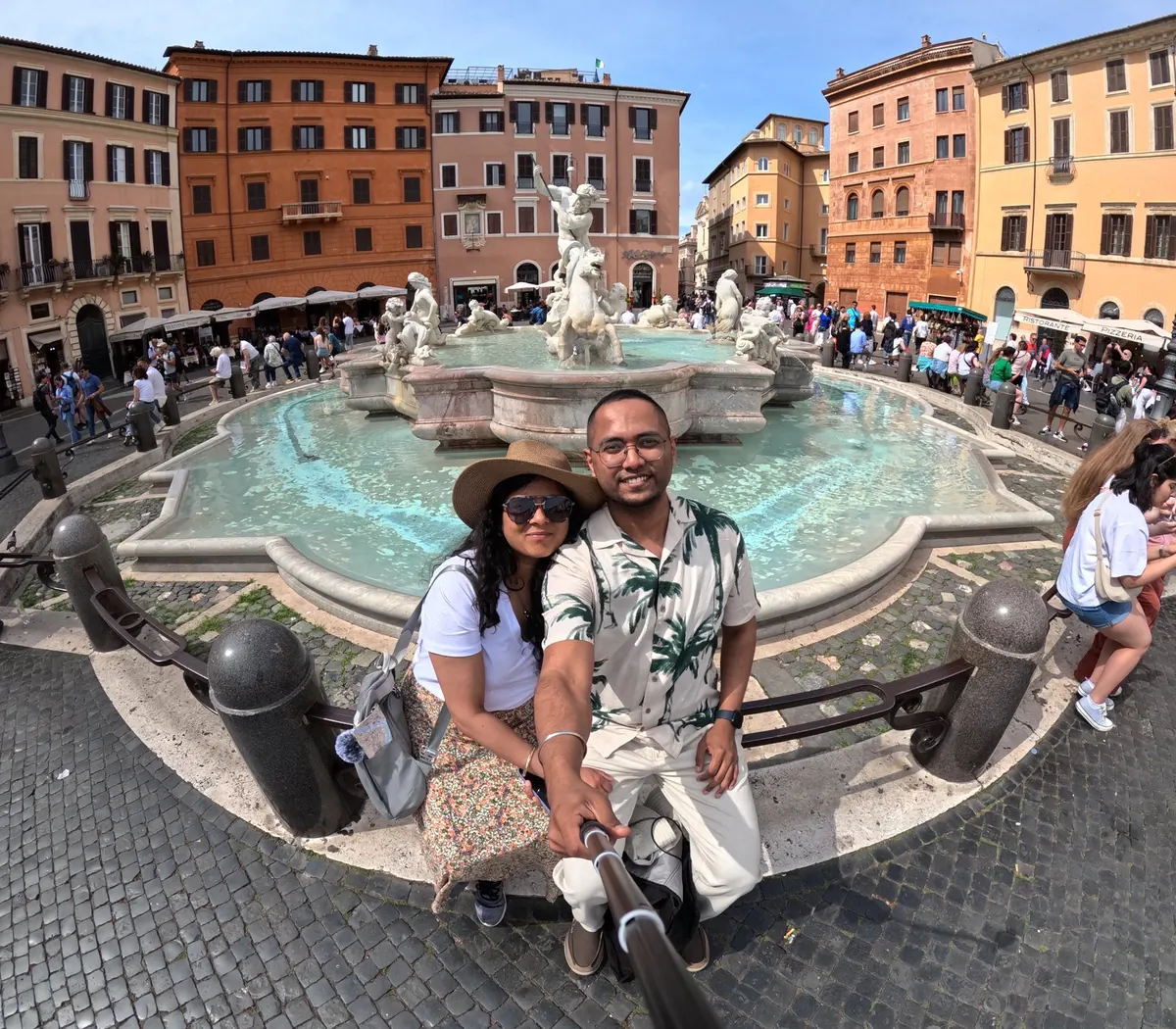
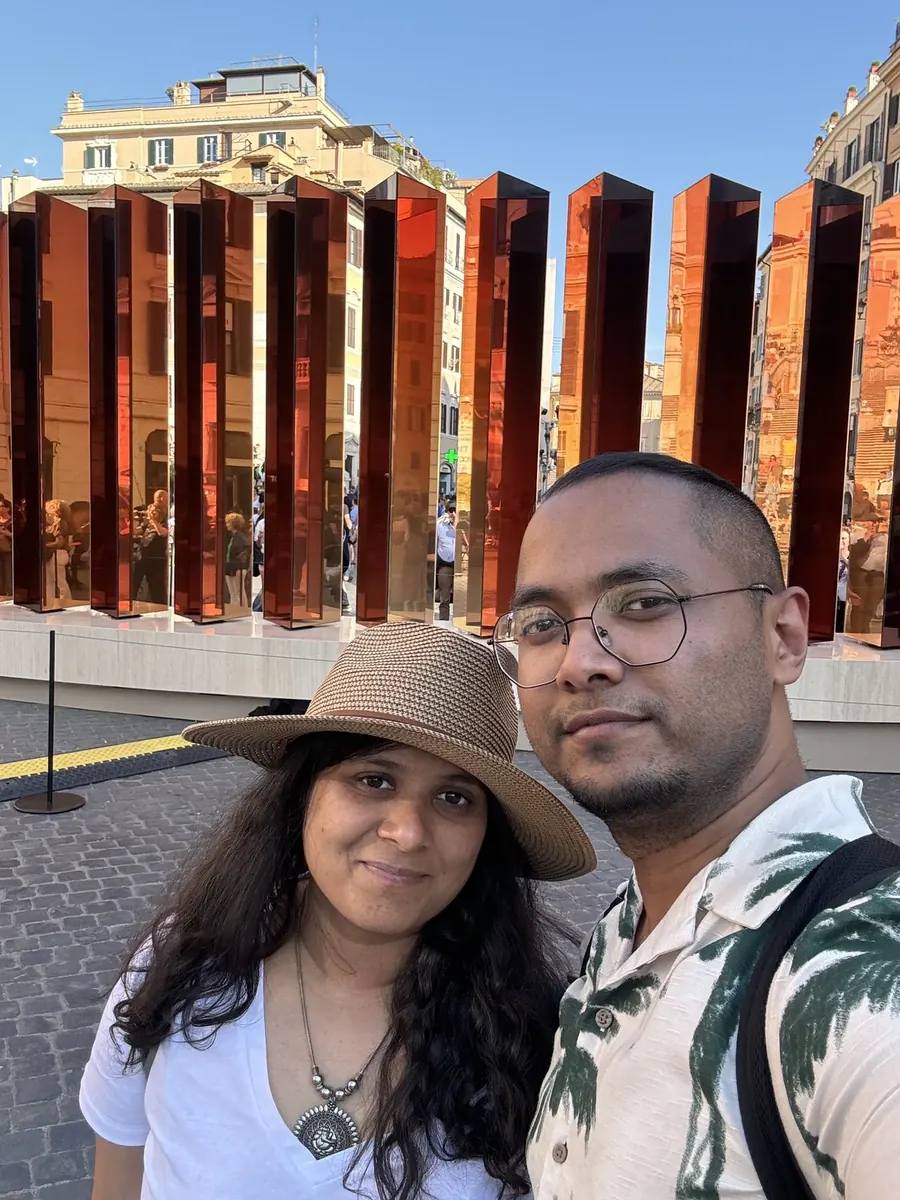
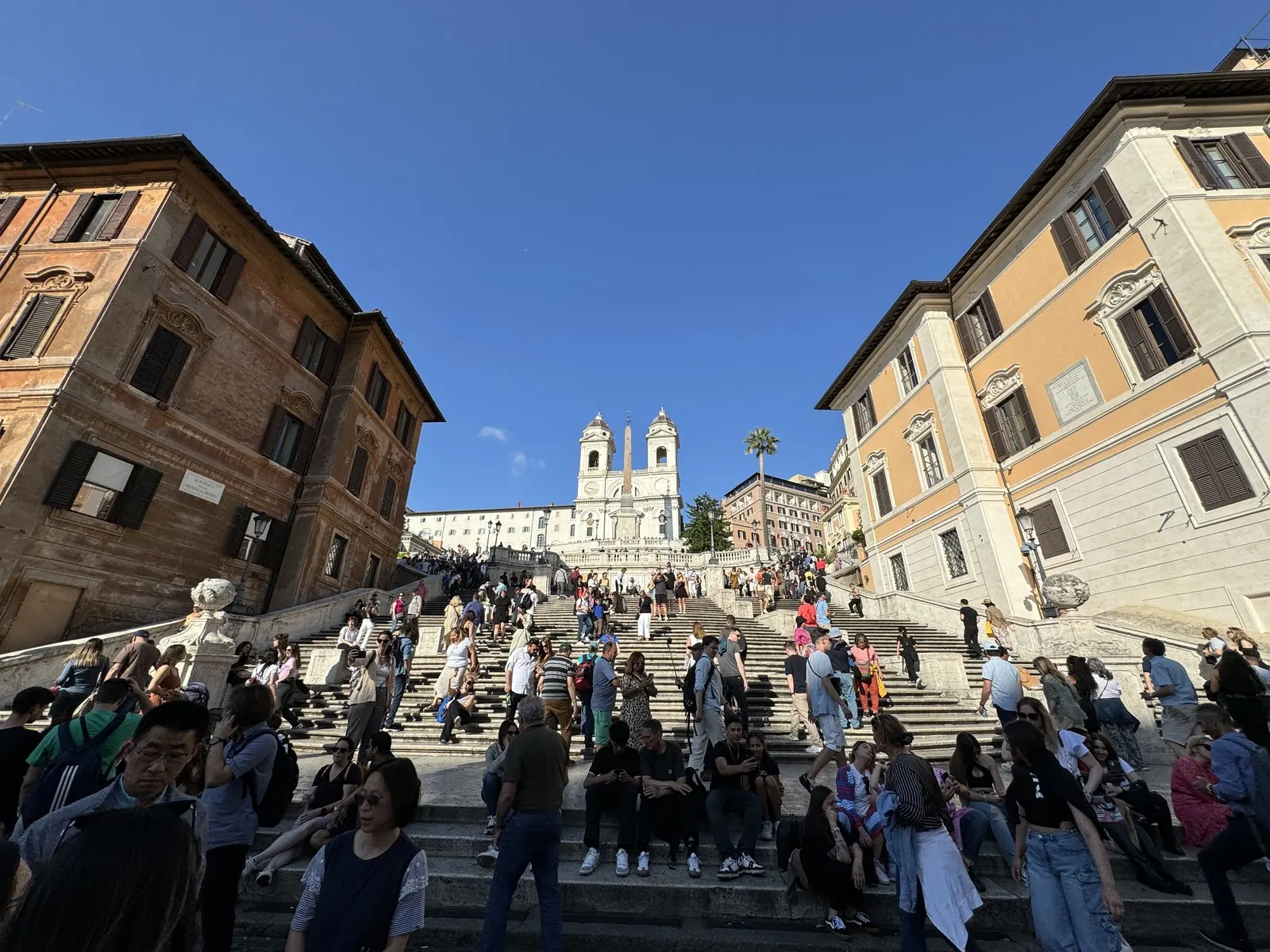
The afternoon was for wandering (with a gelato in each hand, naturally): Piazza Navona with Bernini’s fountain, a walk past the Pantheon from the outside (no tickets that afternoon, so we saved it for tomorrow), and the Spanish Steps, packed with happy people.
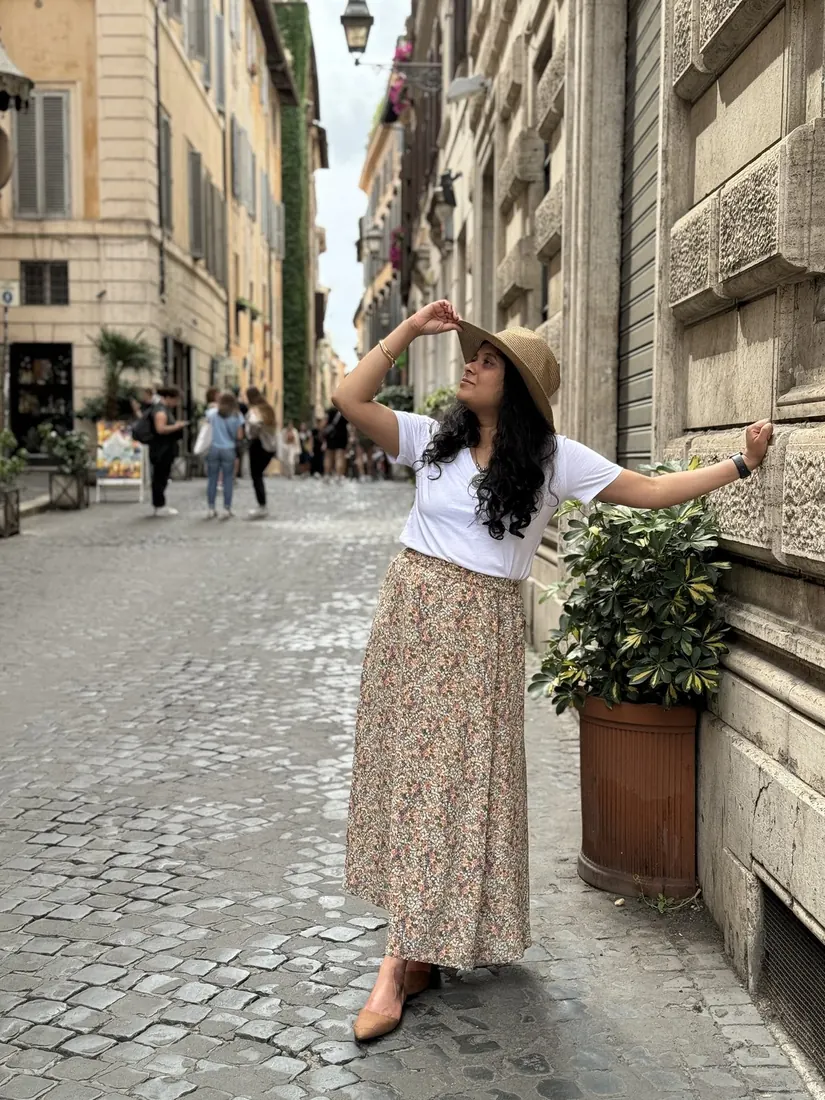
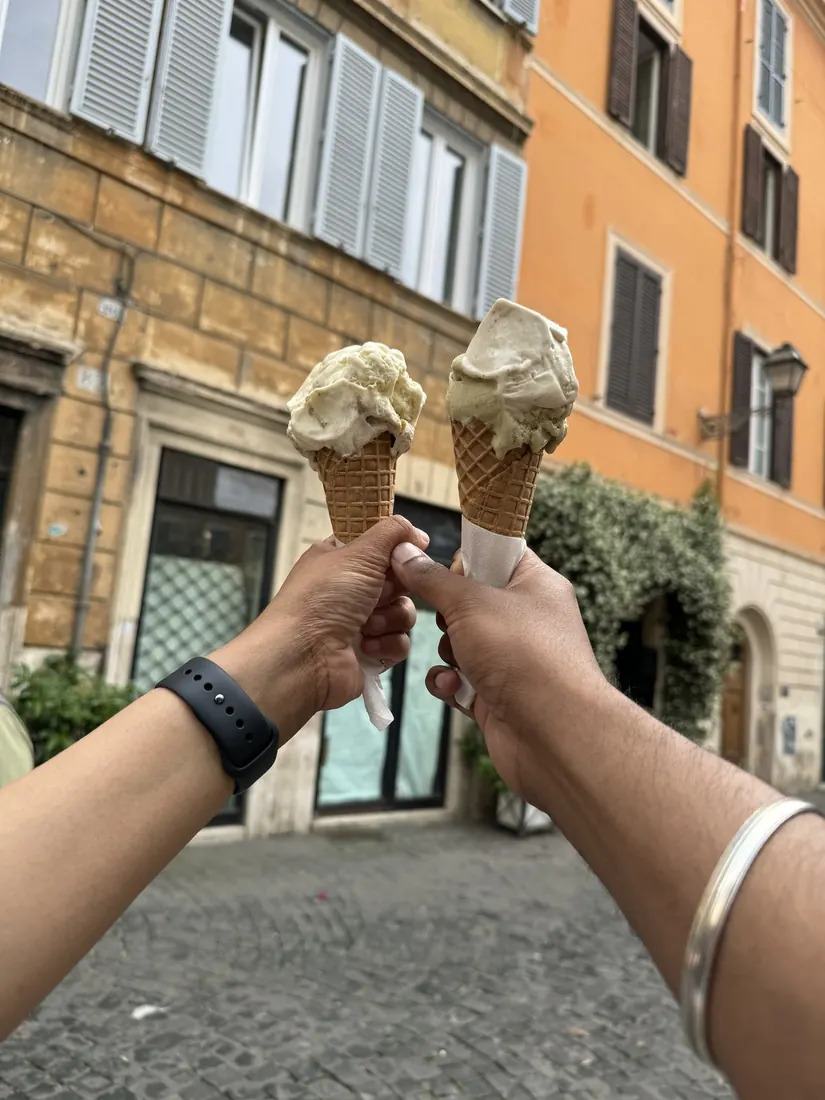
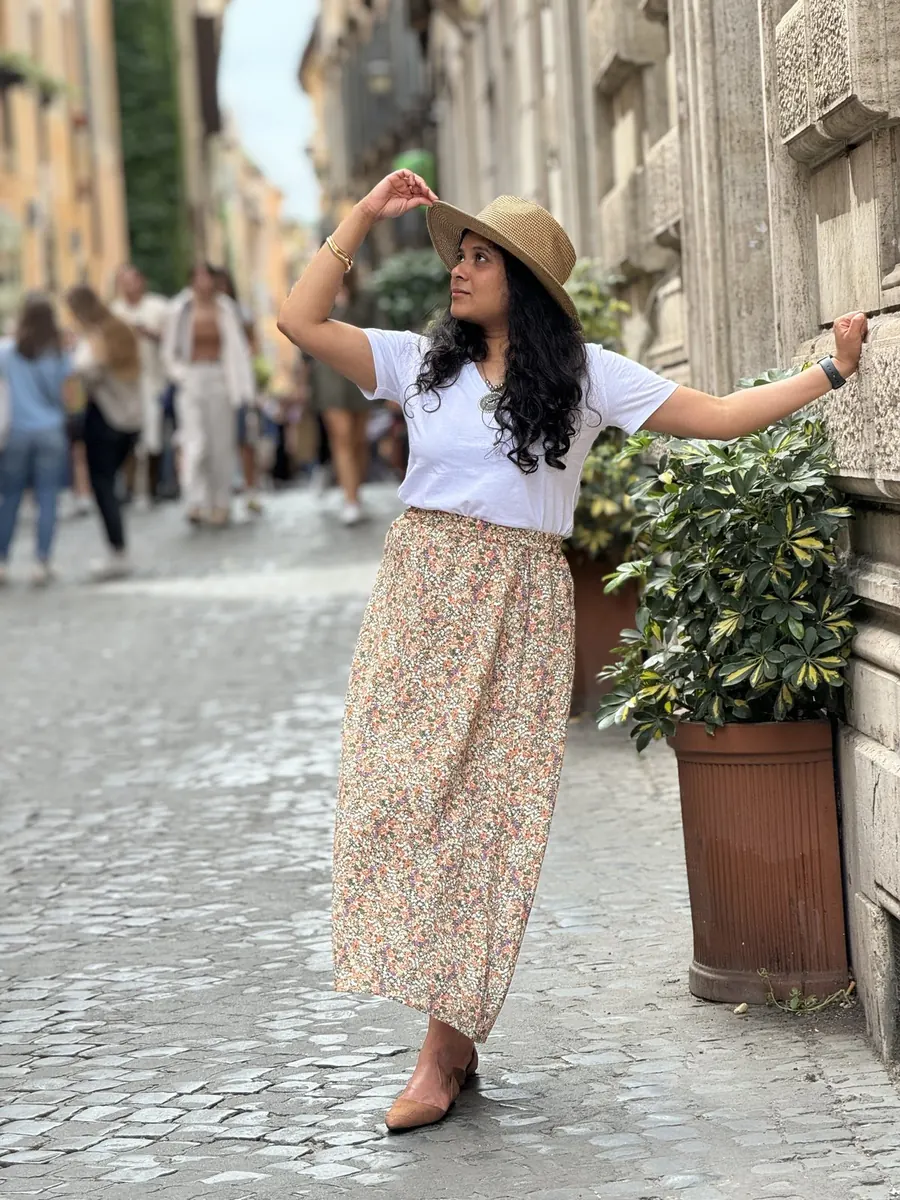
Somewhere between the Navona fountain and the gelato, Miss Vibes discovered the perfect Roman wall: warm stone, a flowerpot, golden light. I became her unpaid photographer. A dozen takes, six poses, one hat tilt. (The hat tilt won.) This is what “keep it cozy, Binu will sort it out” looks like in real life: I sorted out the camera angle.
And now one of my fond moments of the day.
That evening, we were wandering inside a grocery store looking for cheap Italian wine, and then suddenly we heard Malayalam across the aisle. A lady was pointing at a bottle of wine and telling a young man:
A voice across the aisleMone, athilum nallathu ithaanu."Son, this one's better than that one." (Every Malayali auntie calls every young man mone.)
Me, quick as a flashEnkil enikkum orennam eduthu thaa!"In that case, pick one for me too!"
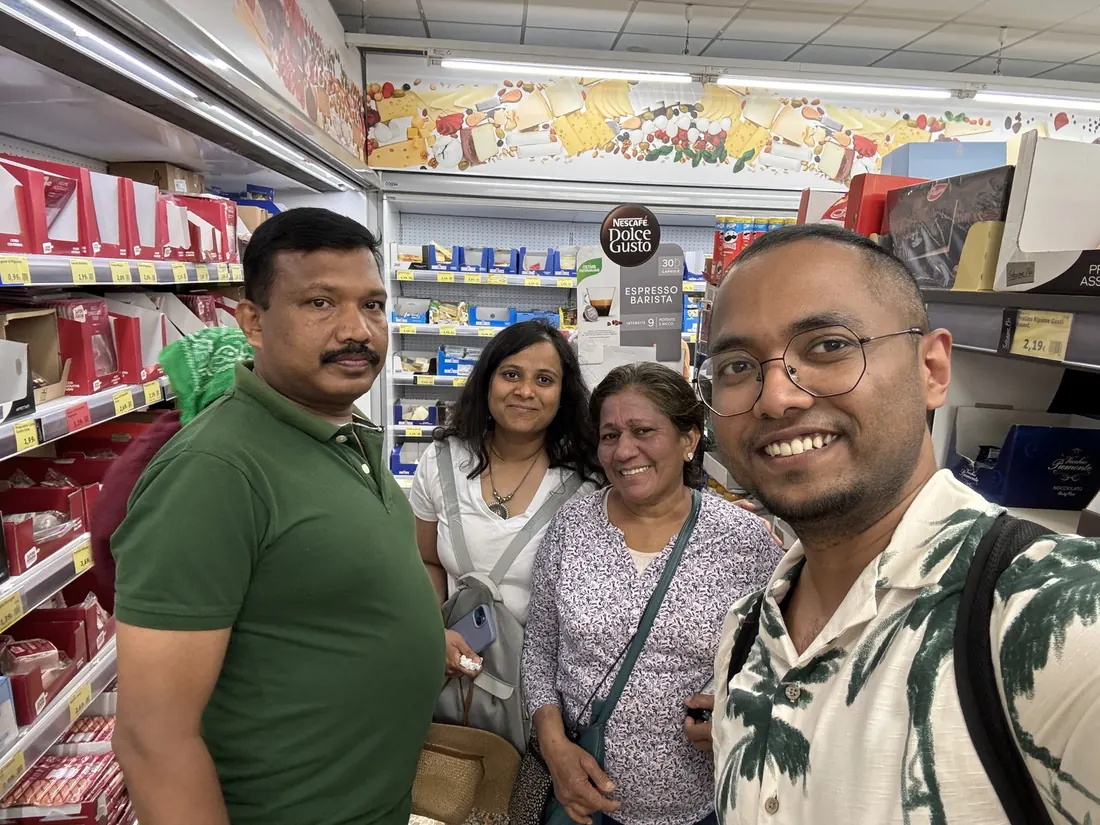
She turned, laughed, and we said hello. That’s how we met Celine Auntie, who has lived in Rome for 24 years. When we said we’re from Thrissur, her whole face lit up. Her family home is right there, near Pazhuvil. Two strangers in a foreign city, from the same corner of Kerala, standing in front of the wine. We swapped numbers, and she promised that if anyone we know visits Rome and needs tips or help, to reach out to her. Malayalis really are in every corner of the world, and I’ll never get tired of that.
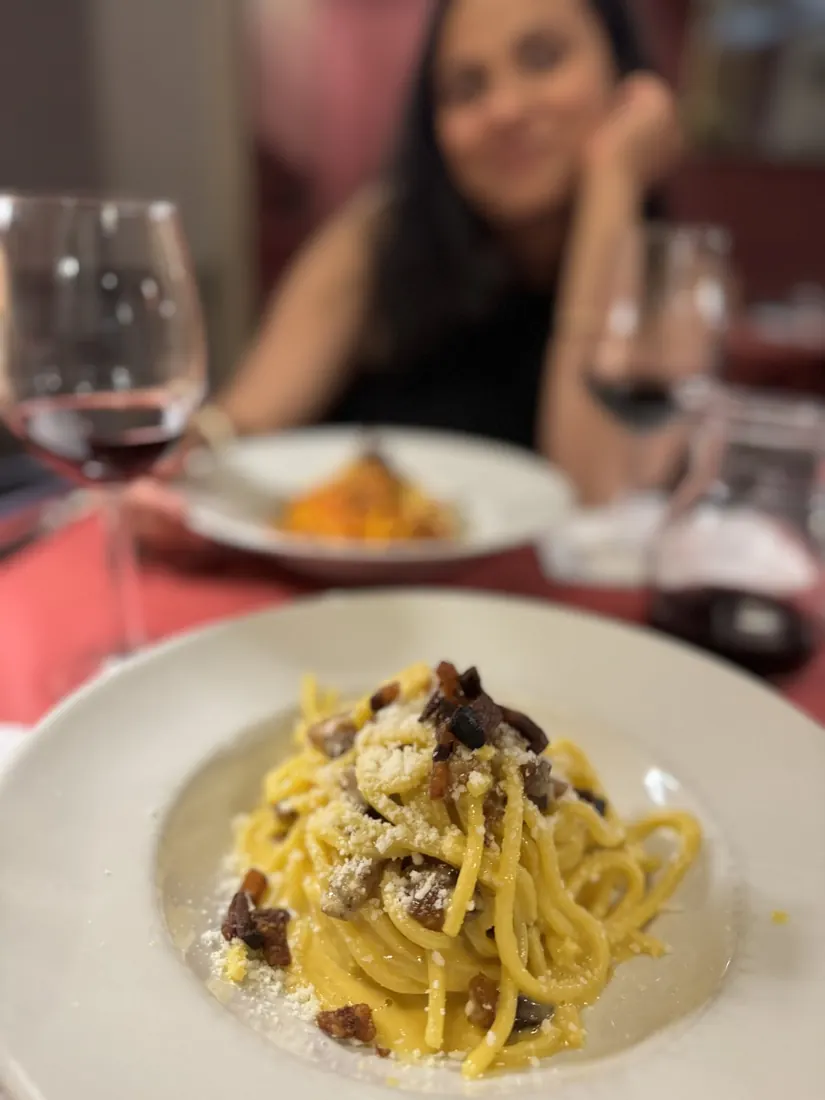
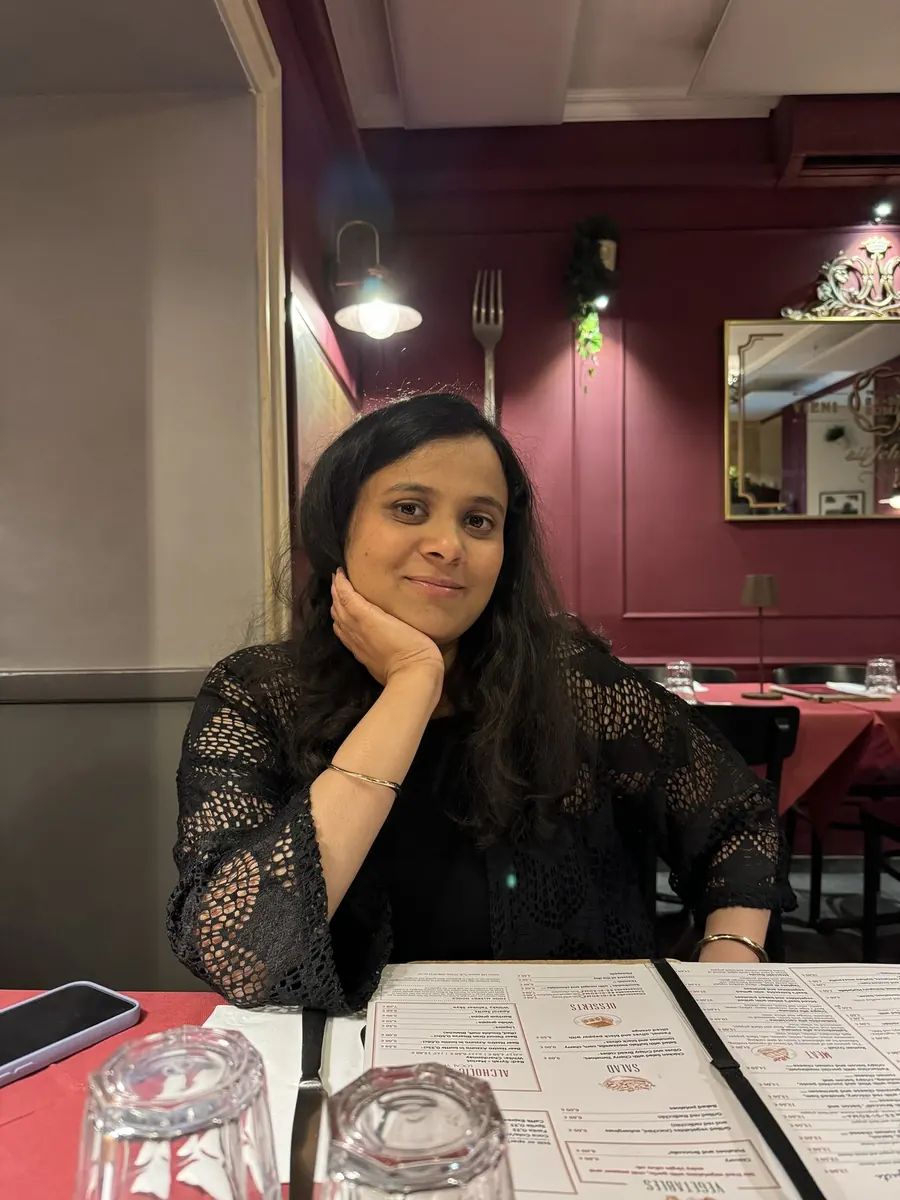
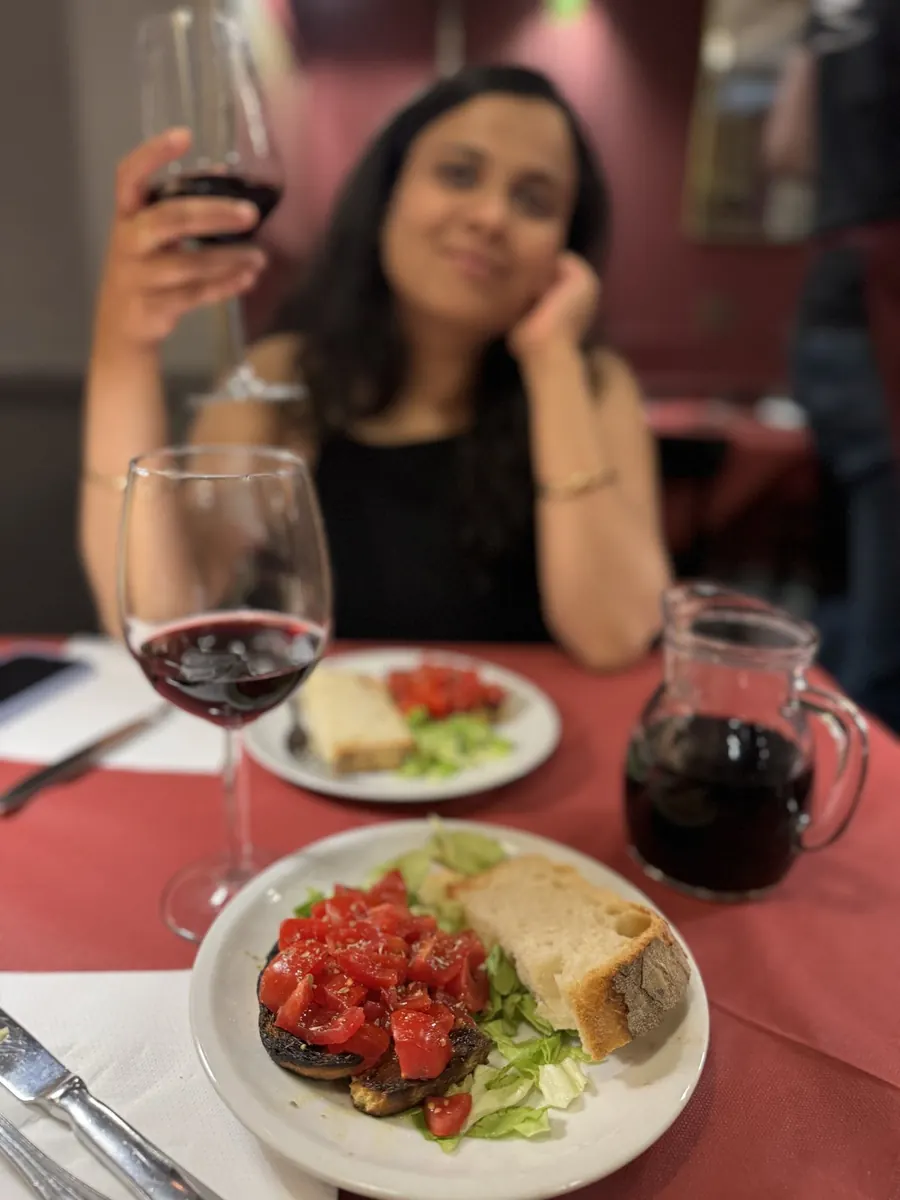
Dinner was a neighborhood trattoria, Trattoria Re di Roma. We had both changed into black for dinner without discussing it, which is the kind of thing that happens when two people have shared a life for a while. There was a starter of grilled aubergine under a pile of fresh tomato, a carafe of red wine, and then Arsha’s amatriciana and my carbonara, with crispy guanciale and the confidence of a dish that has been perfect for centuries. Both were rich, comforting and gone embarrassingly fast.
And that was Day 2: popes, pillars and one very welcome piece of home. Tomorrow was the day I’d set the alarms for.
Bread, Circuses and 25,000 Steps
Sun, May 26 · Ancient Rome
This was the day I planned the whole trip around.
When we started planning Italy, two things were non-negotiable: the Vatican Museums and the Colosseum. And the Colosseum is the toughest ticket in town. They release tickets exactly 30 days ahead, hour by hour, so I was awake at 1 AM, then 2 AM, refreshing the page like it owed me money, racing the bots. The special underground tour vanished in the blink of an eye. But I snagged regular morning entry at about 9:30 and punched the air in my kitchen. If you don’t book ahead, you either stand in line for hours or pay a scalper a ridiculous markup.
Breakfast first, Italian style: light, sweet, no savory spread. Cappuccino plus a cornetto, the Italian croissant. I had mine filled with sweet cream. Arsha went plain, like a professional.
The sky was blazing blue when we reached the Colosseum, no clouds at all, the opposite of yesterday’s grey. Audio guide in ears, we walked in. (Bonus: a pack of cyclists came whizzing past the Colosseum just as we arrived, and I filmed the whole parade.)
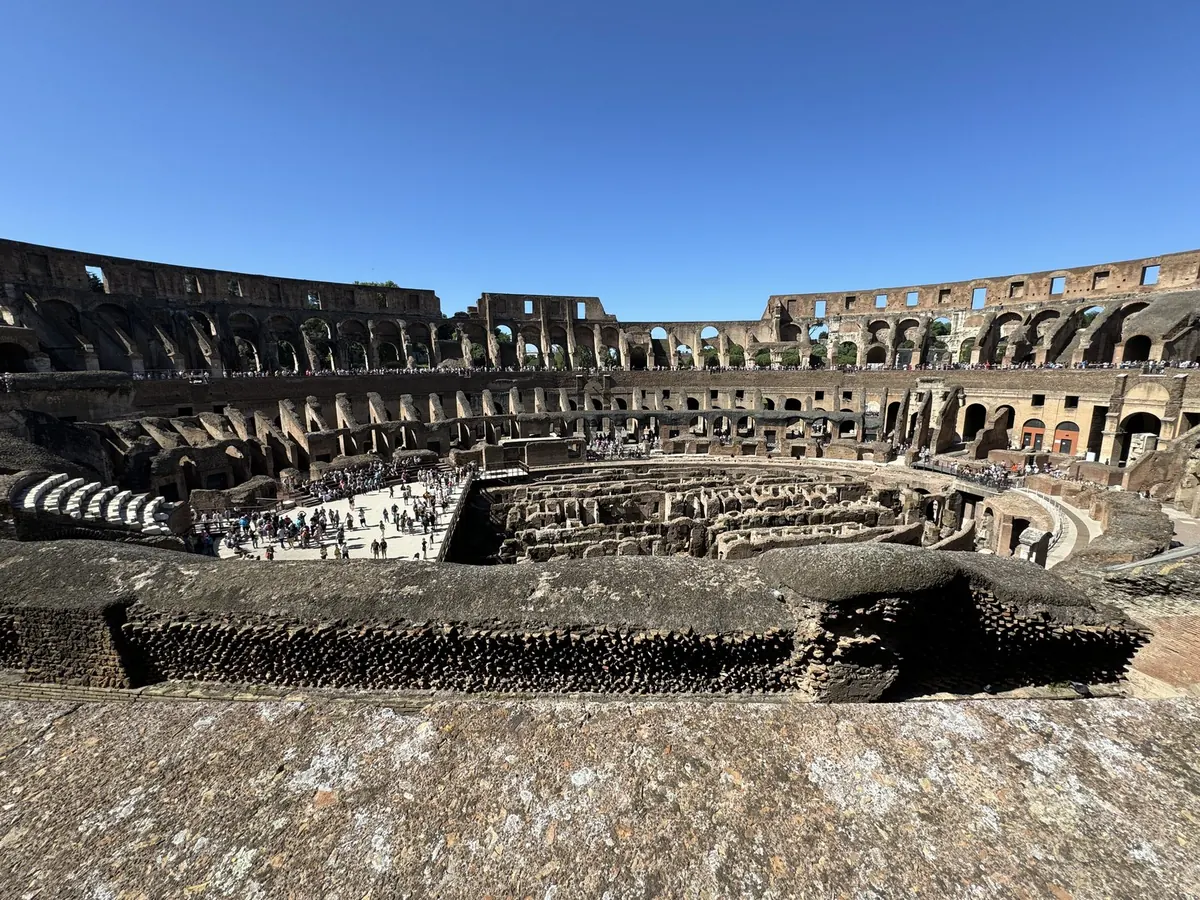
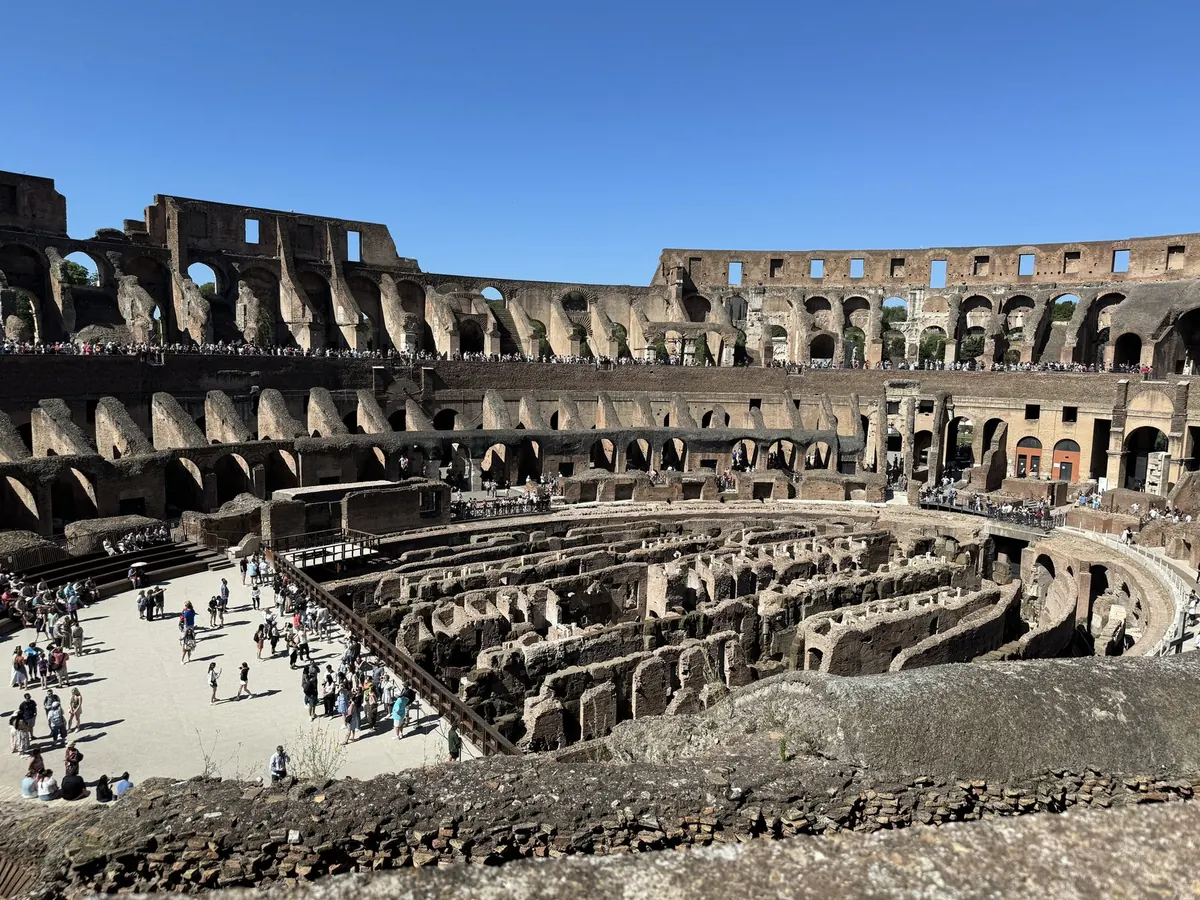
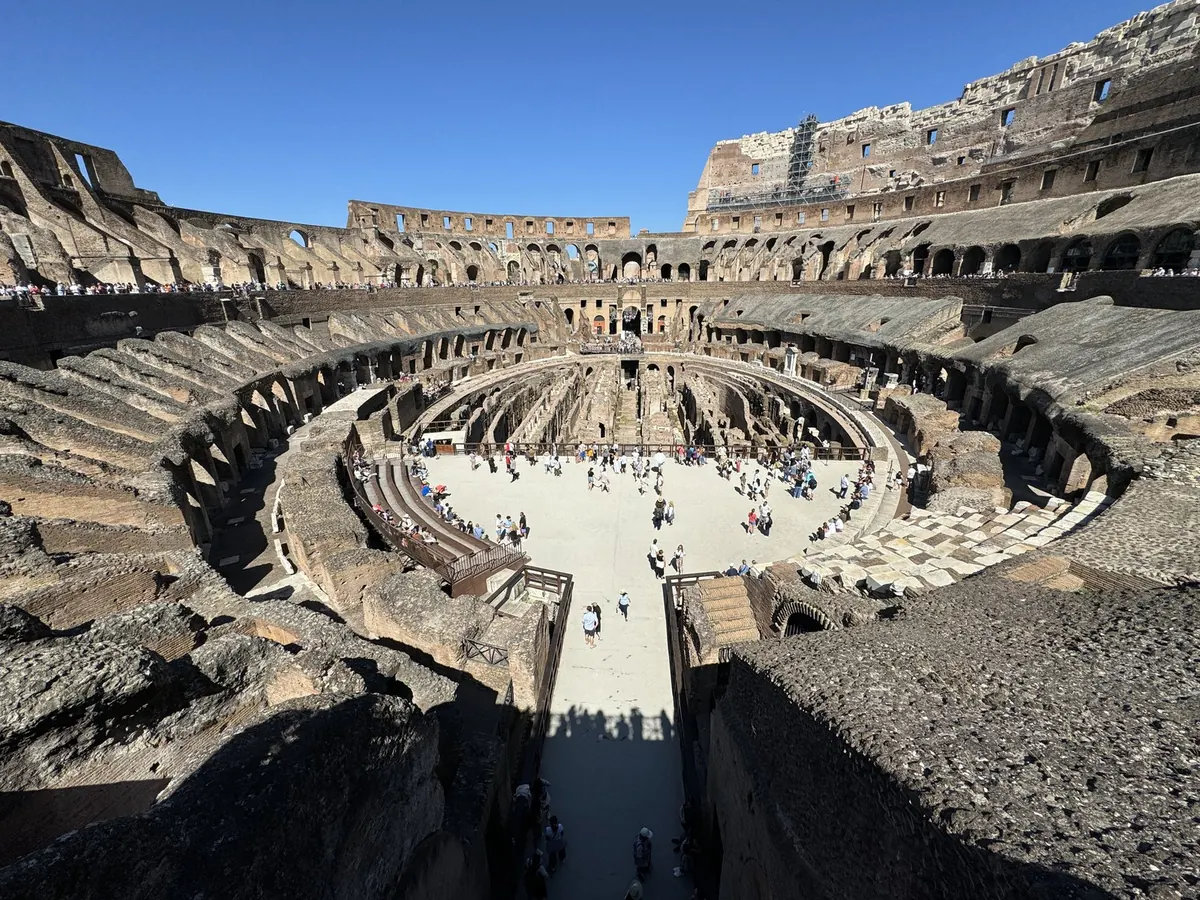
Honestly, I hadn’t expected much. I knew it’d be huge and iconic, tick the box. But the mechanics of it blew my mind. Over 50,000 people could sit there, with 80 exits so the crowd could flow out in minutes. Under the arena floor was a whole hidden maze of corridors, cells and lifts worked by ropes and pulleys, where lions, leopards and even giraffes (from Africa!) were launched up through trapdoors into the arena. No radios. No electronics. Just thousands of people who all knew exactly what to do, at exactly the right time.
As a project manager, I stood there with the biggest, nerdiest grin on my face thinking: this is the best-run live event in history.
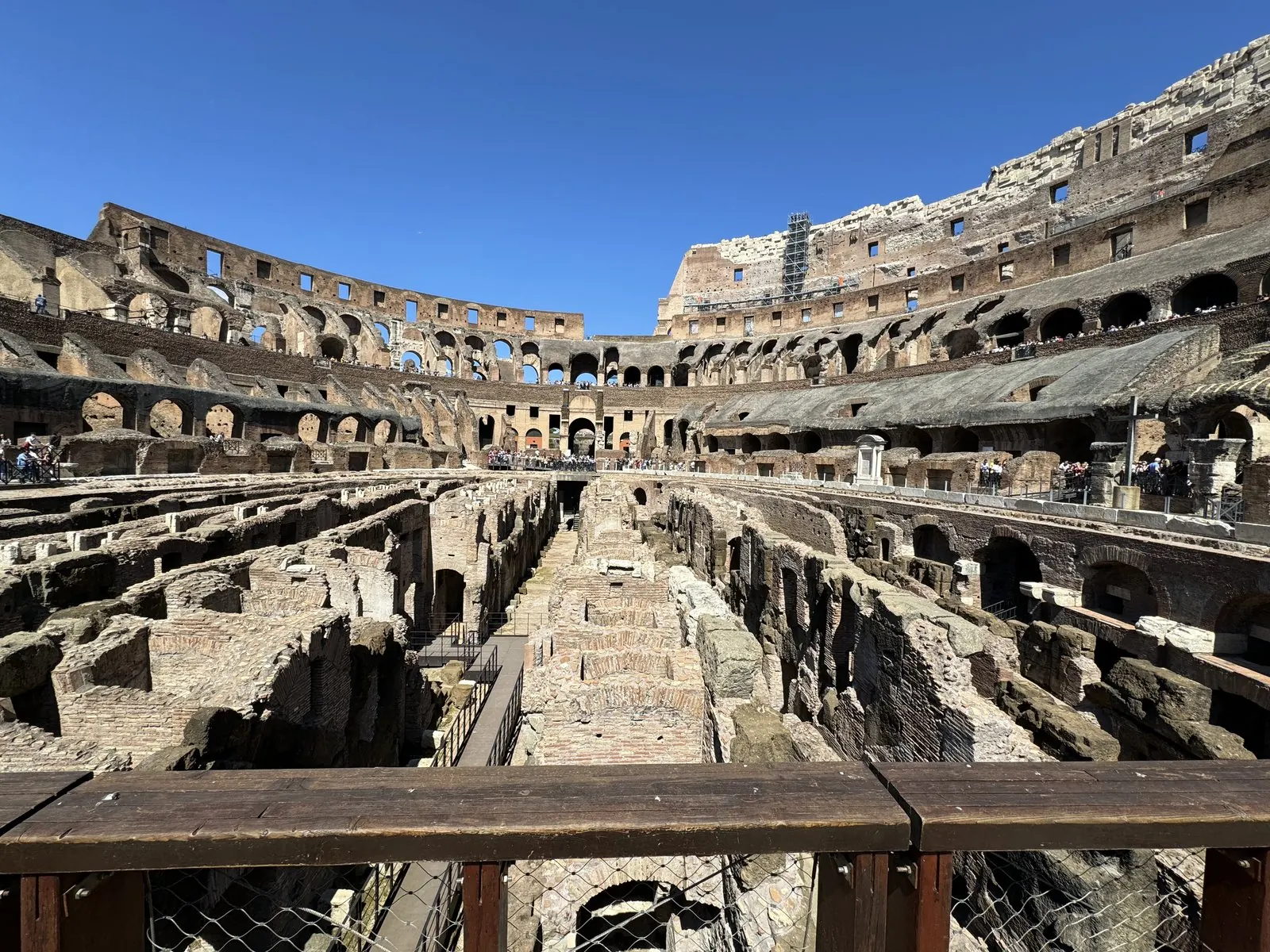
And then the other feeling: the weight. Walking on the arena floor, you can’t help thinking about everything that happened there, and how much blood was spilled on that ground. Rulers kept the public happy with “bread and circuses”: free food and non-stop spectacle. The outer wall is half gone now, and the little square holes all over the stone are where people dug out iron clamps for scrap. What’s standing today is the skeleton of something that must have looked unbelievable in gleaming white.
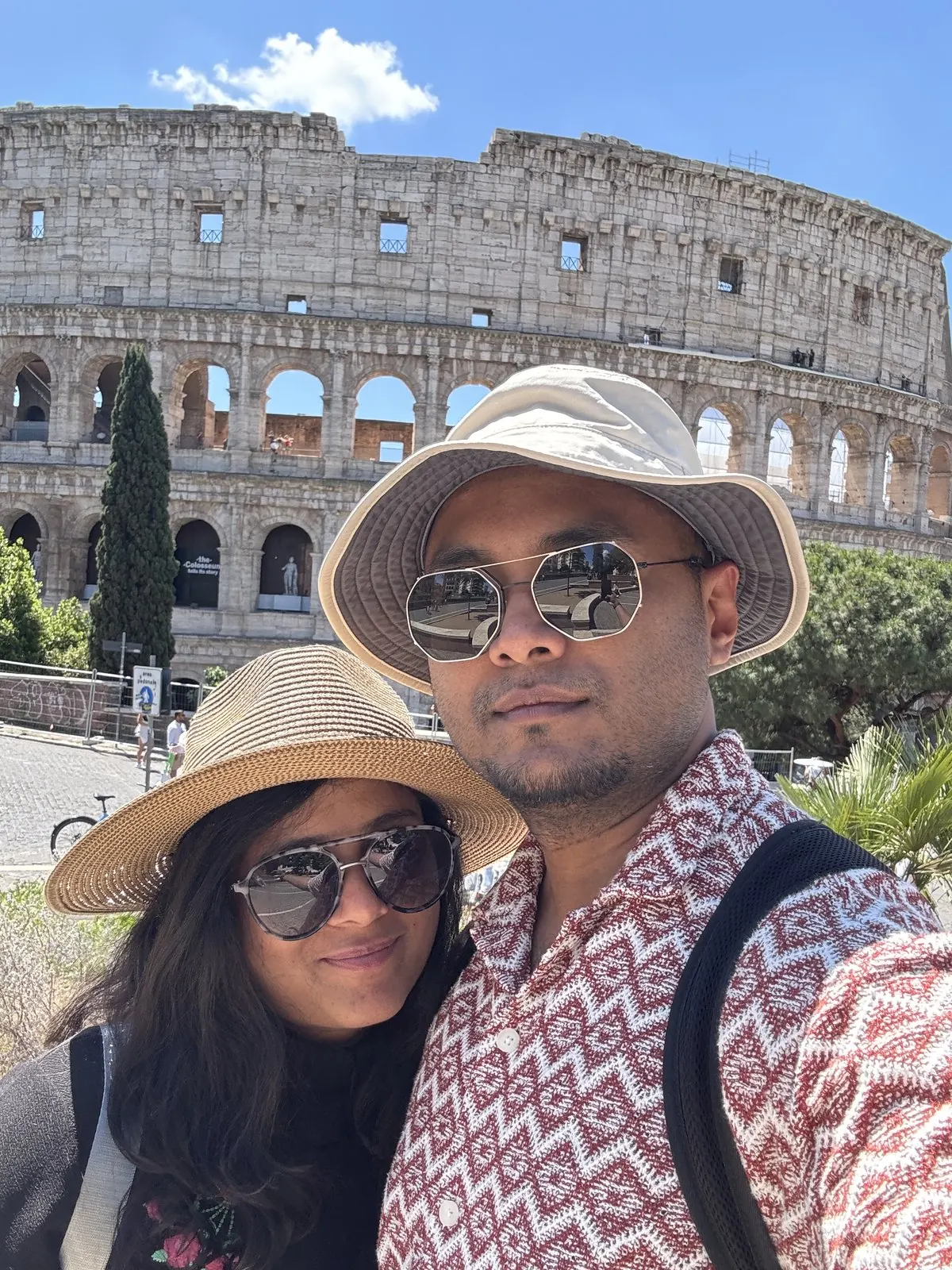
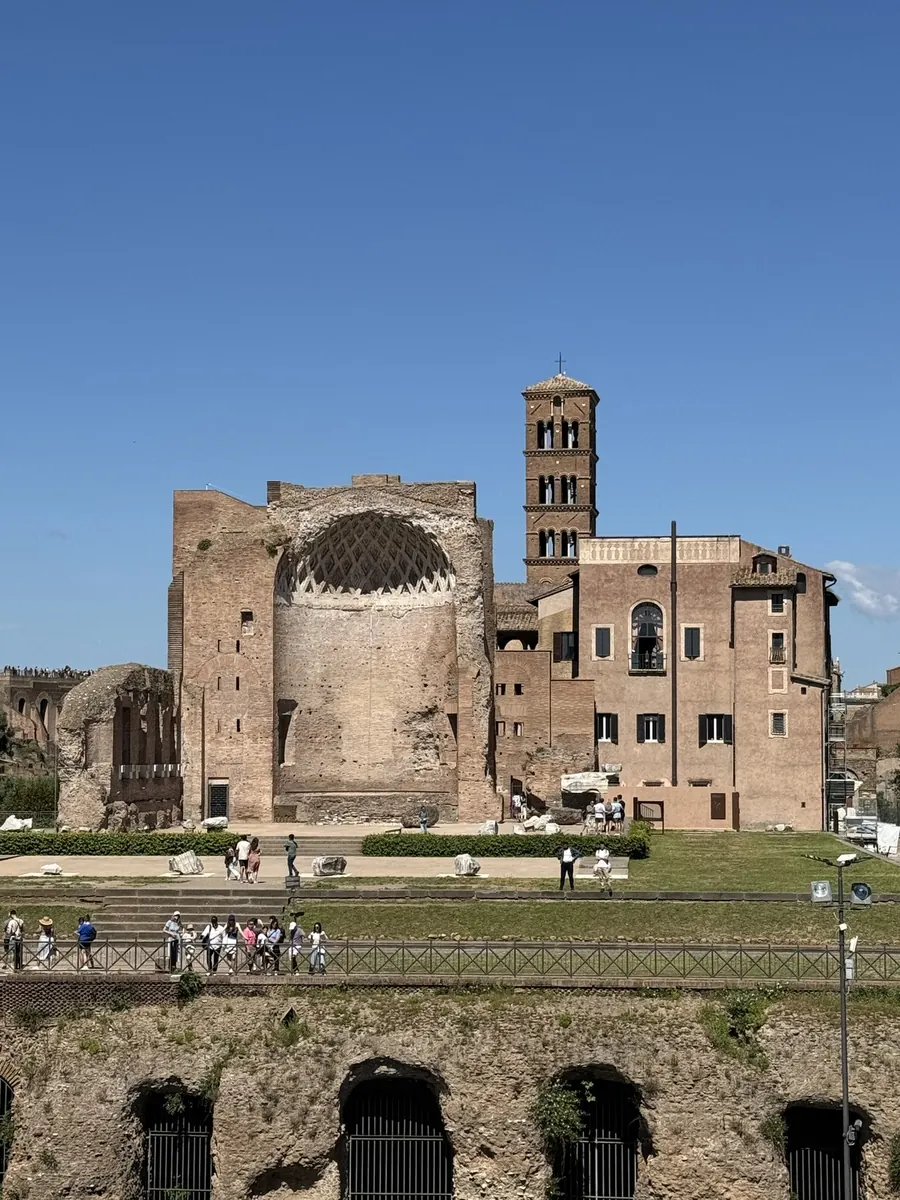
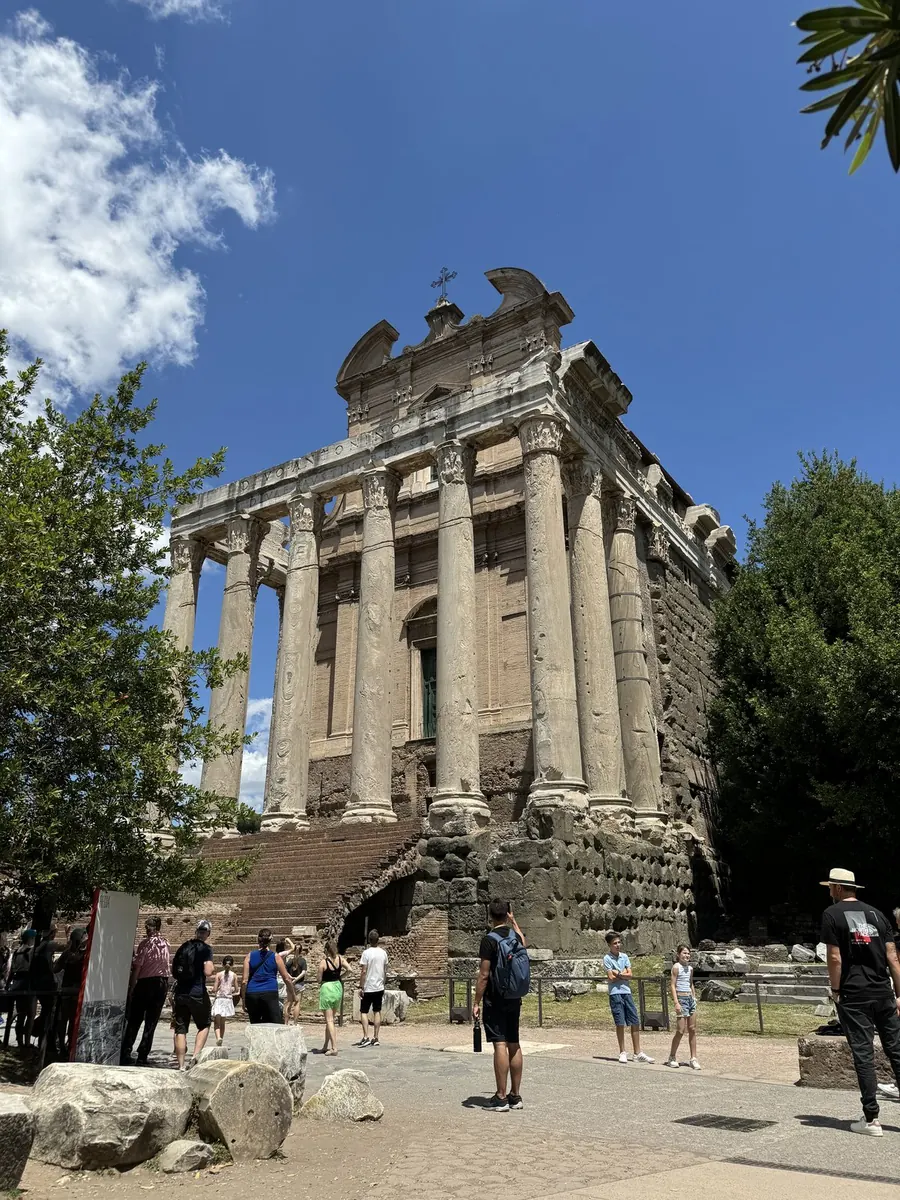
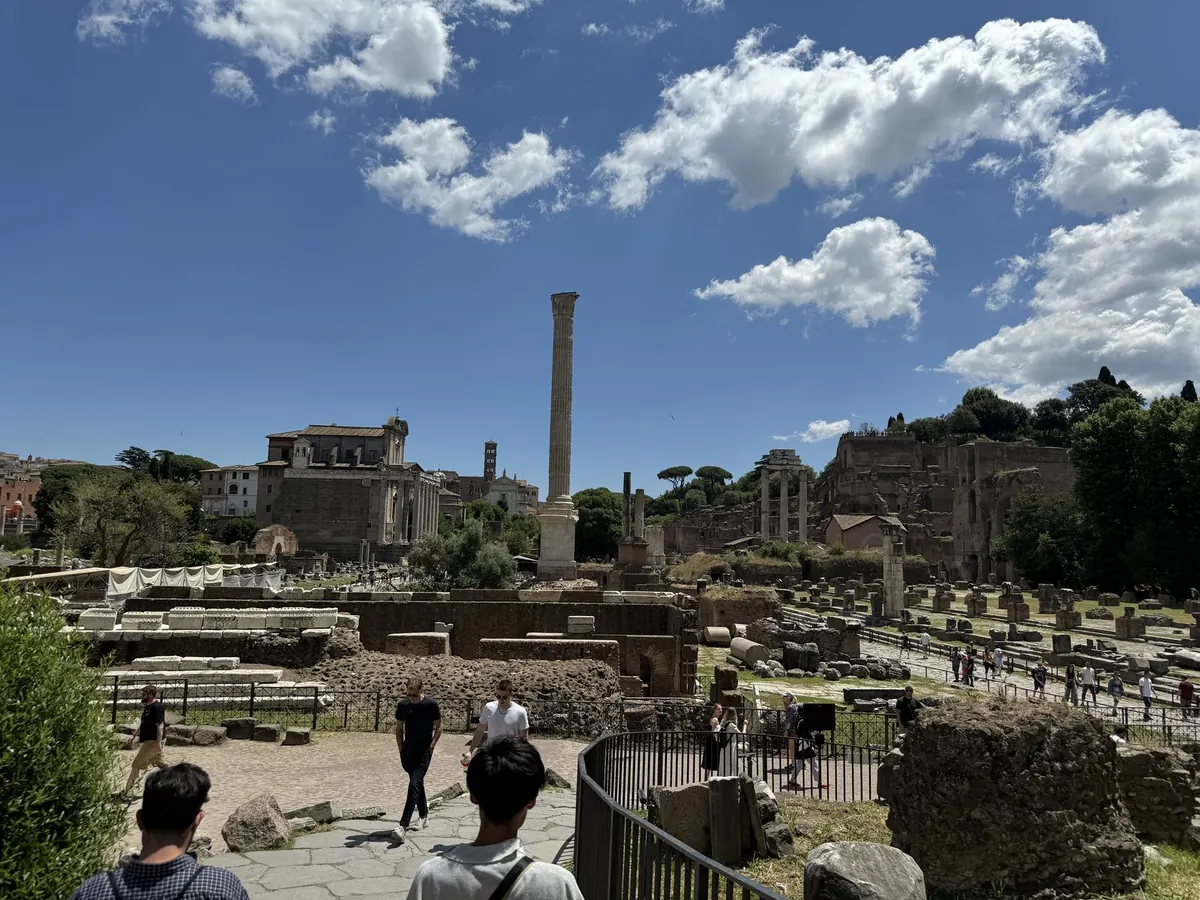
Right across from it: the Roman Forum, the civic heart of ancient Rome. You wander past the Senate House, old courts and markets, and the spot where Julius Caesar was cremated. Under the midday sun it was gorgeous and absolutely exhausting.
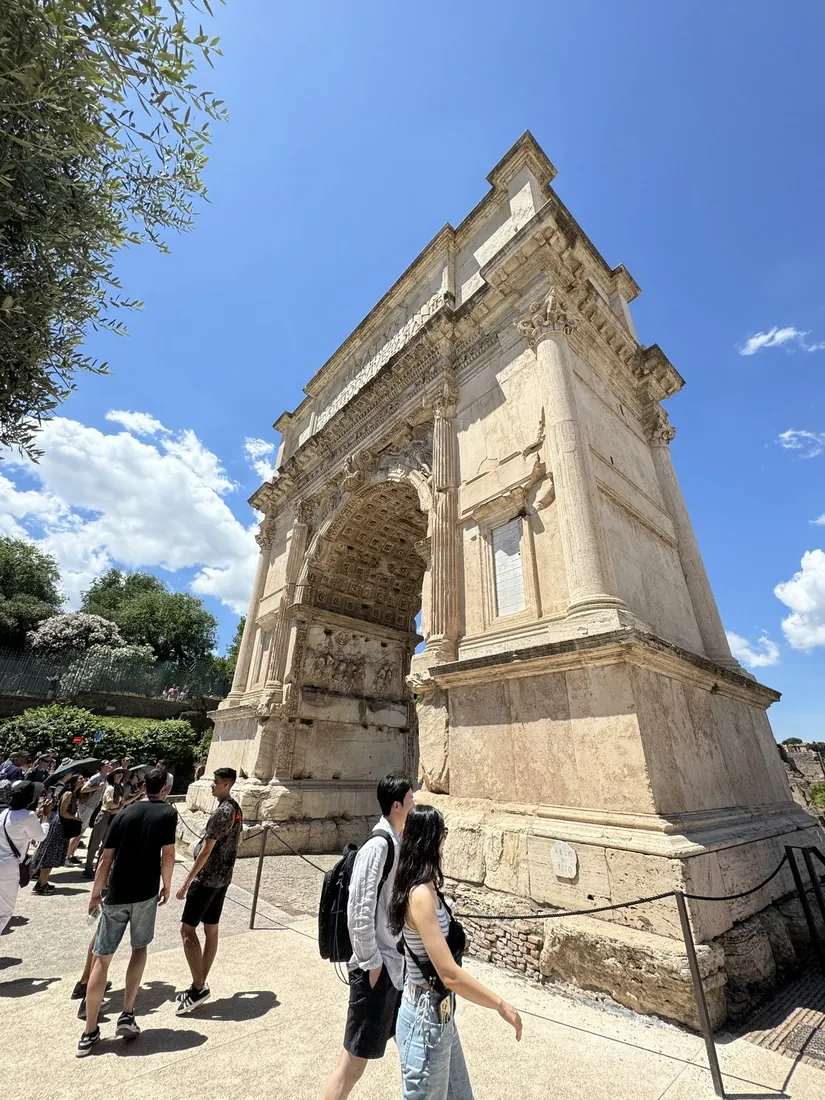
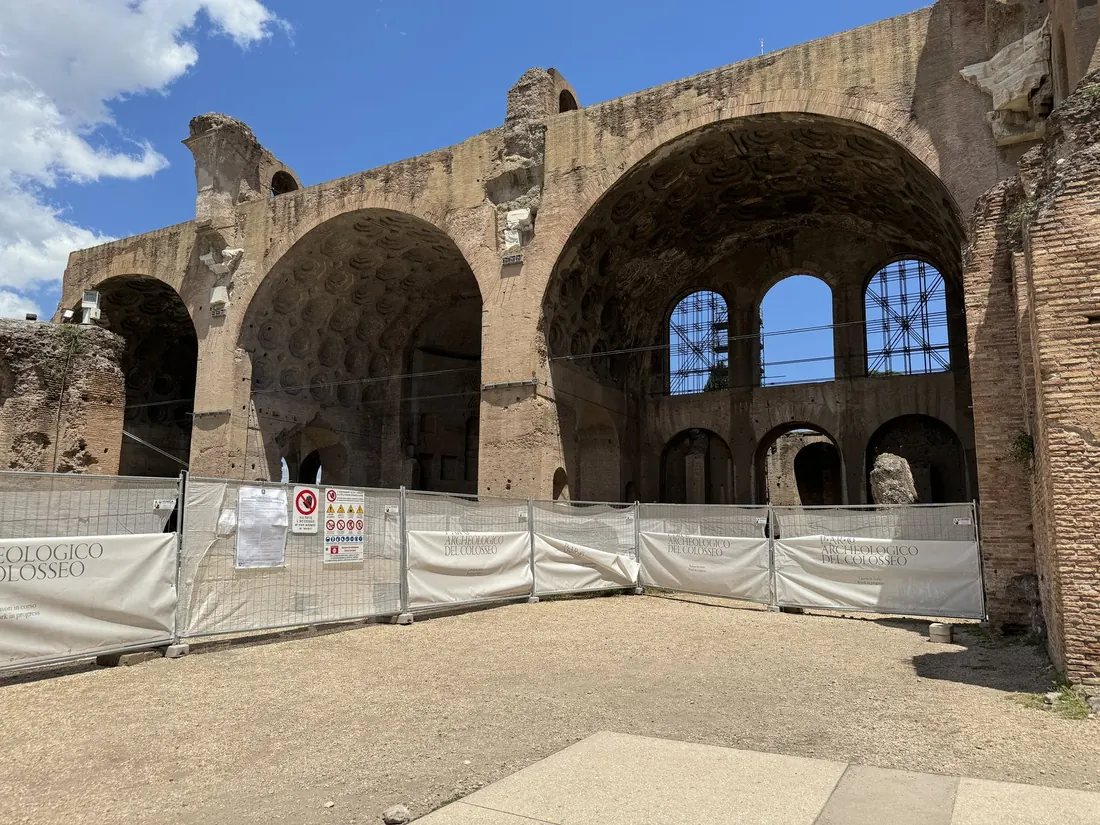
Two Forum landmarks deserve a name: the Arch of Titus, nearly 2,000 years old and still doing its job as a gateway, and the enormous arches of the Basilica of Maxentius, which look like someone built a cathedral and then forgot the roof. We climbed Palatine Hill too, where Rome’s emperors built their palaces (the word “palace” comes from the hill’s name), and from the top you look down on the Forum and the Circus Maximus we’d seen the night before.
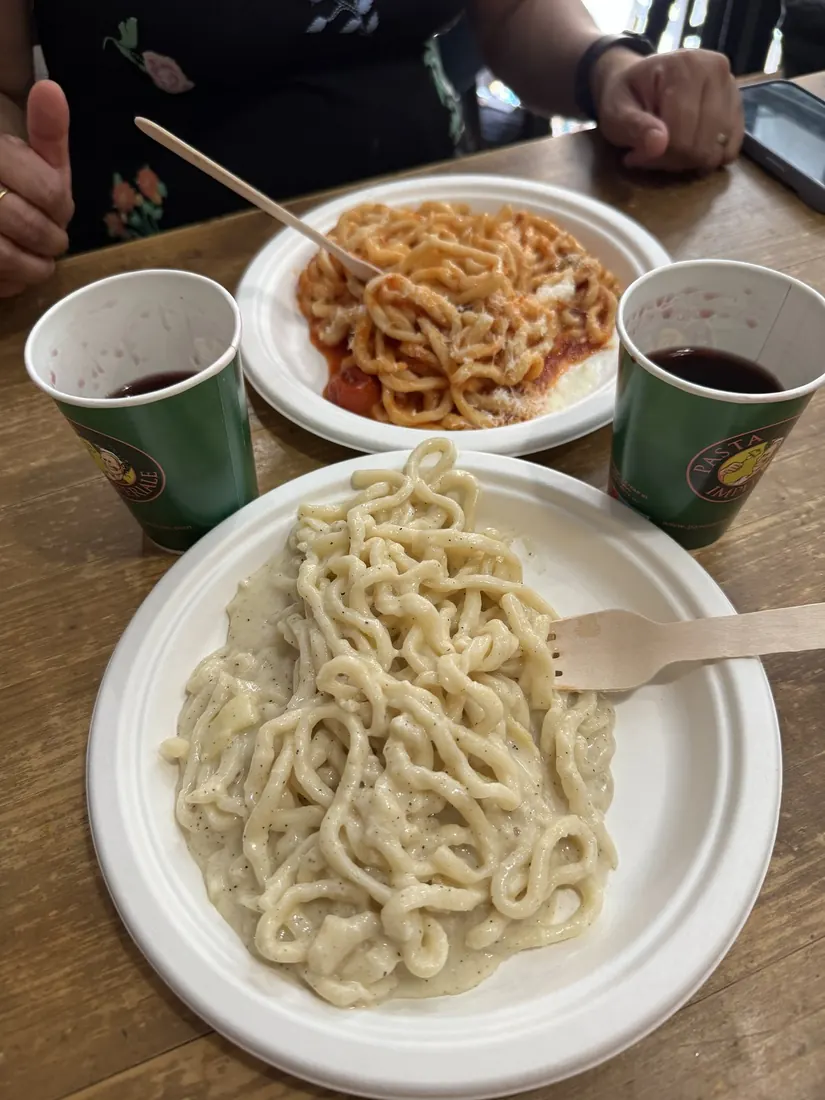
Lunch was a takeaway pasta counter in Monti: a chalkboard of sauces (amatriciana, cacio e pepe, pesto, ragù), fresh pasta handed over on paper plates, and red wine in paper cups. No tablecloth, no waiter, no regrets.
On the way to the Pantheon you can’t miss the giant white monument in Piazza Venezia (the Altare della Patria), with bronze chariots galloping off its roof. Romans call it “the wedding cake” or “the typewriter,” depending on how kind they feel.
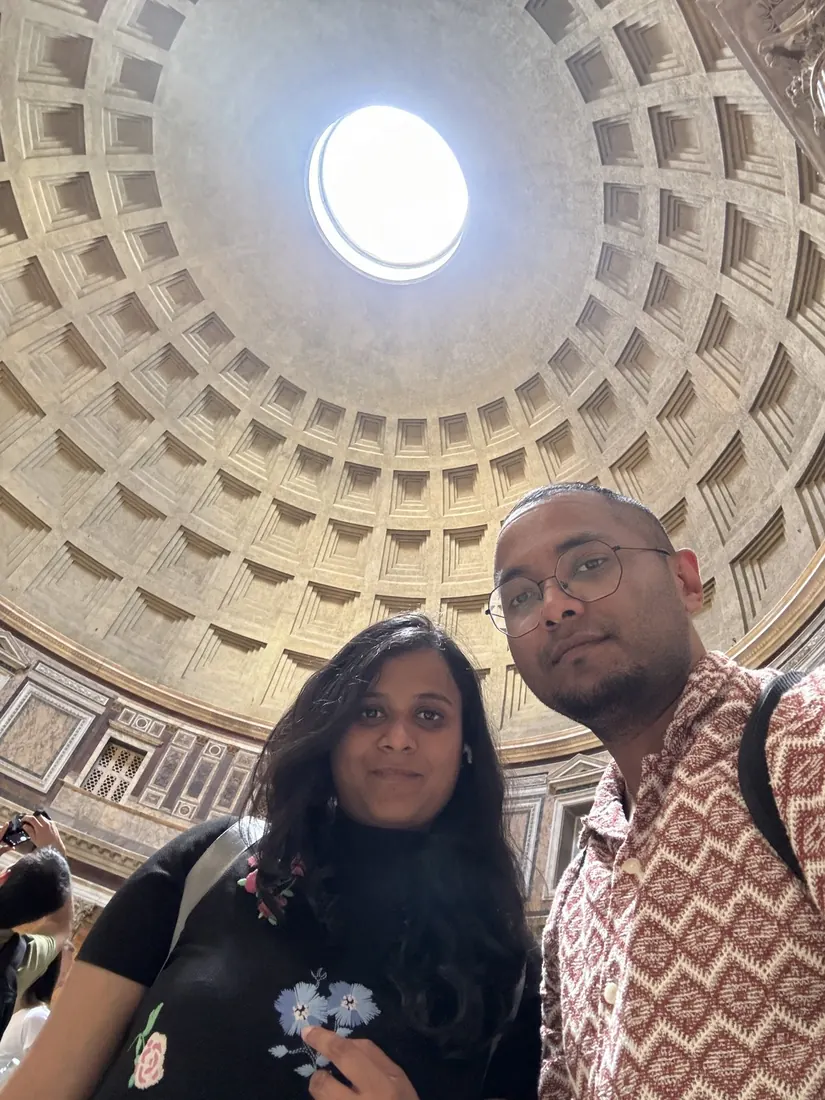
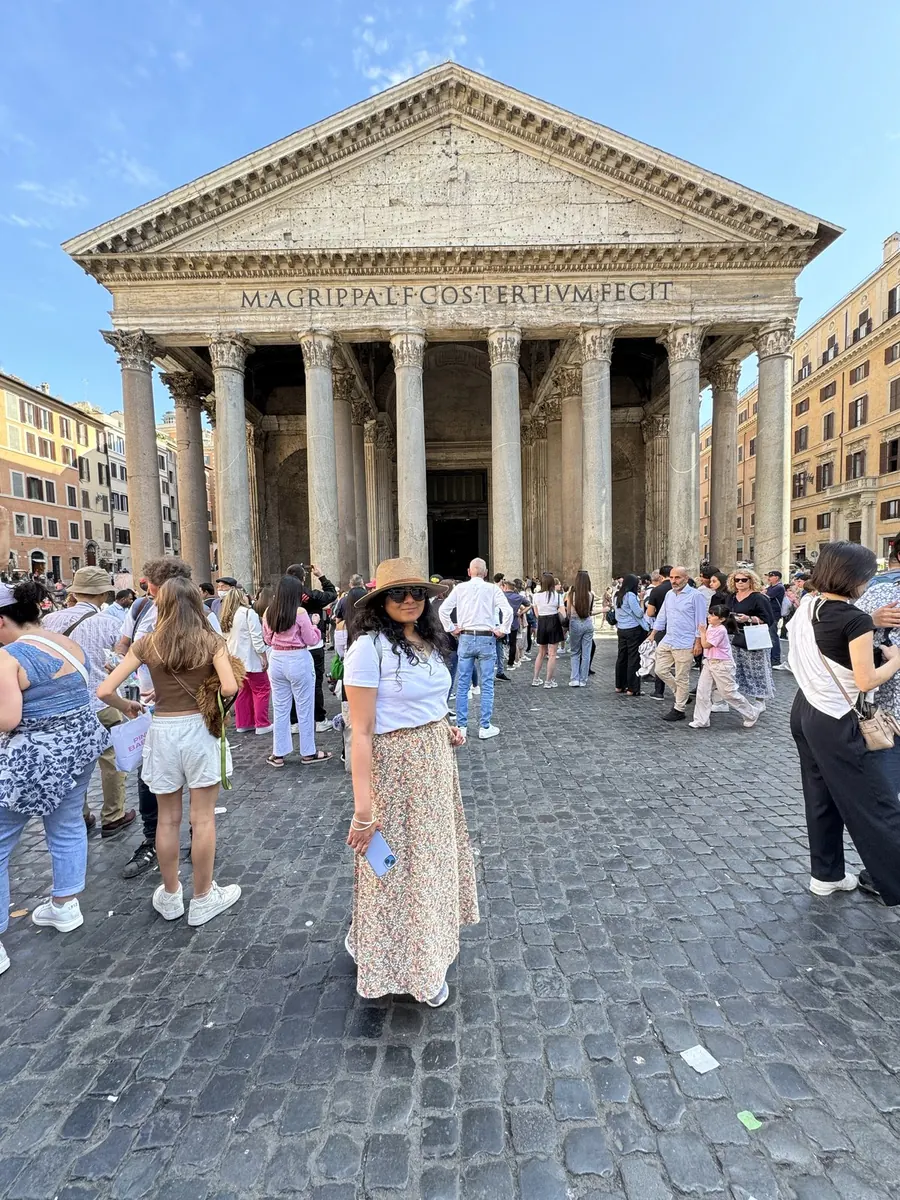
Revived, on to the Pantheon. Two thousand years old and still standing, because someone had the sense to turn it into a church early on. The dome is unreinforced concrete (a record-holder, as far as I know), and the very top has a 9-meter opening, the oculus, which lets in light, and rain. A sunbeam drops in like a spotlight. With Raphael’s tomb tucked inside, it’s one of the most impressive rooms I’ve ever walked into.
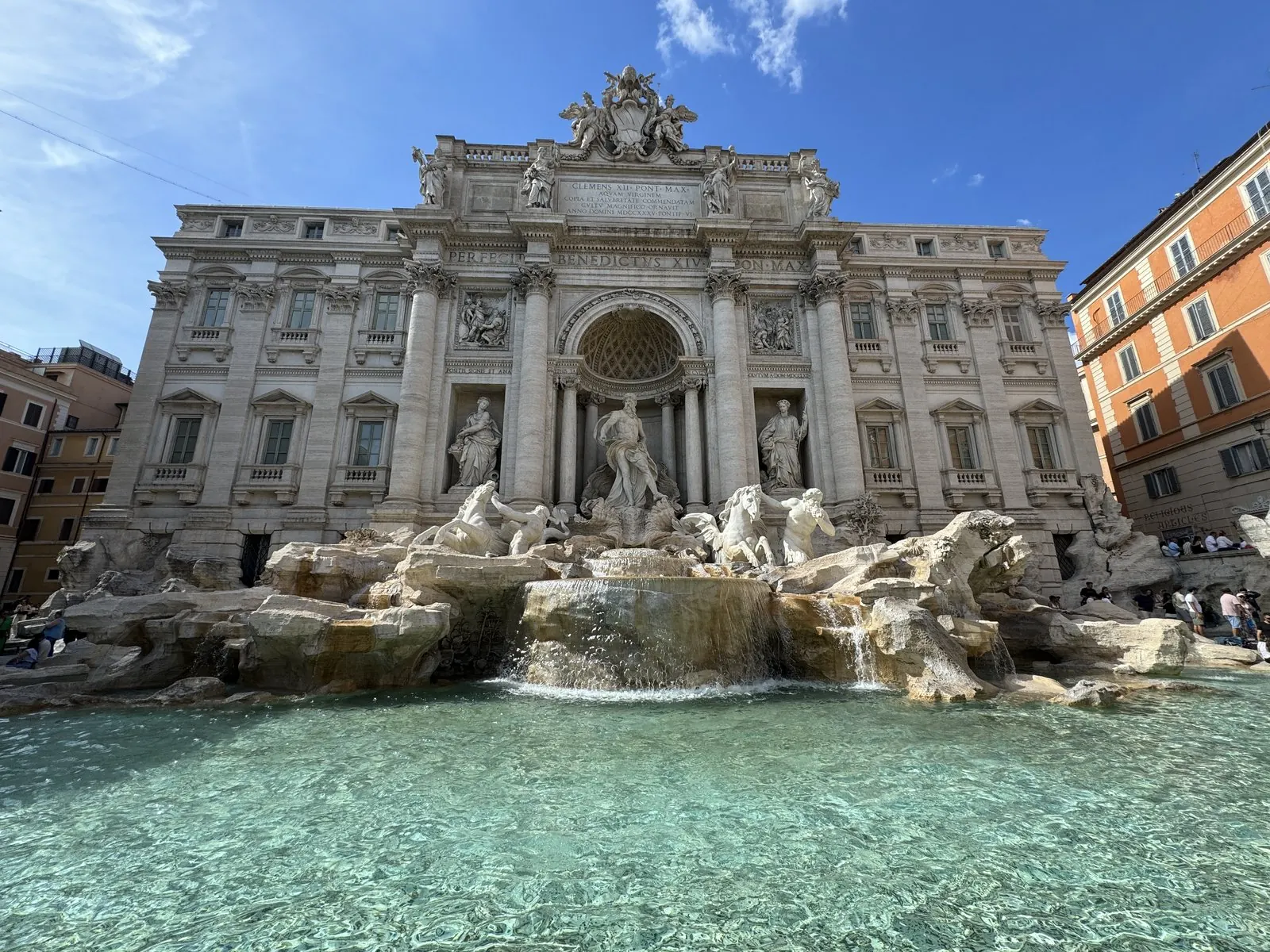
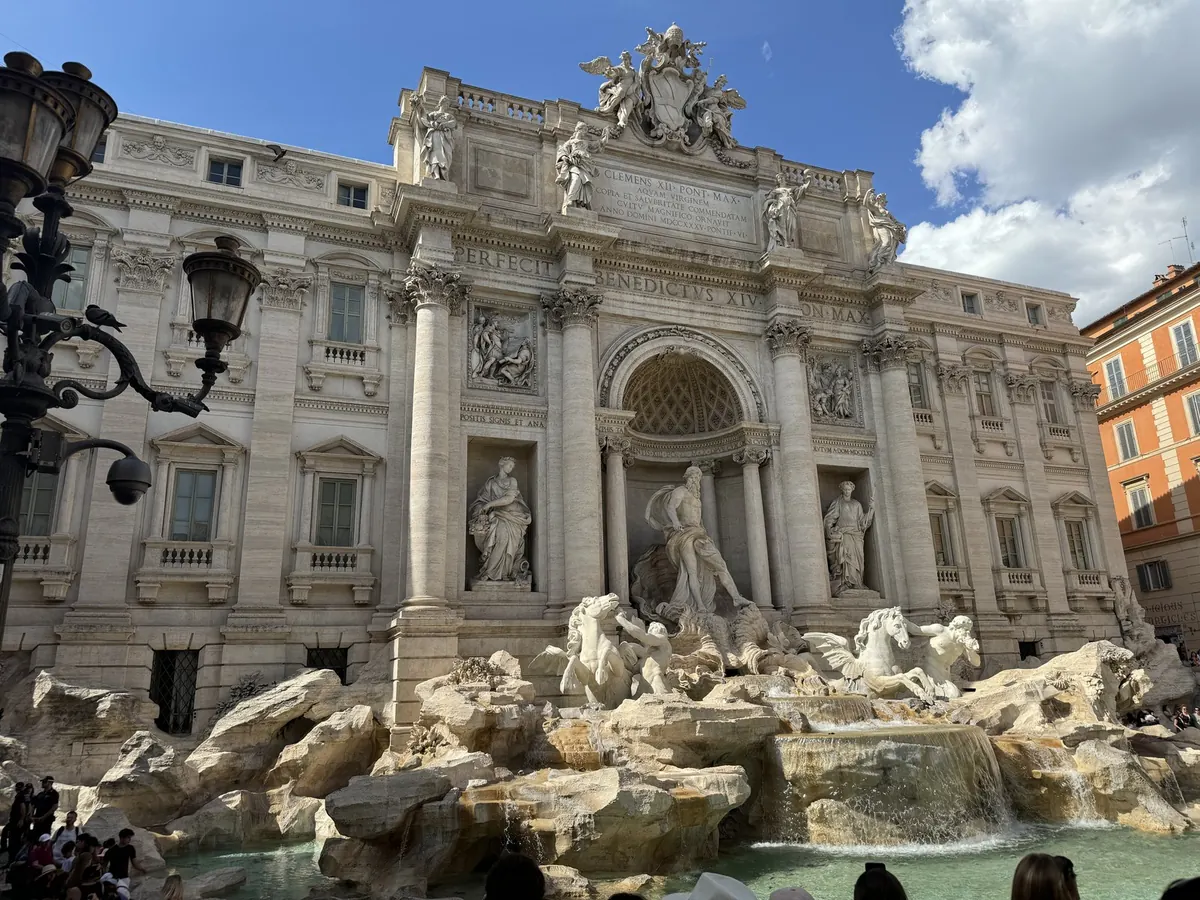
Next, the Trevi Fountain, packed with people, but we squeezed right up to the edge. Coin in the right hand, thrown over the left shoulder, so you come back to Rome. Fun fact: Rome’s fountains run on gravity, fed by ancient aqueducts, and the public ones, called nasoni, give you free, ice-cold drinking water on every street.
Rome’s cobblestones (sanpietrini) are no joke, and our feet complained loudly. We picked up more supplì (obviously), took them home, and called it a night, completely wrecked and completely happy.
25,000+steps, second day in a row
Tomorrow we’d trade the chaos for a train north.
Florence, the Exhale
Mon, May 27 · Rome → Florence
Original plan: four days in Rome, four in Switzerland, rest as travel days. Then I looked closer and realized Rome’s greatest hits fit in three days. Which meant a bonus city! The shortlist: Venice, Pisa, and Pompeii, which has been a dream of mine for years, but doing it justice needs a full day and makes the train route north a mess. So Florence won, sitting right on the high-speed line between Rome and Milan. (Pompeii, I’m coming for you next time. It’s on the list.)
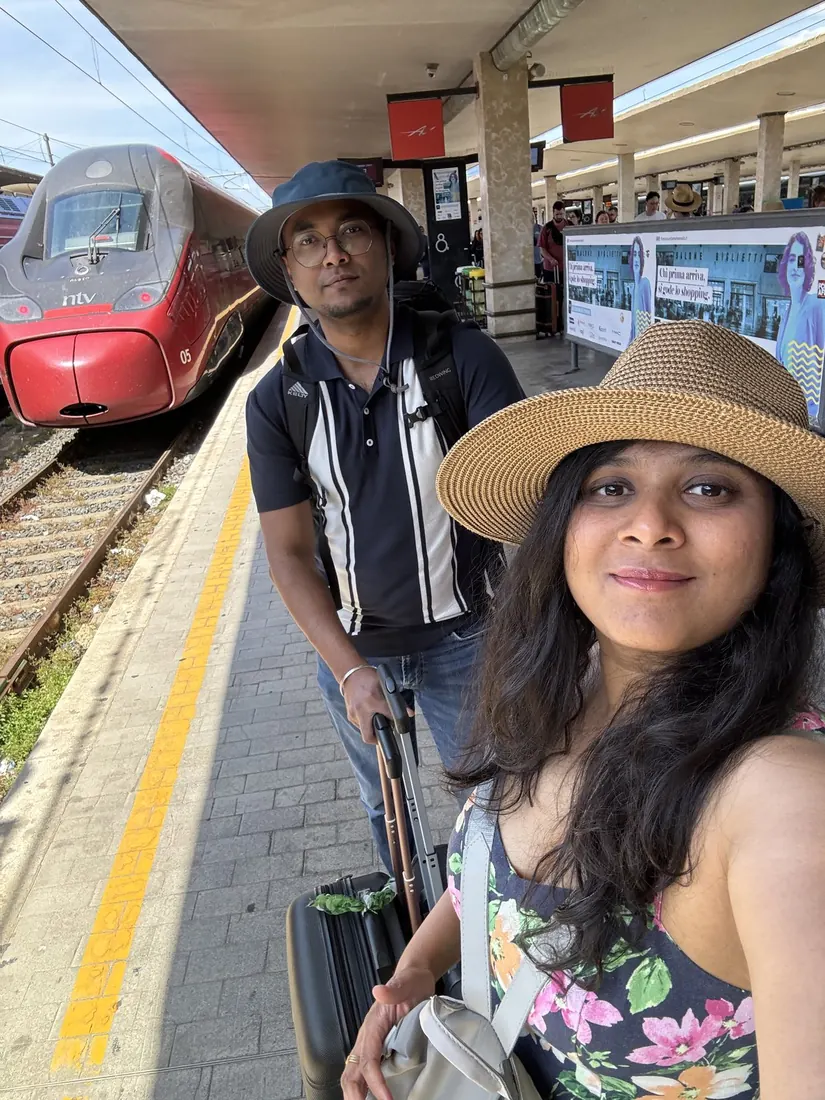
We checked out of Rome, hopped on the fast train, and rolled into Florence a little before 2 PM.
Our little hotel was a stone’s throw from Santa Maria Novella station, behind a gate with a handwritten sign explaining how to open it. The instructions were half the charm: part check-in, part treasure hunt. By about 3 PM we were out the door, Arsha in her flowery jumpsuit and sun hat, ready to meet Florence.
And the mood changed instantly. Rome is loud, huge and gloriously weathered.
Florence is calm, compact and cuddly.
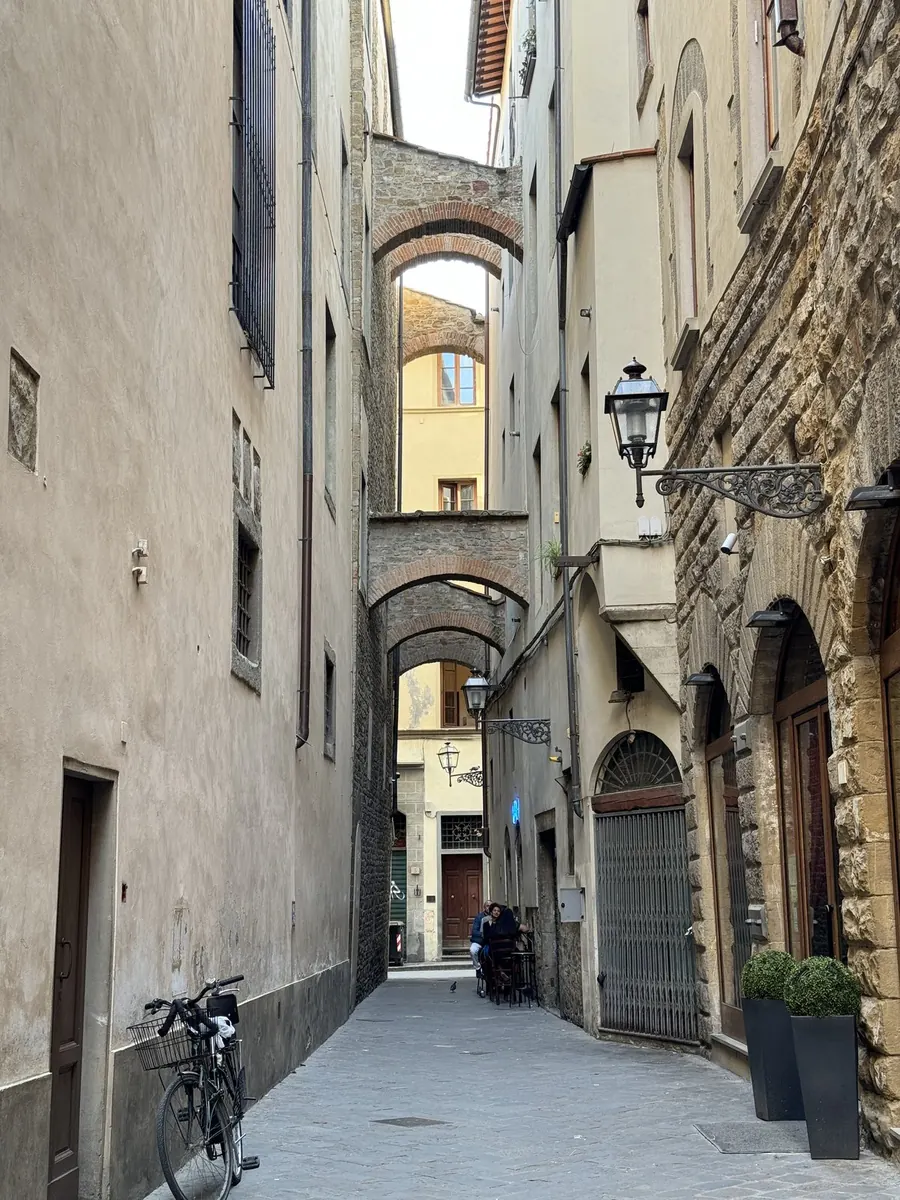
The streets are smooth flat stone instead of Rome’s ankle-twisters, windows have shutters, alleys are narrow and warm. After Rome, it felt like a long exhale.
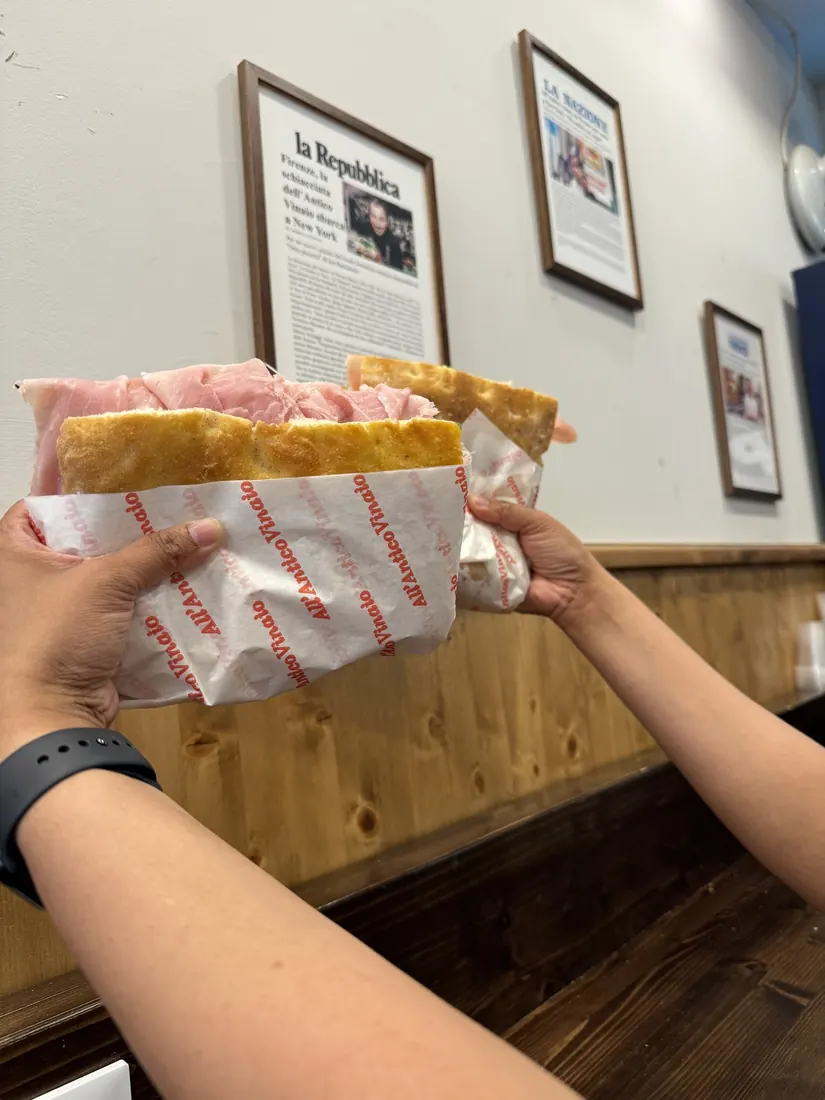
We said a quick hello to the Duomo on the way, but the first real stop was lunch, since it was nearly 4 PM. Schiacciata sandwiches from All’Antico Vinaio, crisp flatbread piled with cured meat, pecorino and truffle spread. Easily one of the best sandwiches of my life.
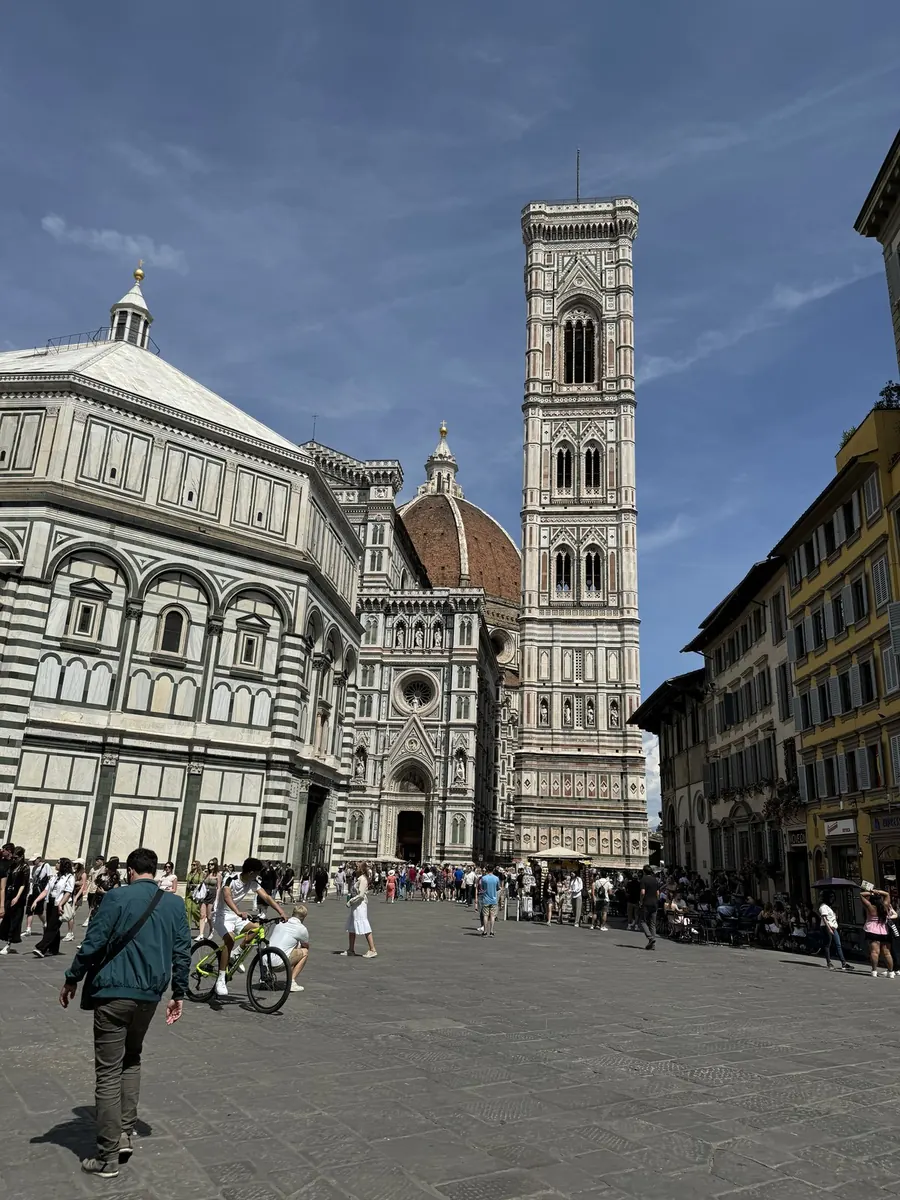
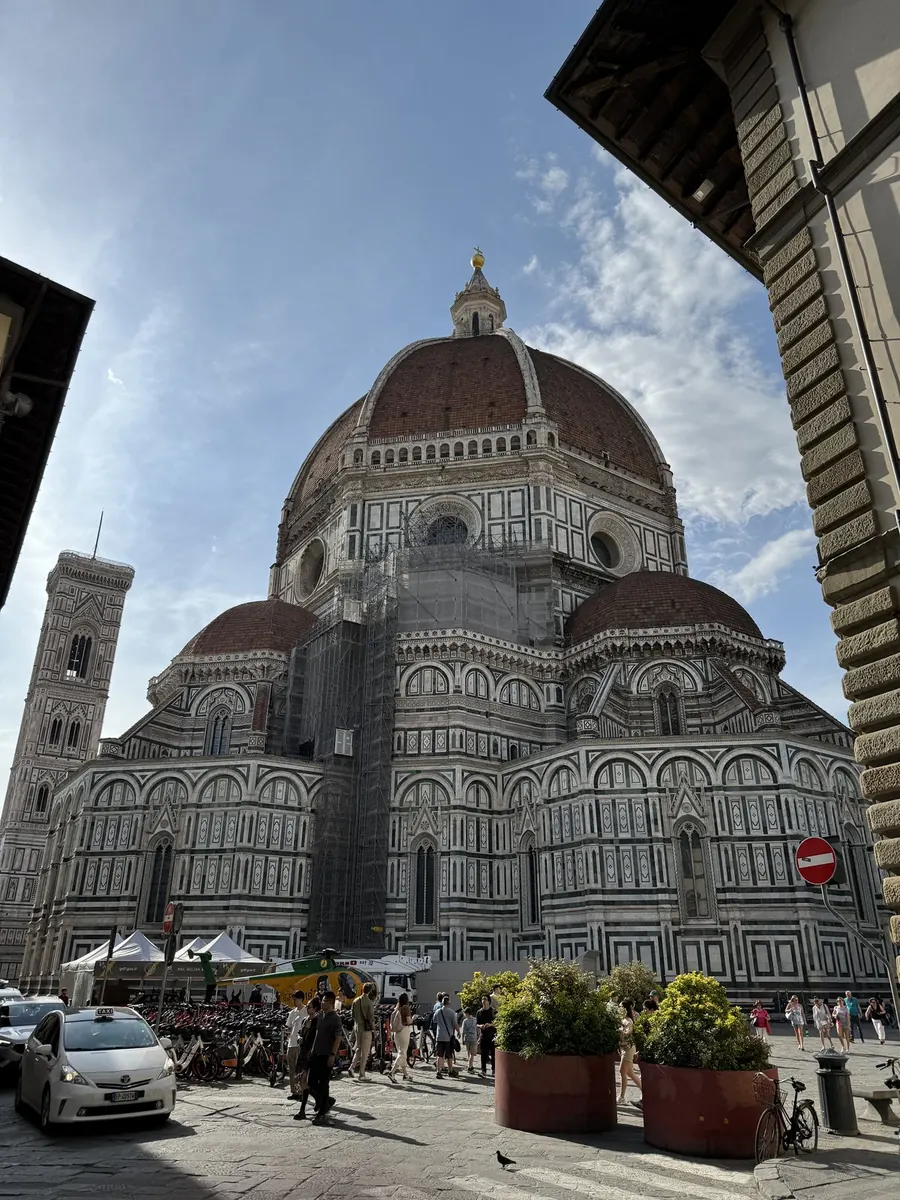
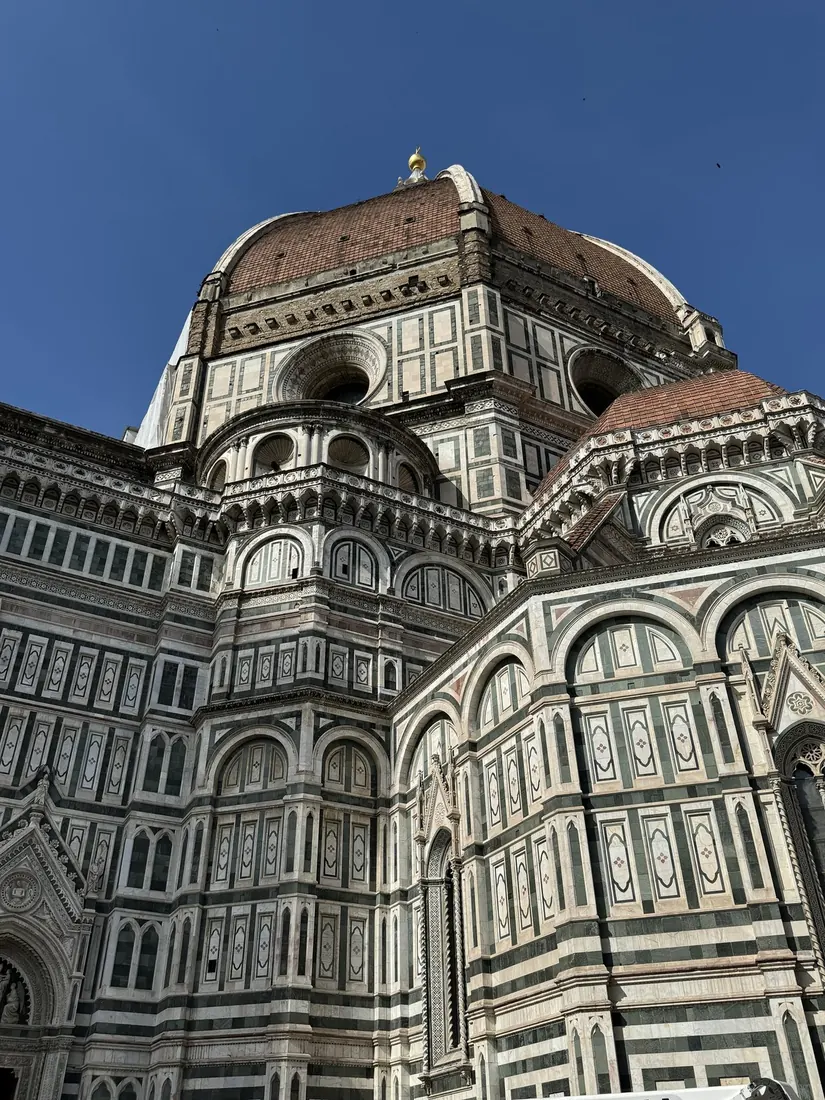
Fed and happy, the Duomo, wrapped in white, green and pink marble in perfect geometric patterns, like a giant, very fancy cake. Apparently the cathedral stood for decades with a gaping hole where the dome should have been, because nobody knew how to build one that big without a wooden scaffold. Then Brunelleschi turned up with a double-shell brick dome that holds itself up.
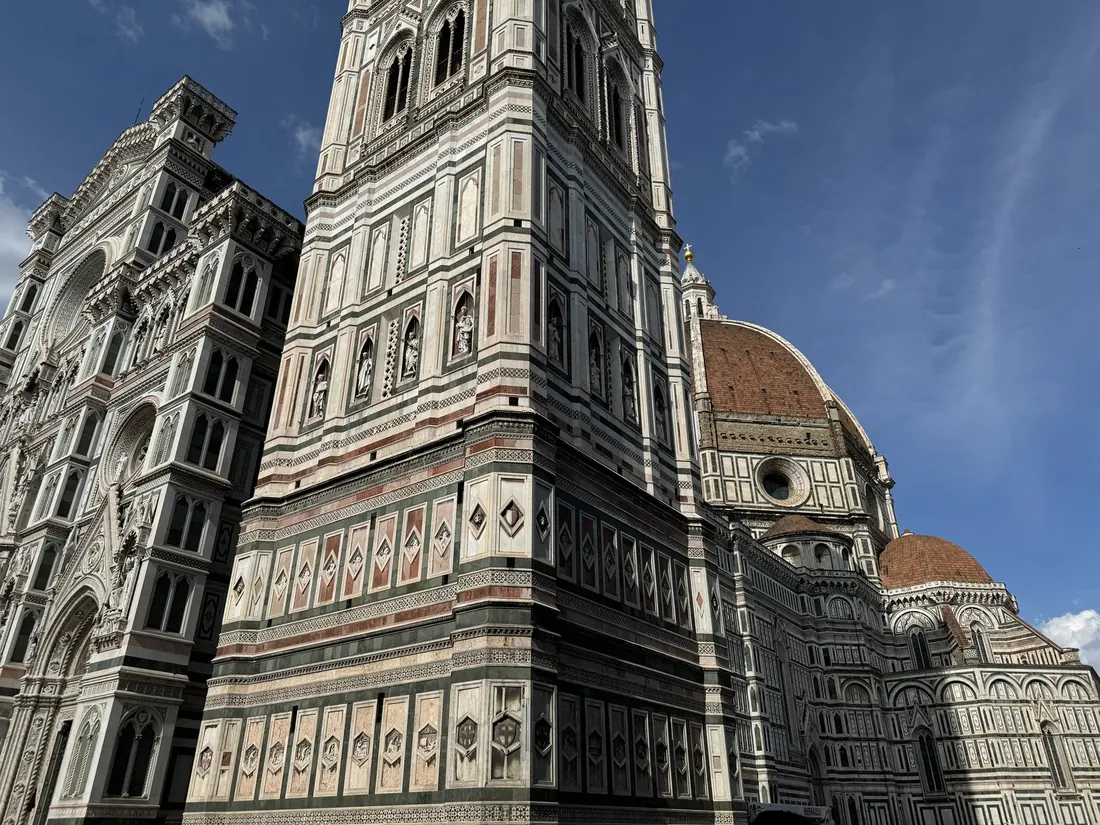
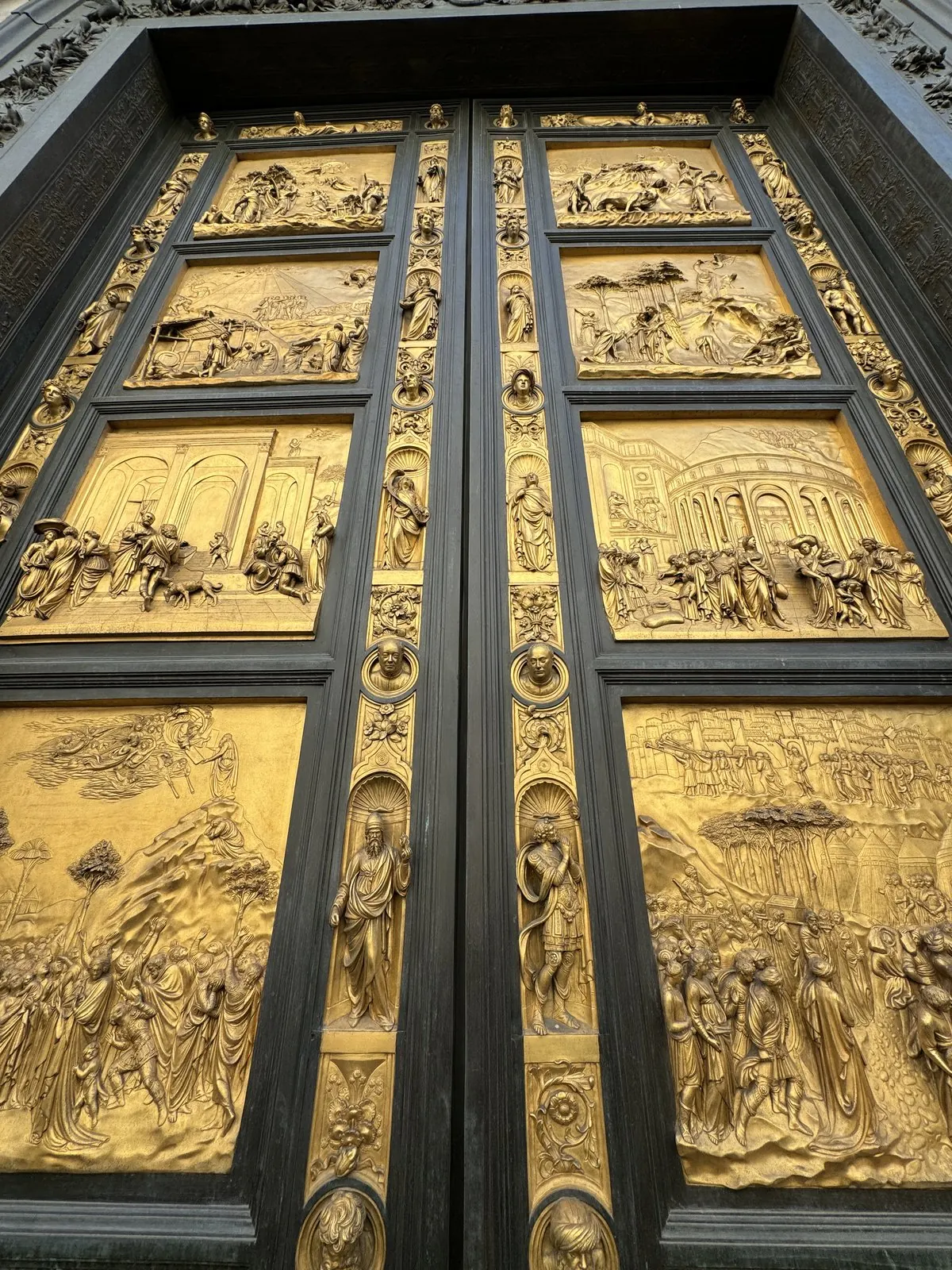
Right next to it stand Giotto’s bell tower and the Baptistery with its “Gates of Paradise,” gilded doors that Michelangelo is said to have called worthy of heaven.
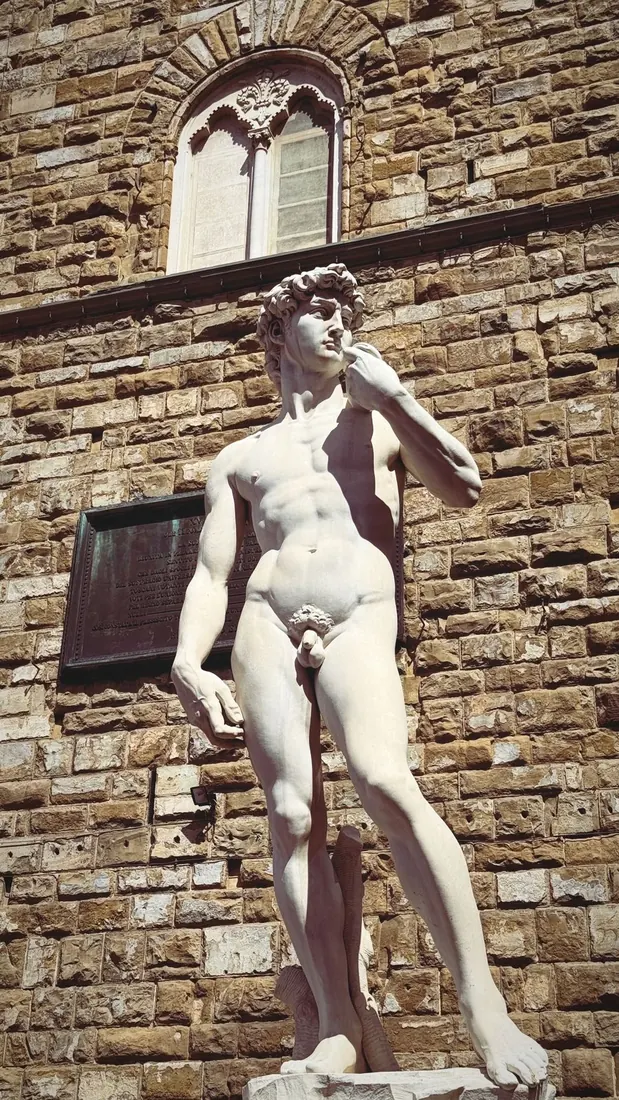
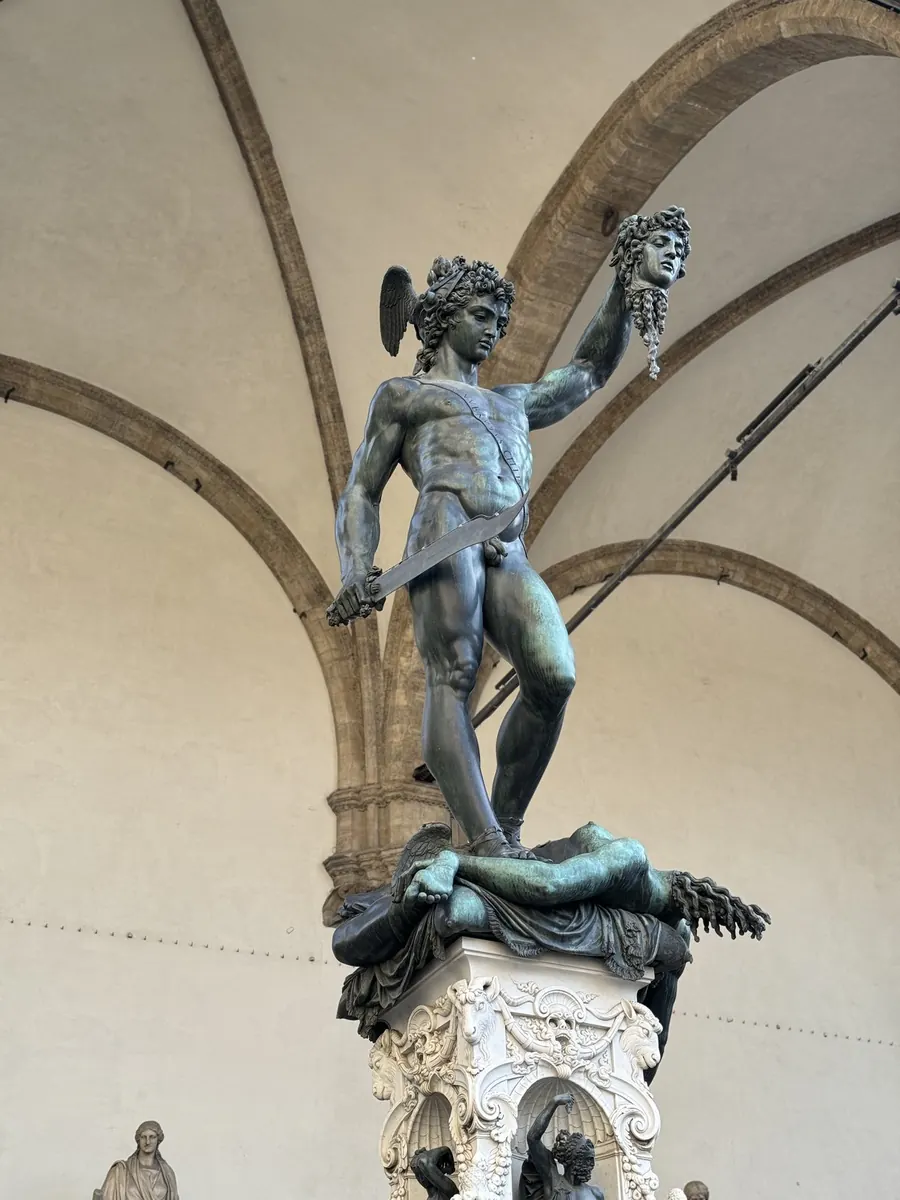
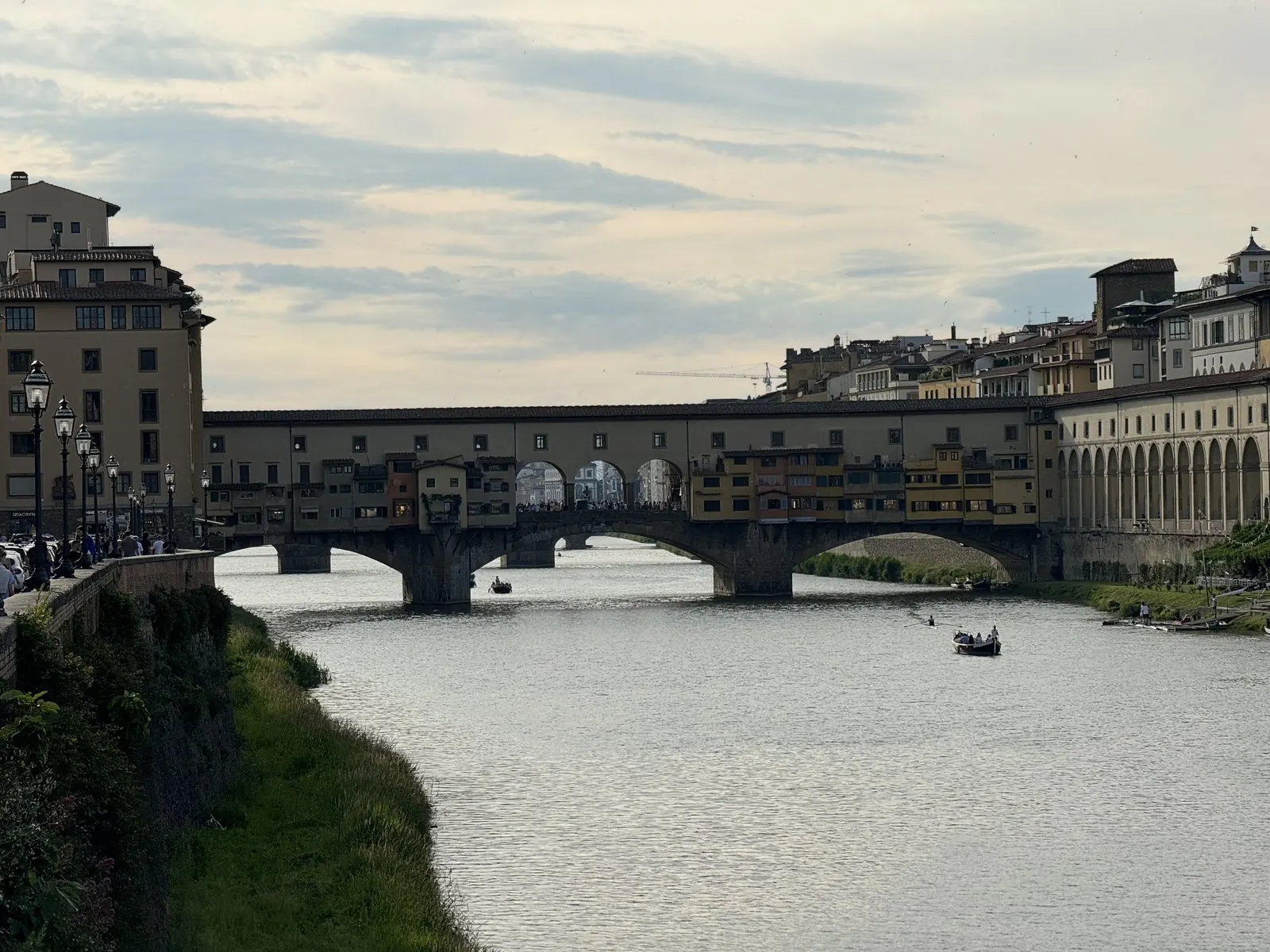
We wandered to Piazza della Signoria, where a replica of Michelangelo’s David stands in the spot where the original once did. (I didn’t get to see the real one at the Accademia, because of time. Another reason to go back.) Then the Ponte Vecchio, a bridge that doubles as a jewelry street with the whole river glittering under it.
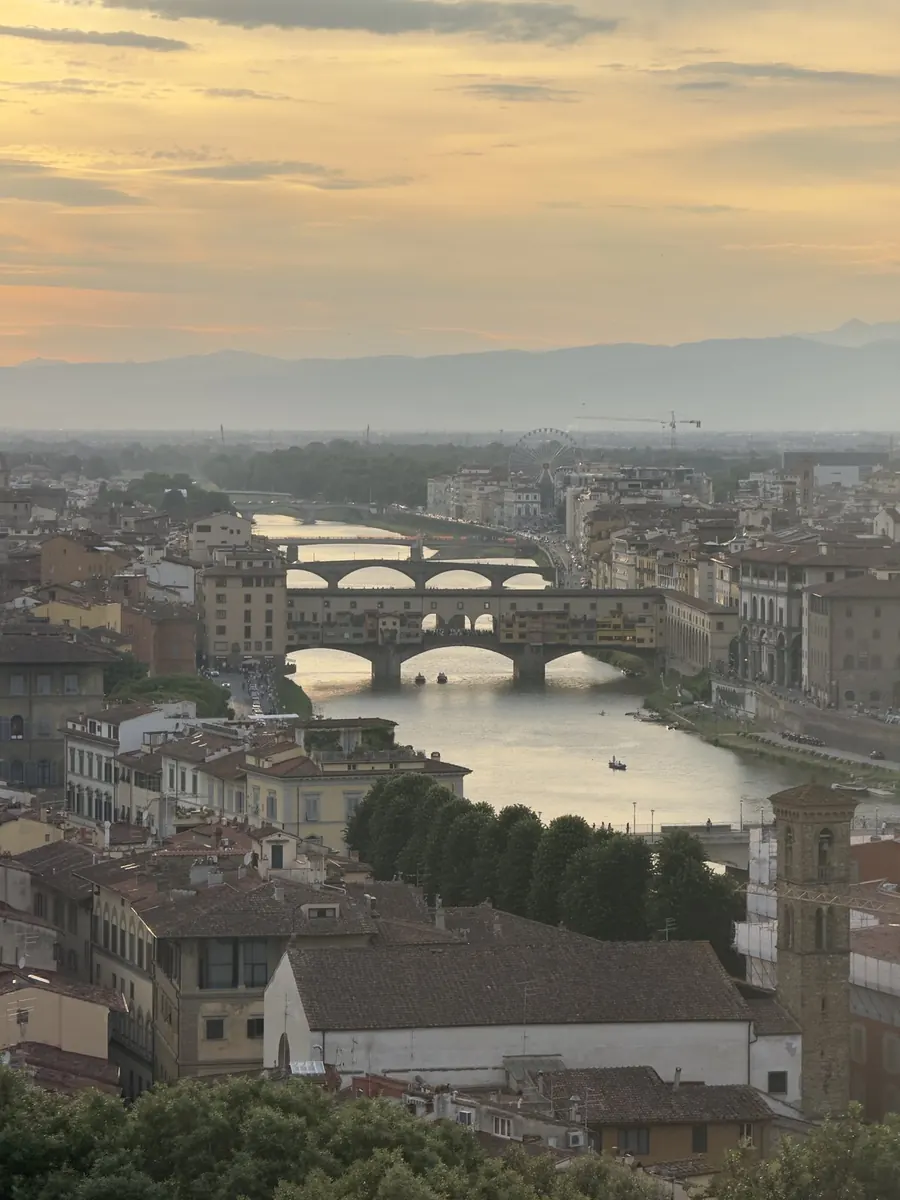
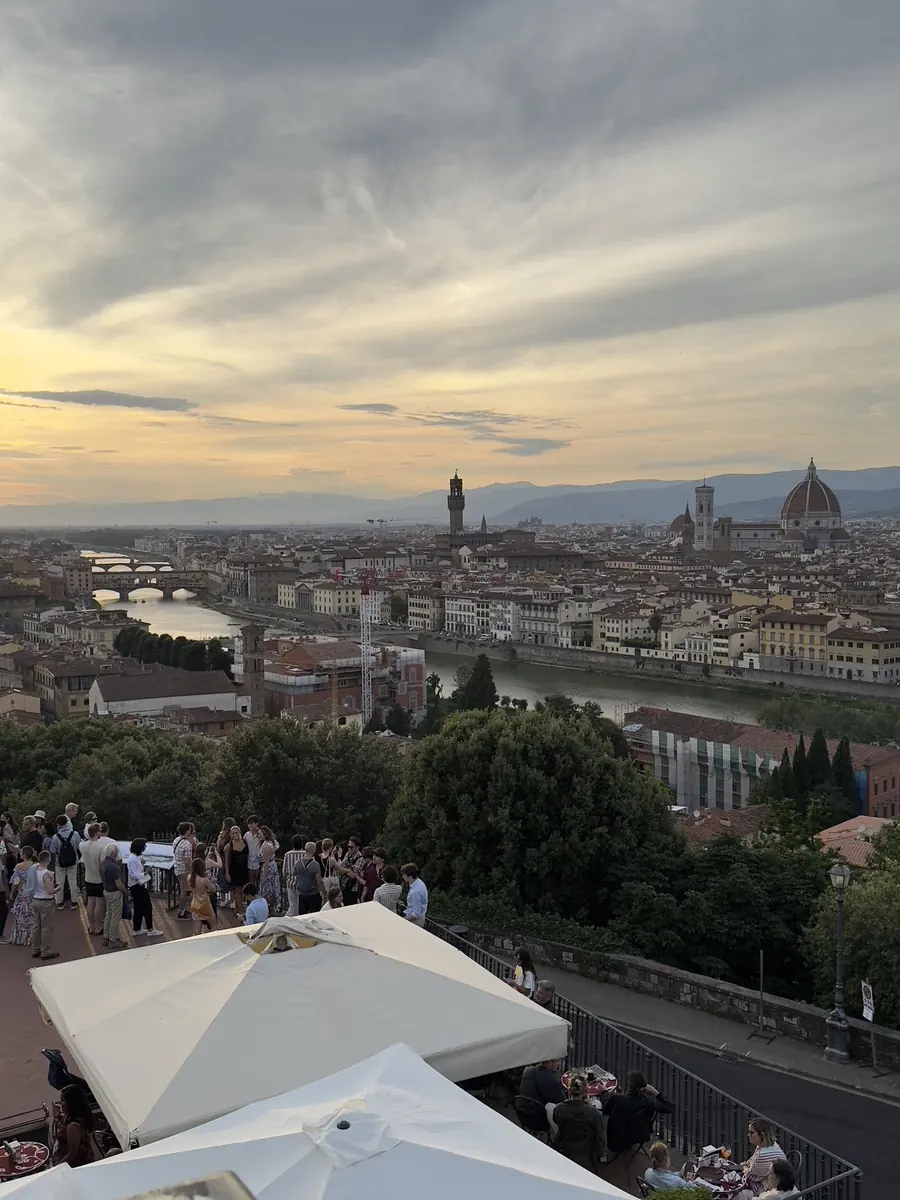
For sunset, we climbed to Piazzale Michelangelo. The buses were crowded, so we did it on foot, through a winding park, and reached the top a few minutes before 7, just as the light started to turn golden. And then we just… stayed. For well over an hour, long enough for me to haul out the Fuji and shoot a few portraits of Miss Vibes with the Duomo melting into the dusk behind her.
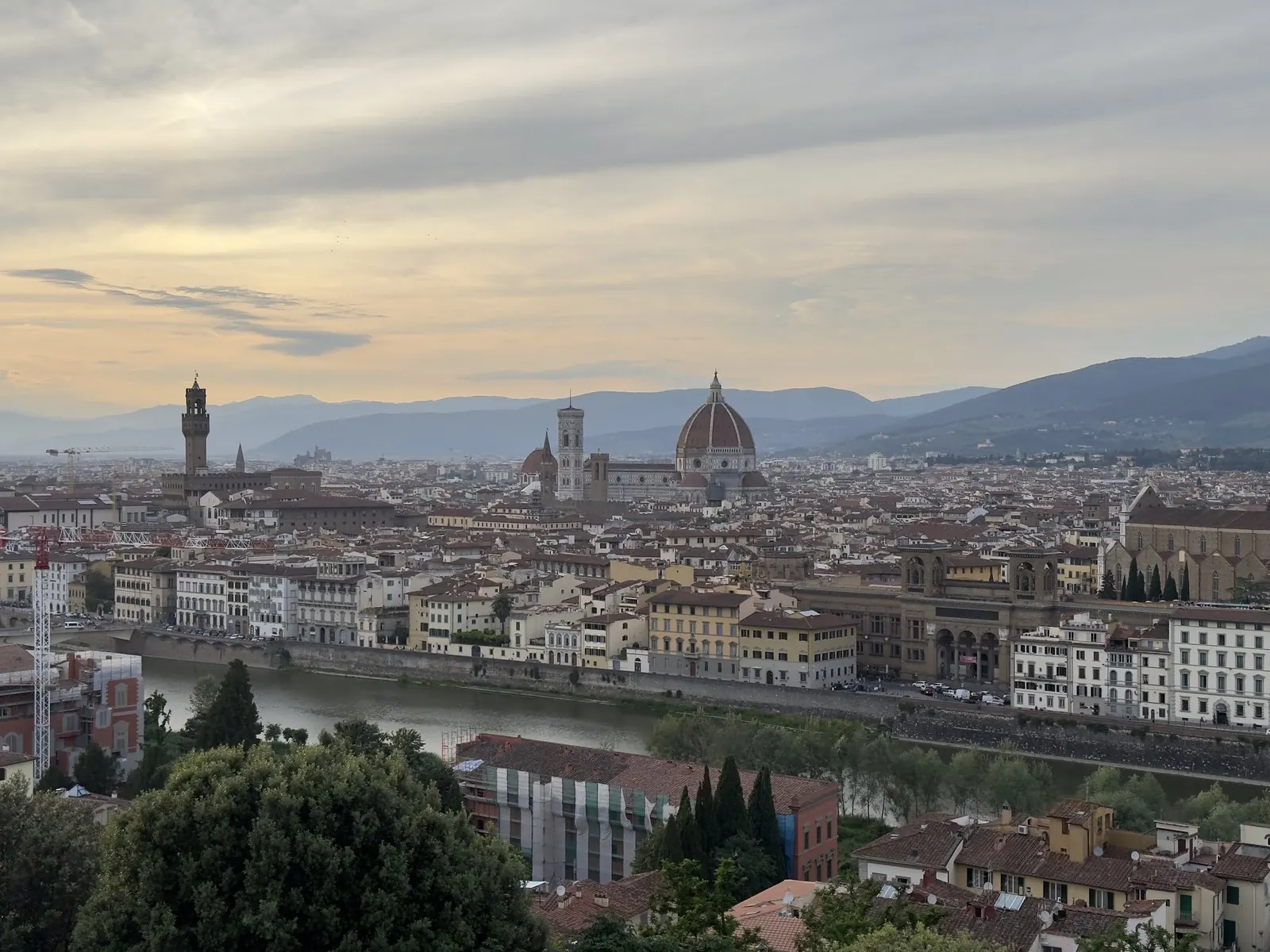
A street musician playing. Wedding photographers directing couples. The Duomo rising out of a sea of red roofs, the Arno curling through the city, Ponte Vecchio glowing in the distance, Tuscan hills behind everything. Honestly, I forgot myself completely up there. One of those evenings where you just smile at nothing.
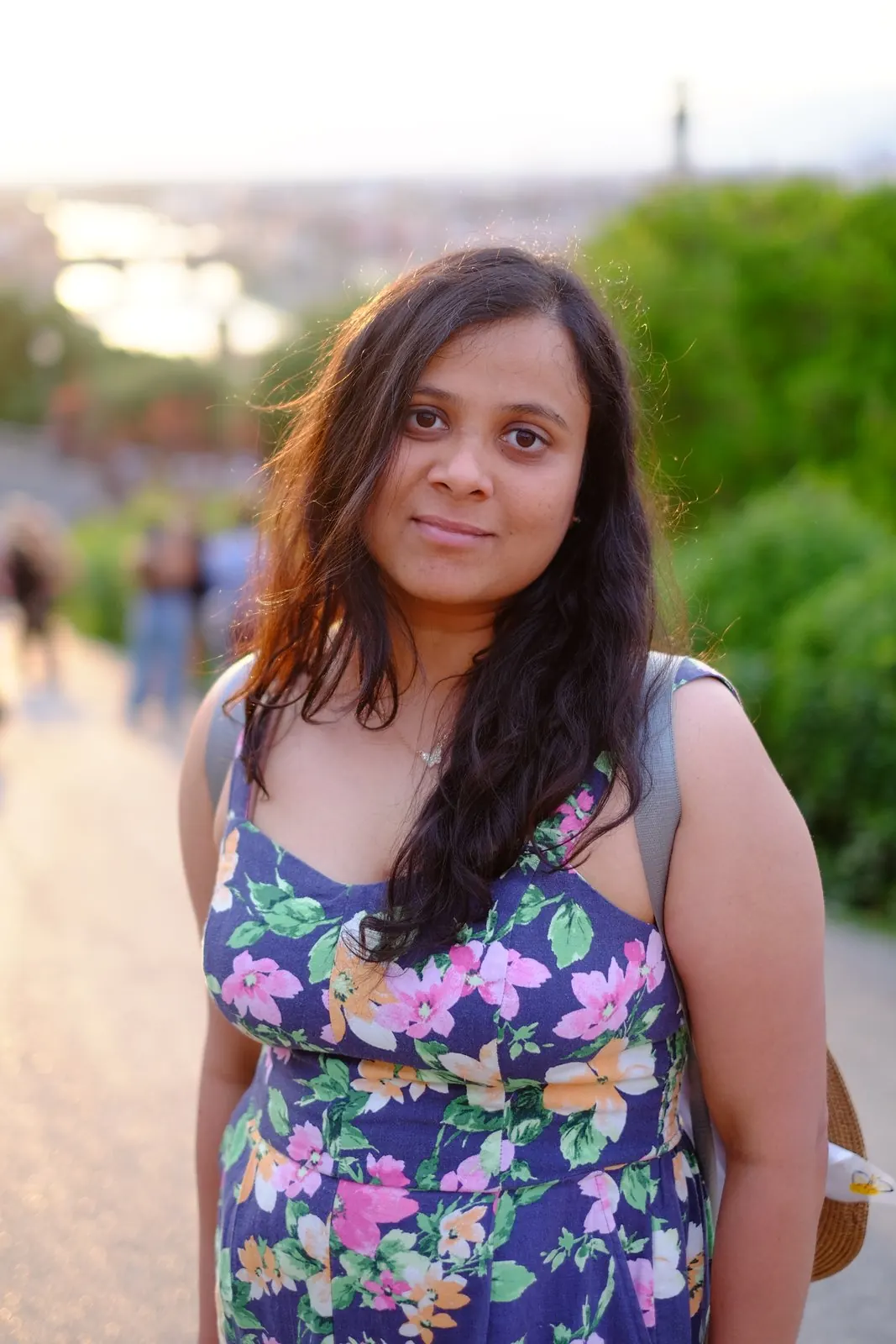
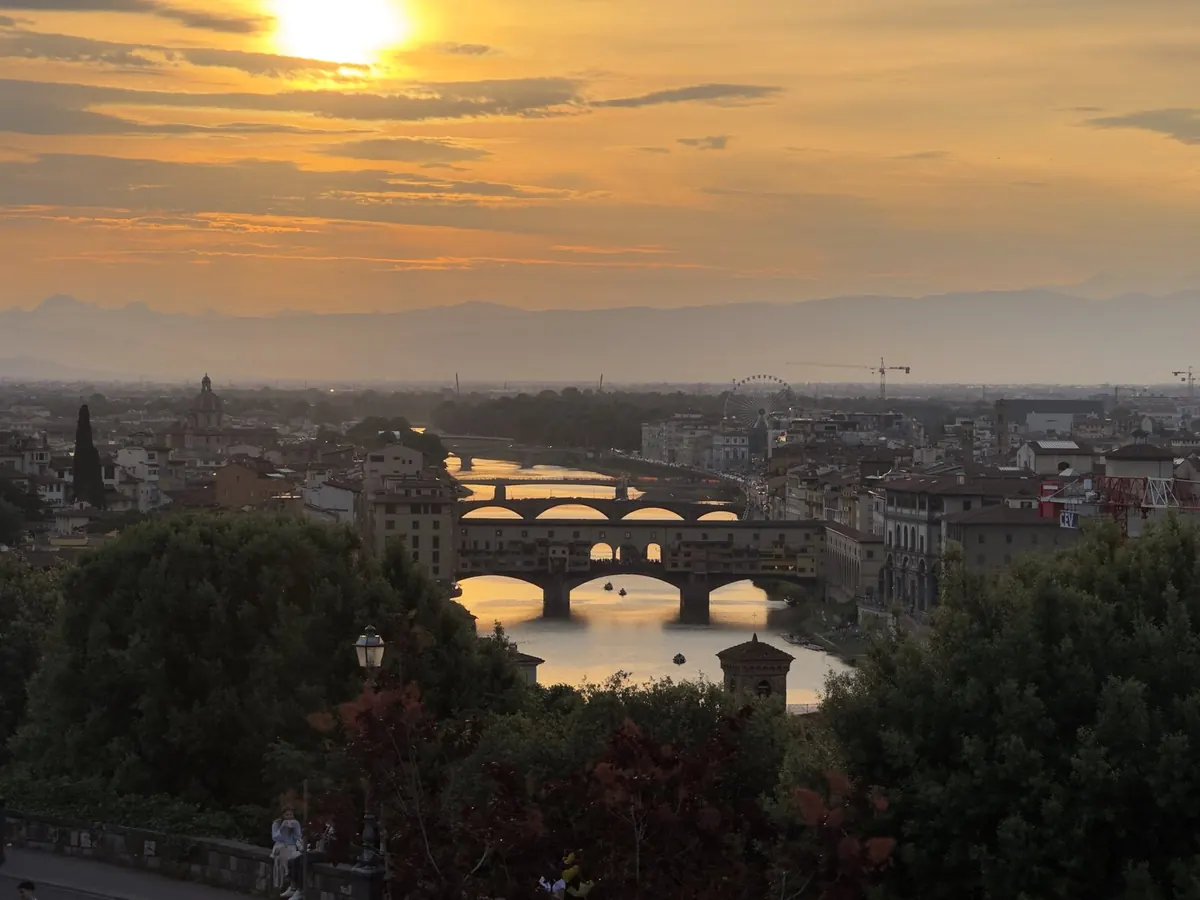
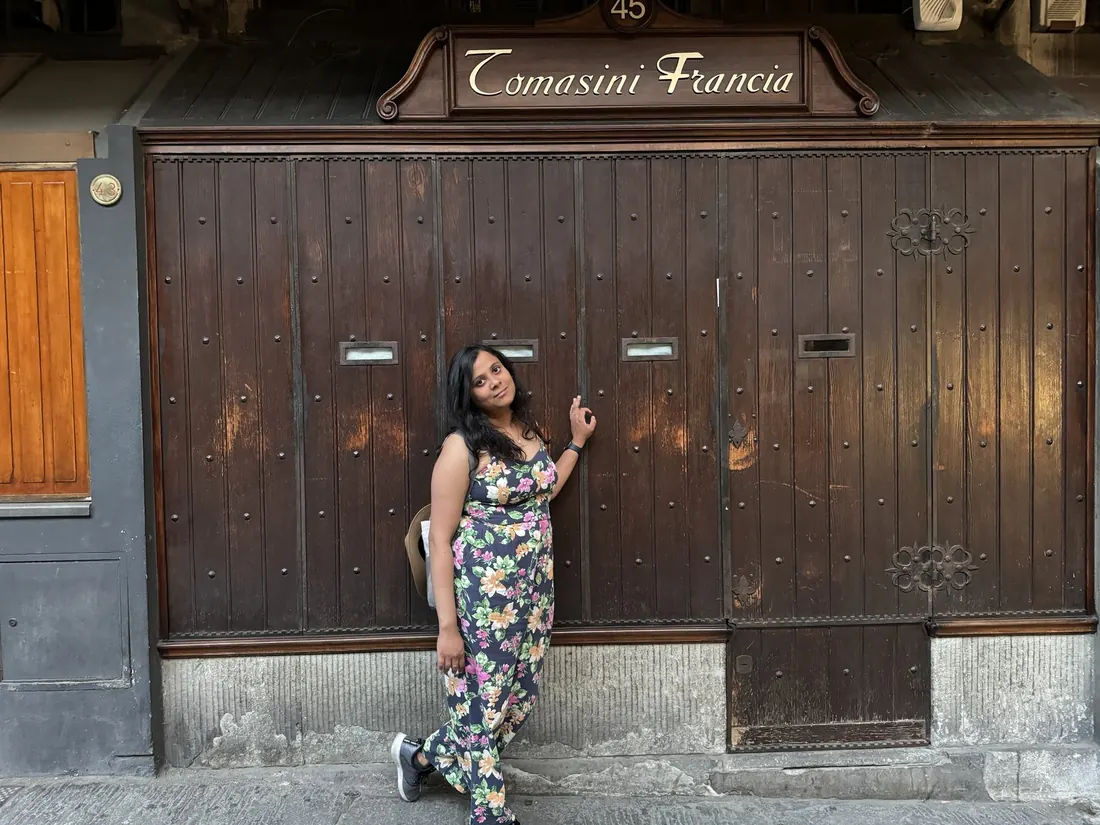
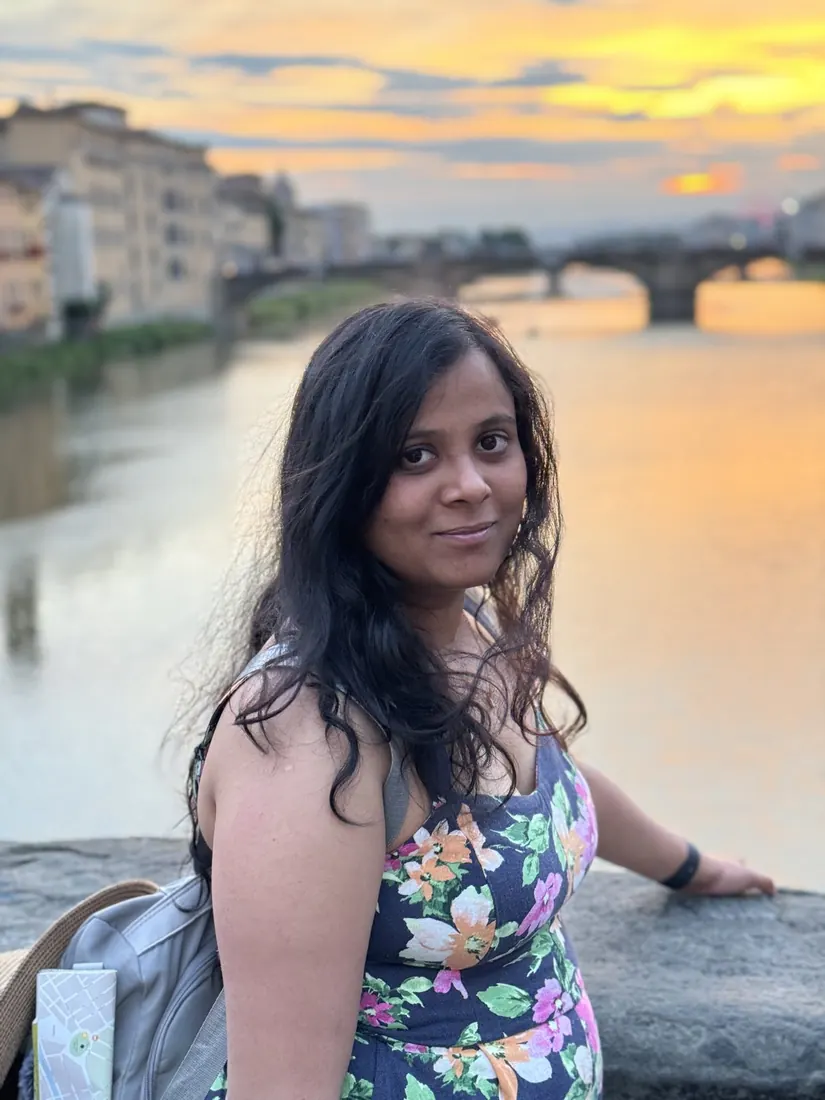
We walked back down as the light was leaving, and by 8:40 the Ponte Vecchio had changed shifts: the jewelers were shuttered behind big wooden doors (Arsha leaned on one like she owned the street), and the Arno turned peach, then pink, then gold. I took more sunset photos per minute than at any other point in the trip. Then came a long stone arcade just beside the bridge, right by the Uffizi, a tunnel of arches where every frame repeats itself and we’re in all of them.
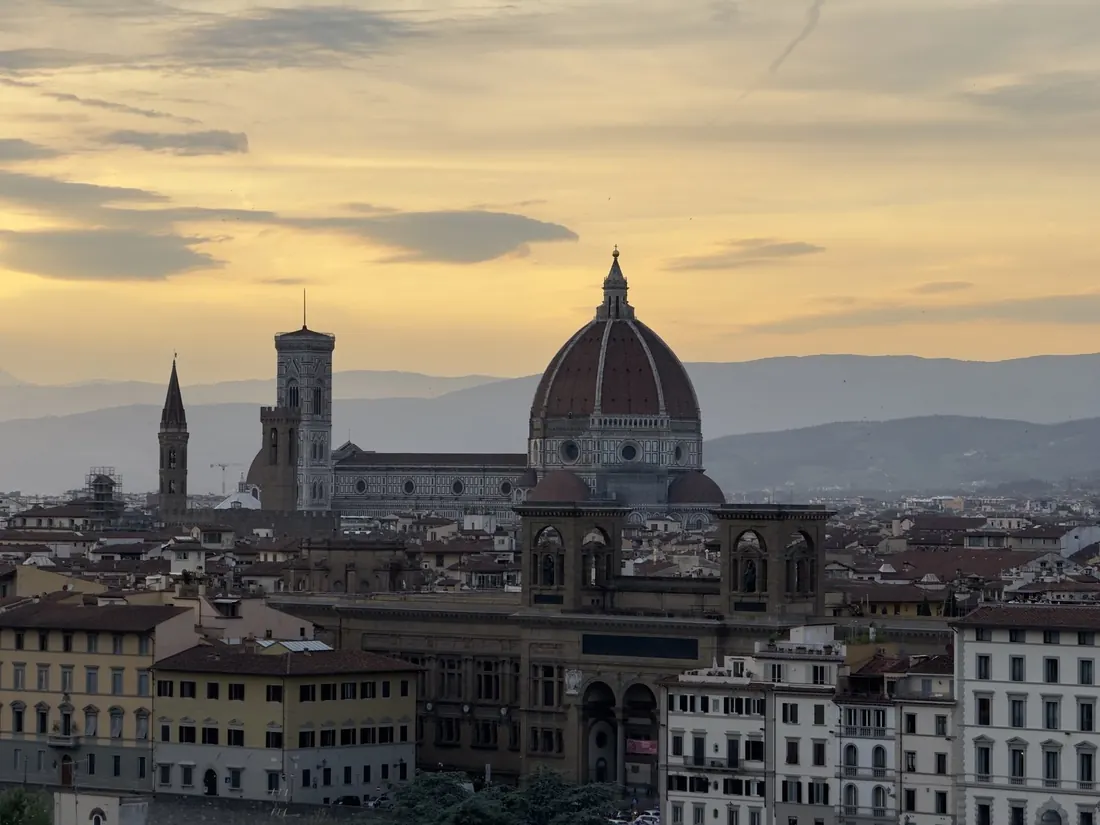
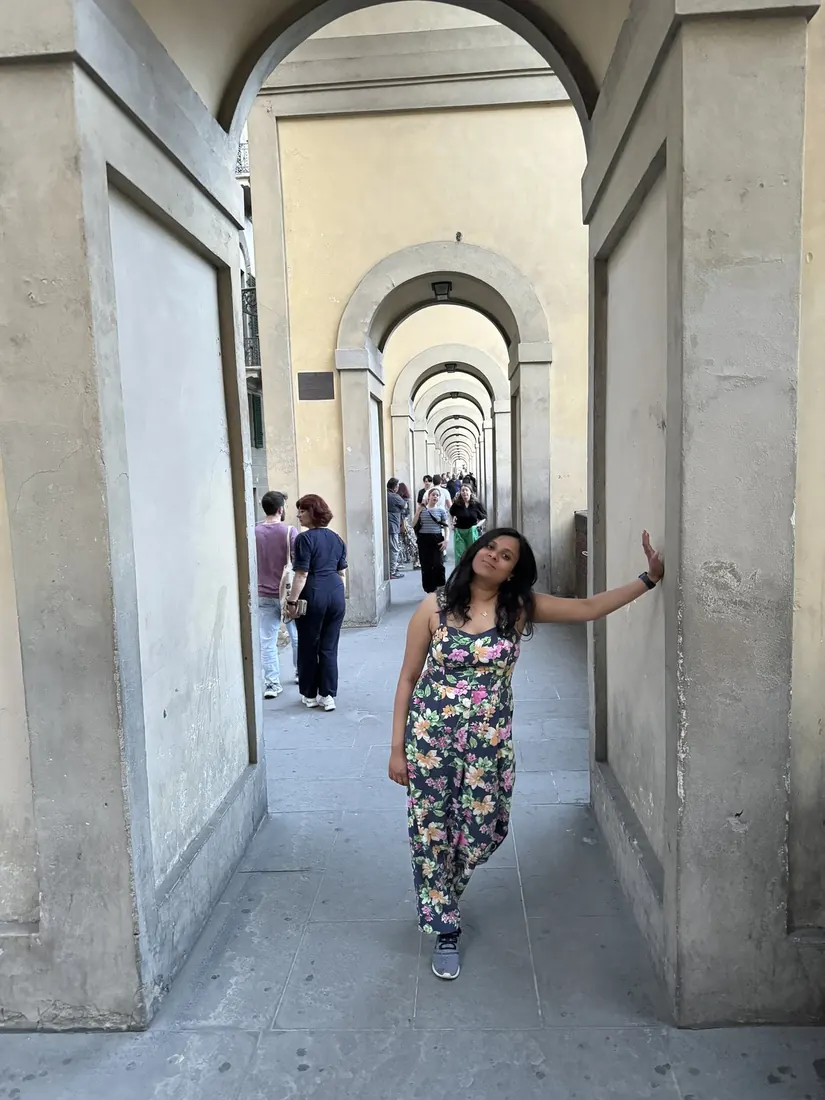
On the way home we spotted a buchetta del vino: a tiny wine window in a palace wall where noble families once handed wine straight out to customers. This one was piled with flowers. Florence is full of little secrets like that. The square in front of Santa Maria Novella went blue in the dusk.
We fell asleep near the station with about 80 photos of a bridge that has been posing for nearly 700 years, happy and a little smug. Tomorrow was a long travel day, and my spreadsheet was about to meet Europe.
The Day My Spreadsheet Met Europe
Tue, May 28 · Florence → Interlaken
Quick background: I had planned this day with the precision of a Swiss watch. Florence to Milan, Milan to Domodossola, then Swiss trains through Brig and Spiez into Interlaken, every leg depending on the last, with a 40-45 minute cushion at Milan.
The morning train was an hour late.
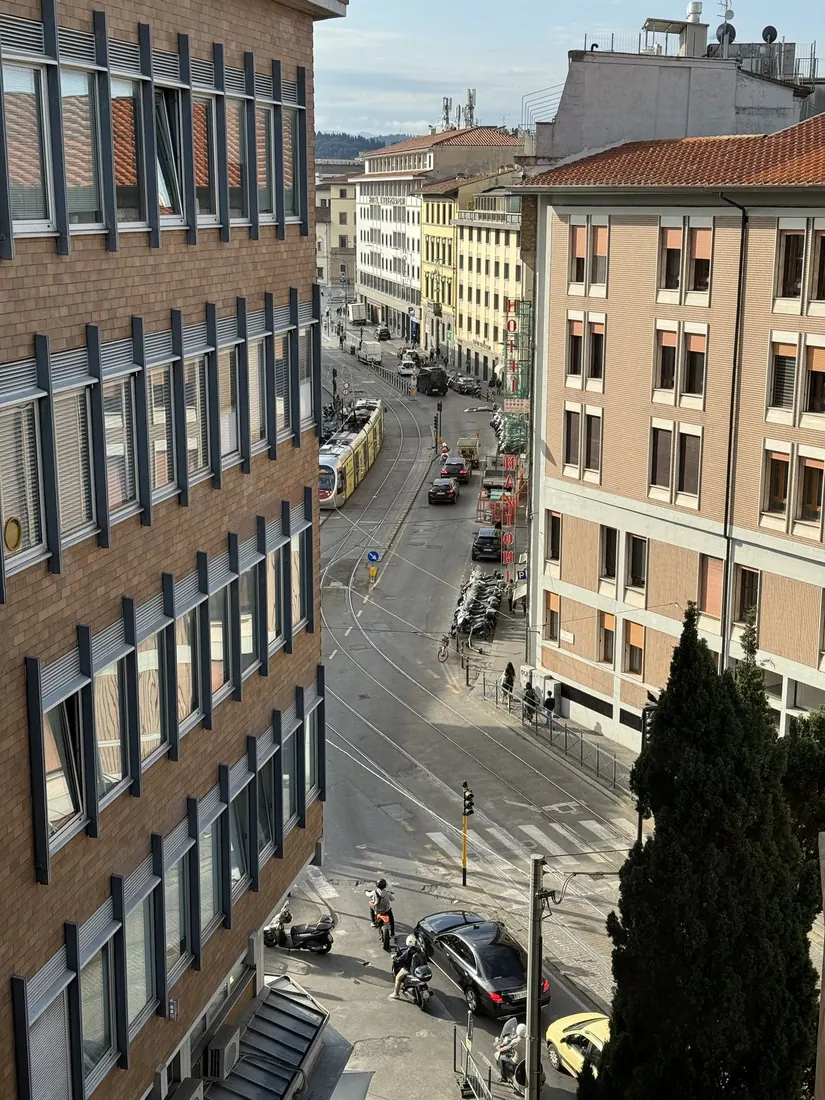
We had a slow morning: one more look from the hotel window at the street waking up, then a wander toward the central market, where a man in a patterned cap was chopping porchetta behind a street-food counter. Then I did the planner thing and went to find the departure board.
Partenze · Departures · Firenze S. M. Novella
| Ora | Destinazione | Note |
|---|---|---|
| 10:55 | MILANO C.LE | RITARDO 60' |
| 11:10 | TORINO P.N. | RITARDO 50' |
| 11:20 | VENEZIA S.L. | RITARDO 50' |
| 11:25 | TORINO P.N. | RITARDO 55' |
I watched our connection die in slow motion. By 11:20 I was standing under the departure board at Florence Santa Maria Novella, where Milano Centrale glowed in orange with a cheerful “60 minutes late” next to it, rebuilding the whole day from scratch.
One hour of delay against a 40-45 minute cushion in Milan: you don’t need to be a project manager to see how that ends. (I am one. I saw it very clearly.) By the time we reached Milan, our connection had rolled out without us, like a movie scene where the hero runs after the train and doesn’t make it.
| Leg | Plan | What happened |
|---|---|---|
| Firenze → Milano | Left 60 minutes late | |
| Milano → Domodossola | Missed. Slow regional along Lake Maggiore | |
| Domodossola → Brig | About 5 PM, finally Swiss | |
| Brig → Spiez → Interlaken | Tunnel blocked. Visp and back, Lötschberg Base Tunnel, in after 9 |
Was I calm? I was not calm. When every step depends on the previous step and one step breaks, the whole plan goes down the drain and you start from scratch. But it was Italy, and Italy can be a lot like India: plans are more of a “vibe.” So I sat down, figured out the new route with a couple of alternate trains, and off we went. Arsha gave me her calm, trusting “Plan B, chief” look, which, I’ll admit, makes you want to produce a Plan B just to see her smile.
Silver lining of a late train: the slow route. Around 4:50 PM the regional line slid along Lake Maggiore, blue water, tiny islands, villages tucked under the mountains like scenery in a school play. If my “efficient” connection had worked, I’d have missed all of it.
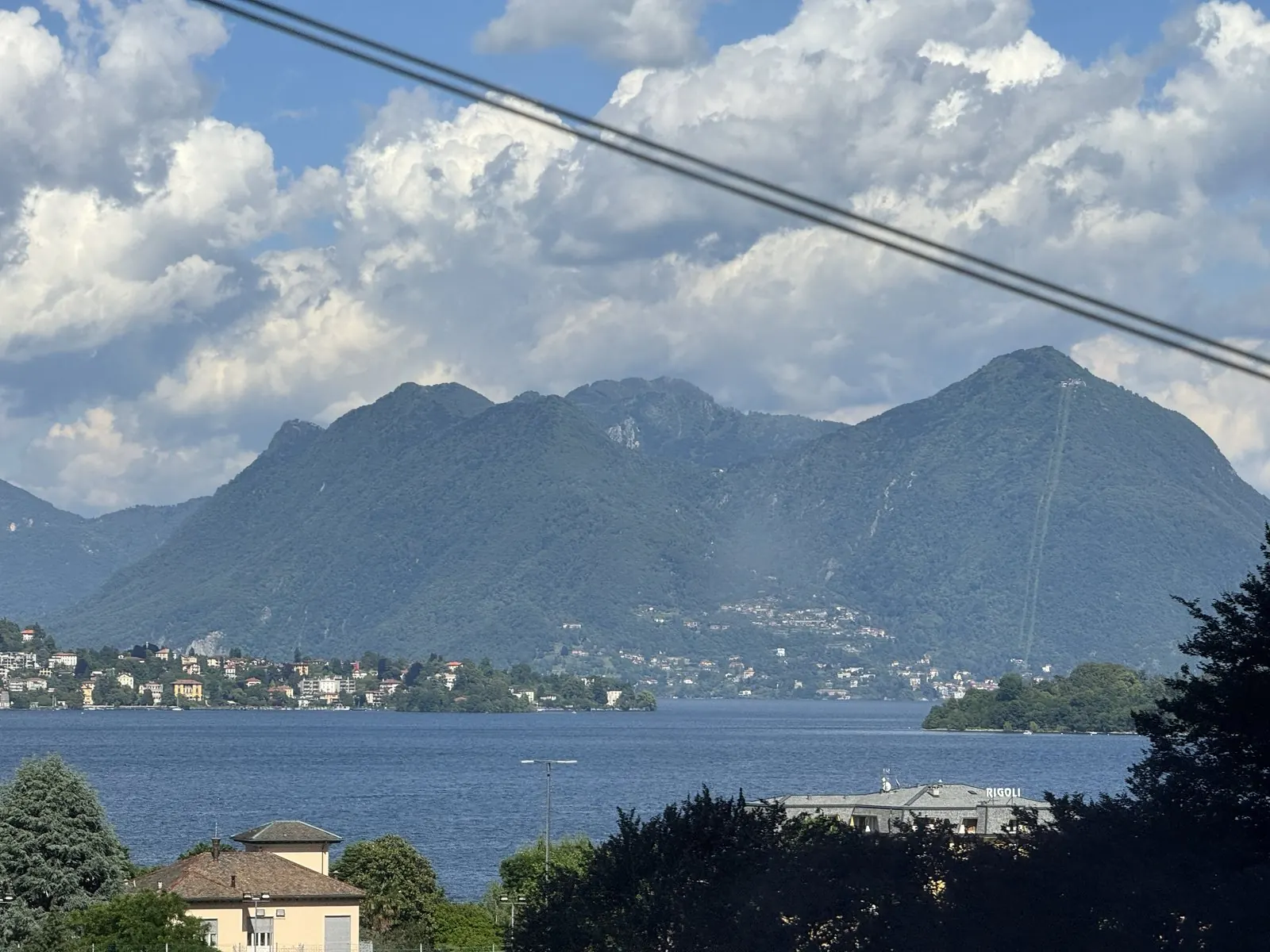
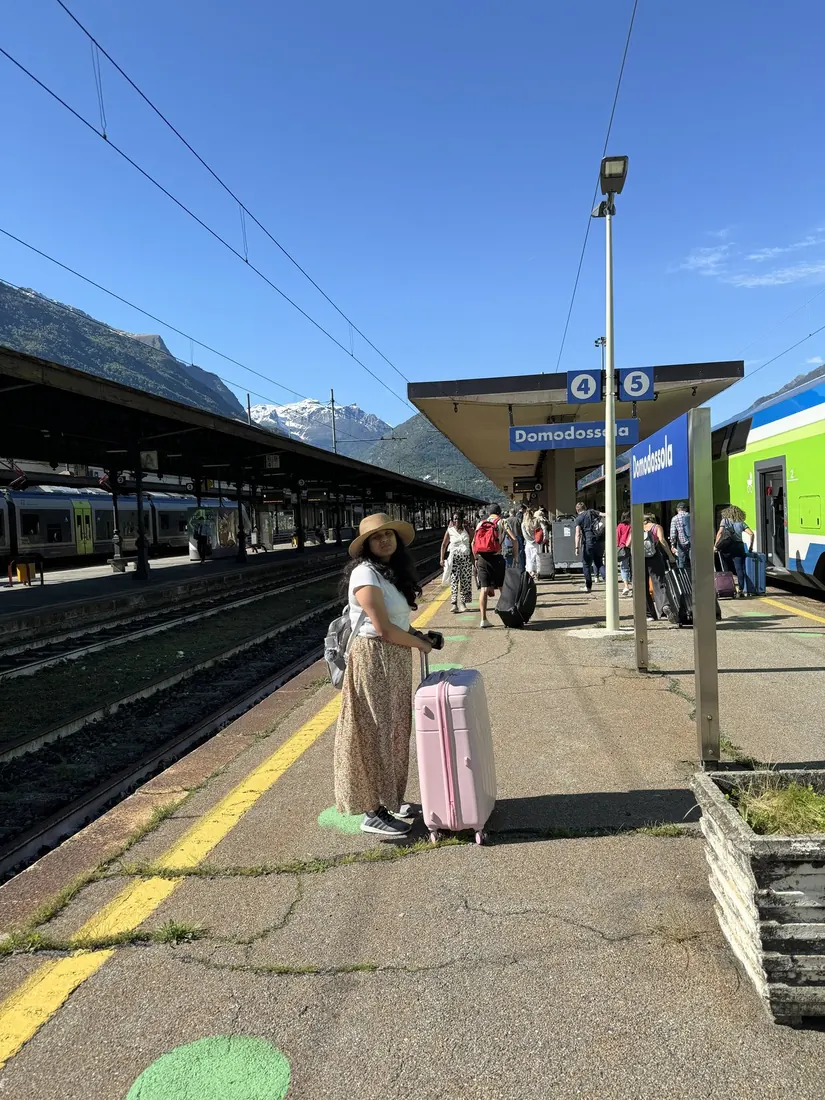
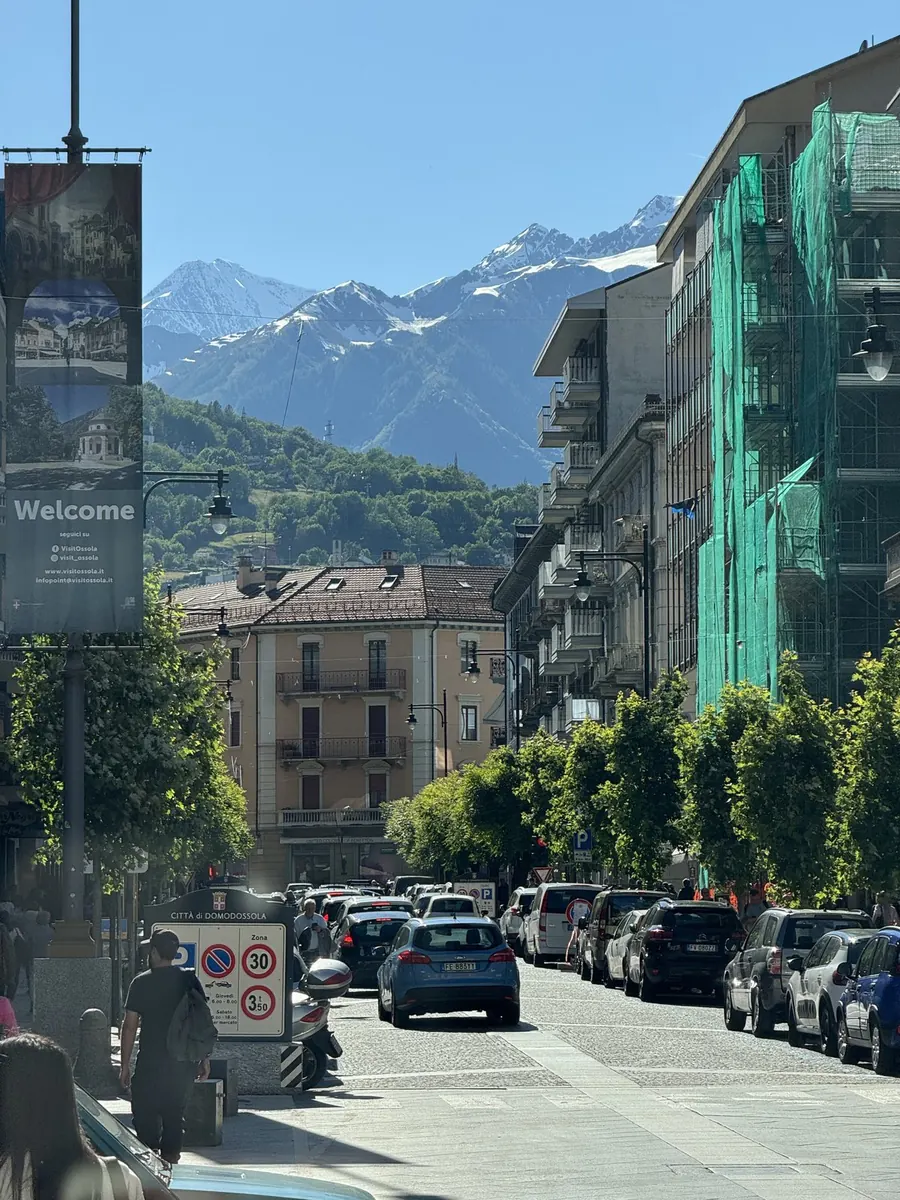
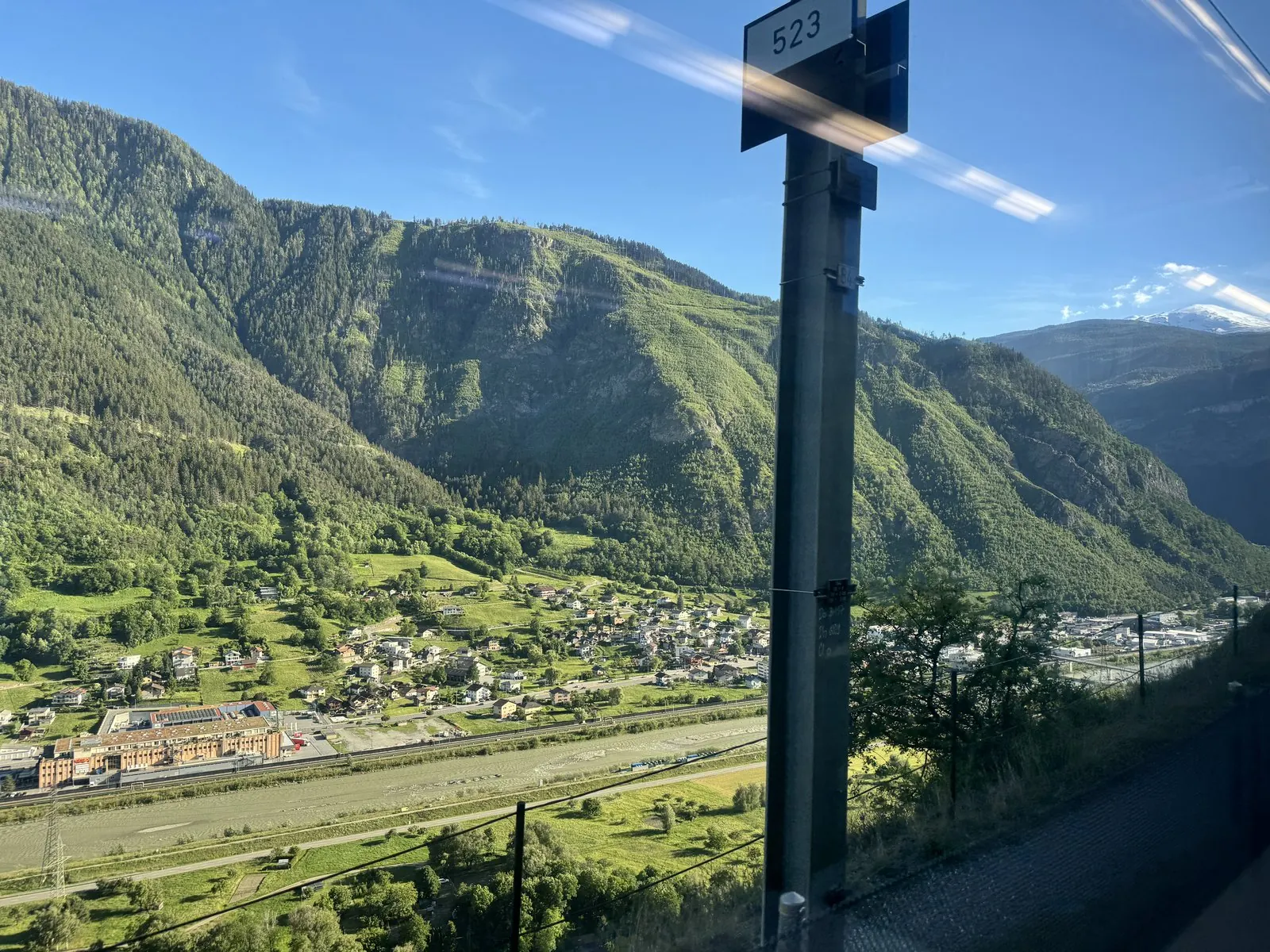
At last, around 5 PM, Domodossola, the border town at the foot of the Alps, and we hopped on a Swiss train. The scenery wakes up before you even cross the border: ridges, gorges, snowy peaks. And the train! Spotless, silent, with huge panoramic windows. It felt nicer than flying first class.
Then the second twist: a track problem inside a mountain tunnel near Spiez had stopped traffic on our line. Our train rolled into Brig, headed a few stations toward Visp, turned around and came back to Brig around 7:30, and we were finally rerouted the longer way through the Lötschberg Base Tunnel. We were supposed to get in at 6:30 PM. We rolled in a little after 9.
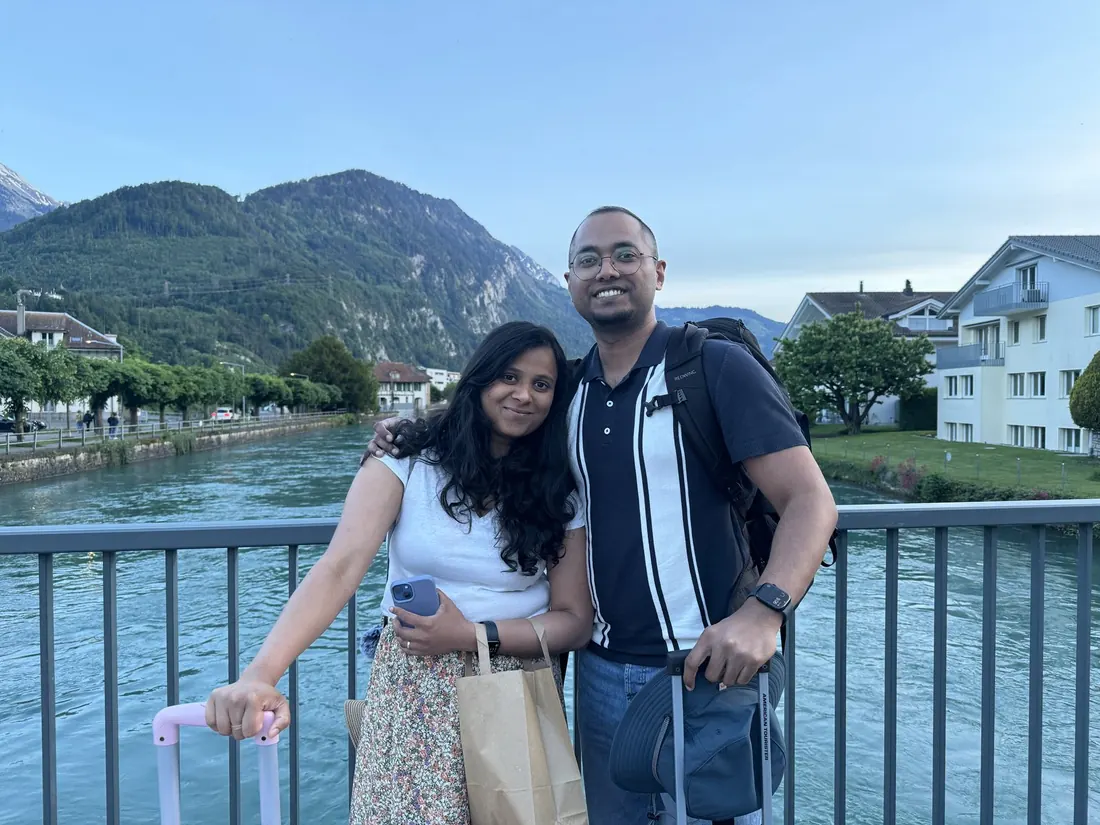
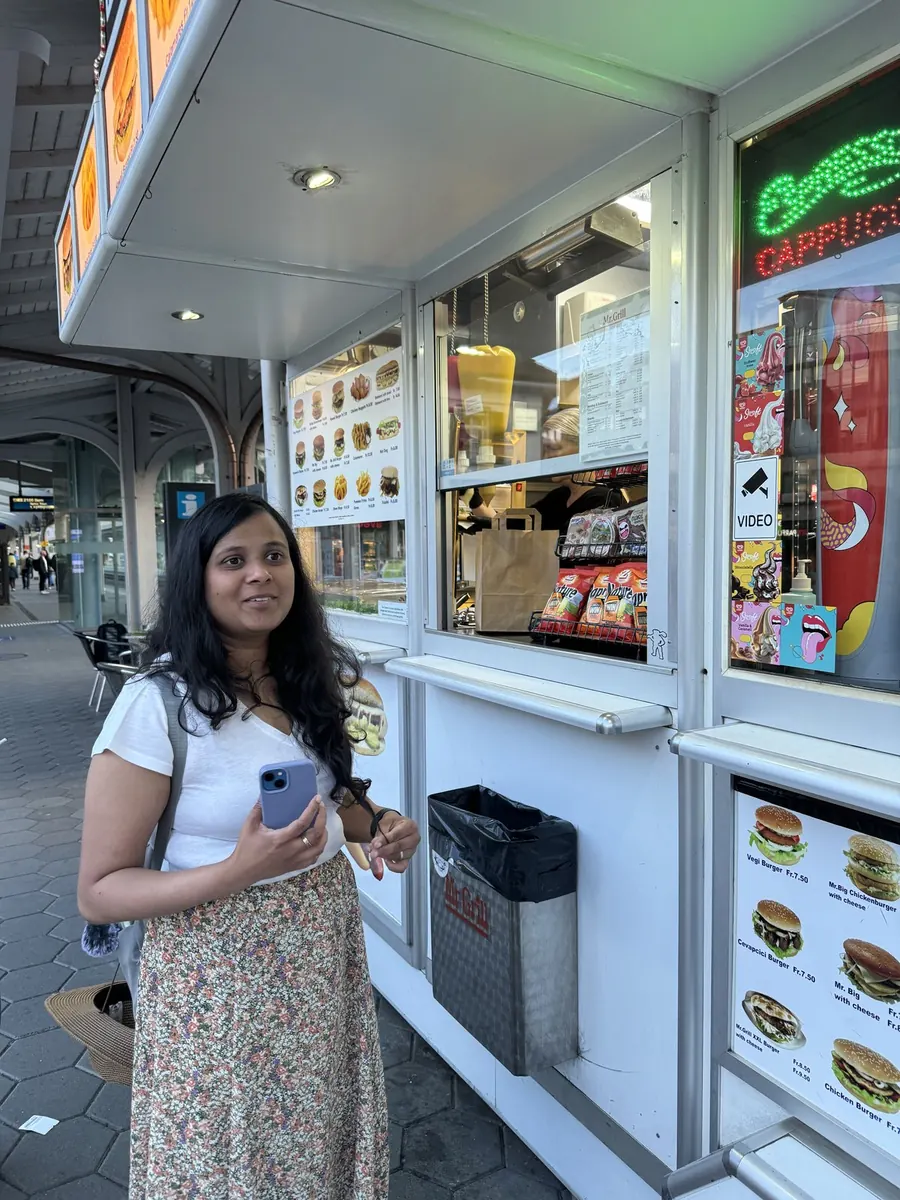
The last kilometre was on foot, with the pink suitcase rattling over Swiss pavement like it was announcing us. We stopped at a snack kiosk for sausages and a sandwich, crossed the bridge over the Aare at about 9:06 PM with the river glowing turquoise, and at the end of one street a snowy peak was glowing pink in the dusk. Arsha stopped mid-step and just looked, which, from her, is the highest praise.
And then, the reward. Our Airbnb in Unterseen was a traditional wooden chalet attached to a working dairy farm, and the moment we got near it, a smell hit me: cows and hay. I grew up with cows at home. The farm smelled exactly like my childhood. After a day of delays, it felt like a warm hug. We tumbled into bed, delighted.
Tomorrow: mountains. Real ones, with cable cars.
Why We Skipped the Top of Europe
Wed, May 29 · Schilthorn, Mürren, Gimmelwald
First morning in Switzerland. Fresh air, clear light, daylight stretching past 9:30 PM. It felt like someone had turned the contrast up on the world.
A word about home base. Our chalet in Unterseen, on the Interlaken side of the Aare, was a wood-paneled room with a balcony, a working dairy farm next door and a short stroll to the trains that unlock every valley around. Interlaken itself sits “between the lakes” and works like a hub: every cable car and cogwheel line seems to start here. We came back to it every evening, to cows, hay and sausages.
The forecast had rain coming later in the week, so we moved the big mountain day to the first clear one: Schilthorn, about 2,970 meters.
Now, everyone goes to Jungfraujoch, the “Top of Europe.” That’s exactly why we didn’t. We wanted somewhere different, and Schilthorn came with a bonus: Piz Gloria, a revolving restaurant (famous from a 1969 James Bond film) with a brunch buffet, and our Berner Oberland Pass covered part of it.
A rotating restaurant on a mountain top with unlimited brunch? I’d take that over Jungfraujoch any day of the week.
Getting there is half the fun: train to Lauterbrunnen, postbus to Stechelberg, then giant cable cars, each carrying about 100 people, climbing straight up a cliff face. Your ears pop, your stomach does a little flip, and you can’t stop smiling.
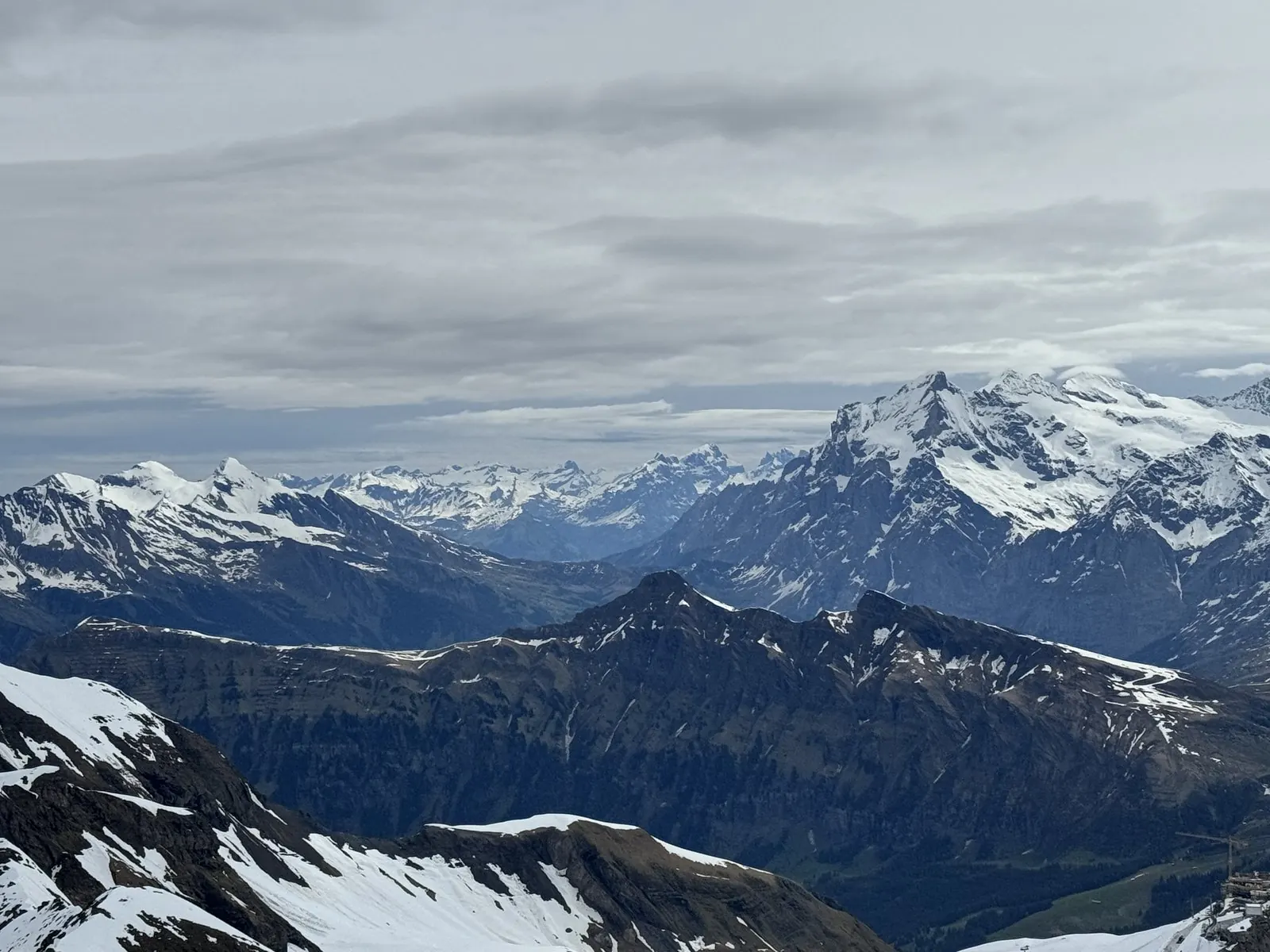
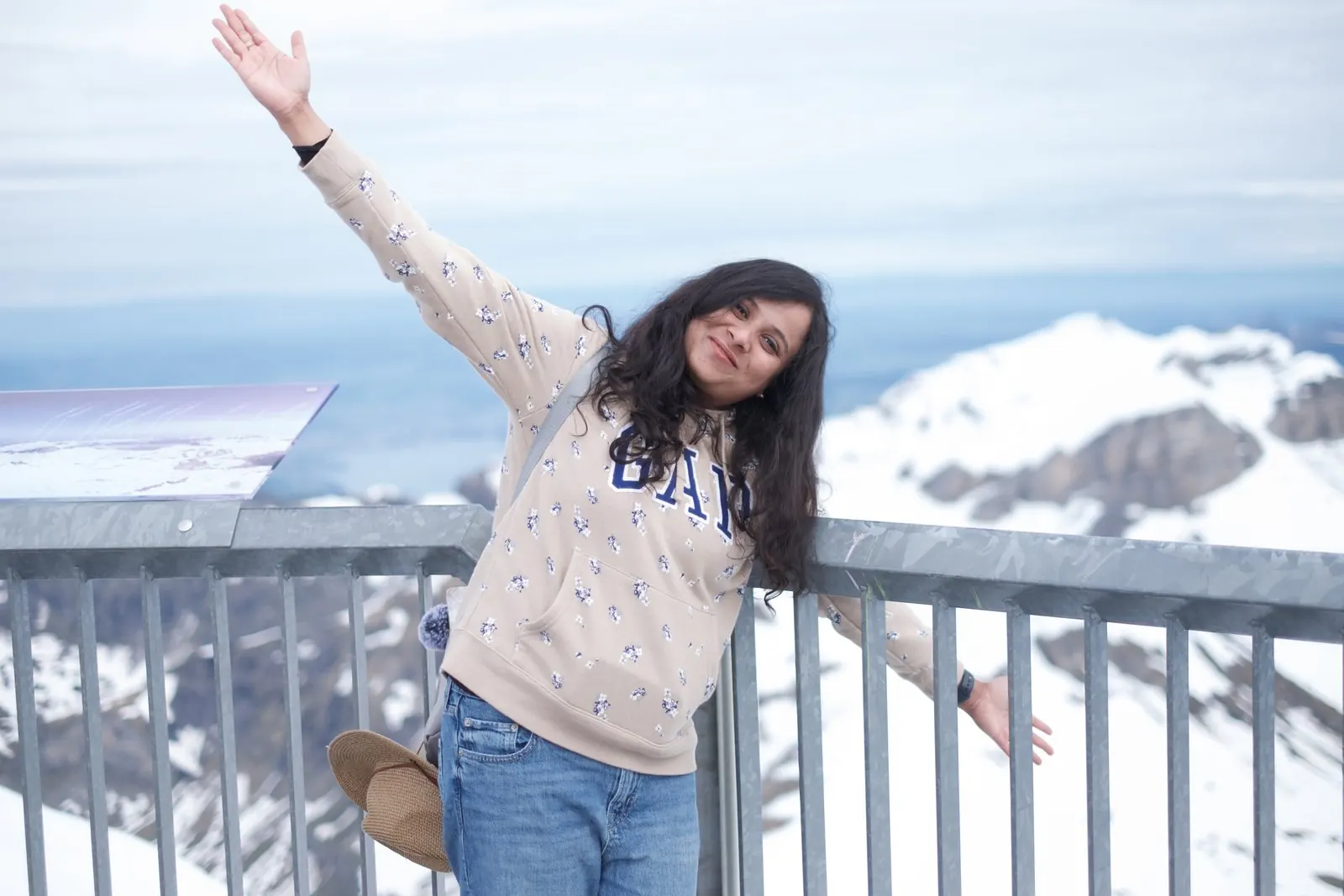
At the top: a 360-degree panorama with the Eiger, Mönch and Jungfrau lined up like three giant guests at a party. The sky was a moody grey and every ridge was dusted with fresh snow, which only made it more dramatic. Inside, the whole restaurant floor turns slowly, one full revolution every 45 minutes, so the mountains parade past your table while you eat.
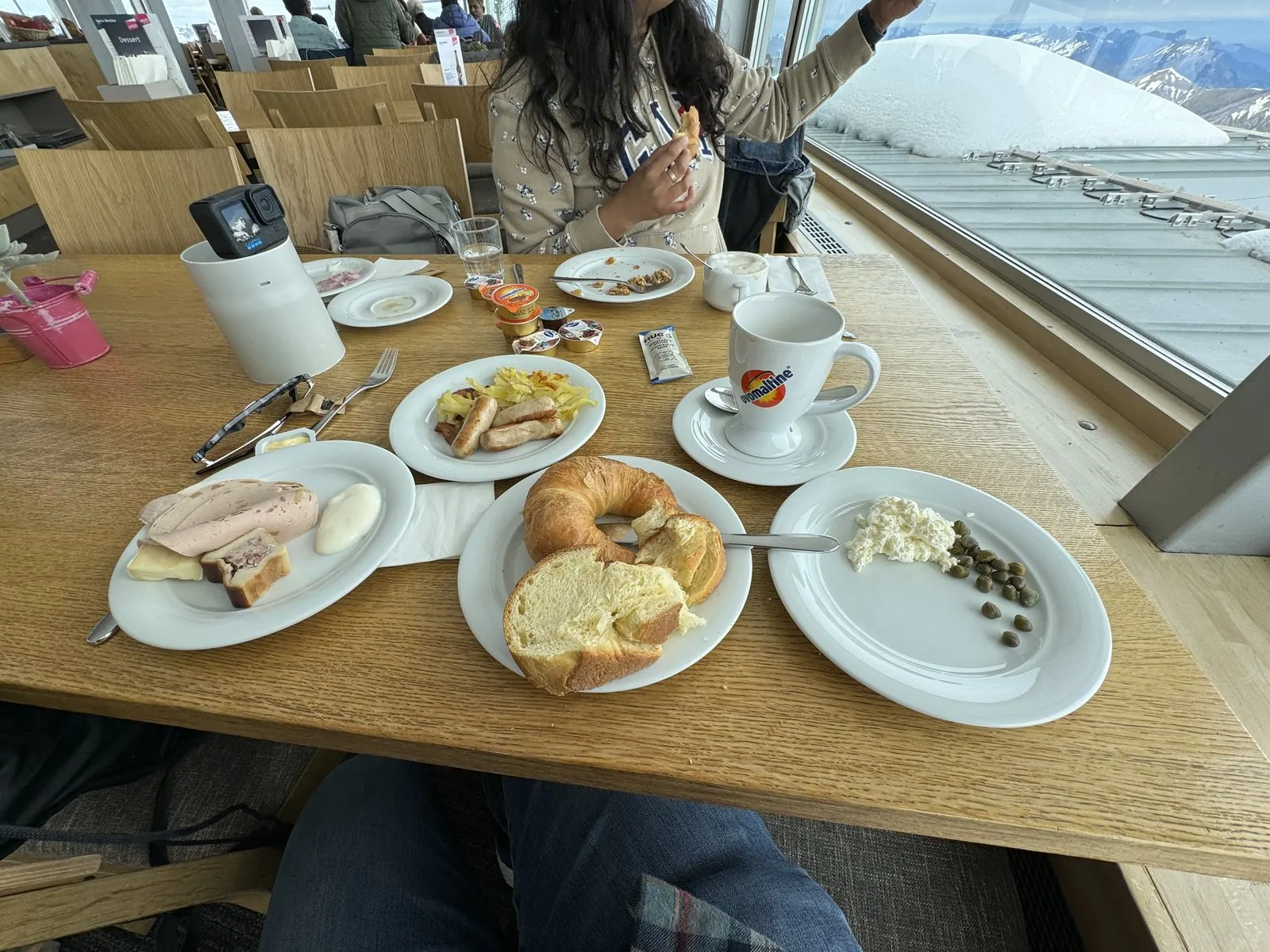
The brunch? Cheeses, smoked meats, fruit, hot dishes, and my new love, Zopf, the braided bread with a crisp crust and a soft, pillowy middle, plus cream cheeses. Arsha ate with the focus of an Olympic athlete. We had a 90-minute seating, and I filmed a time-lapse of the entire rotation, a table with a view on a spinning mountain.
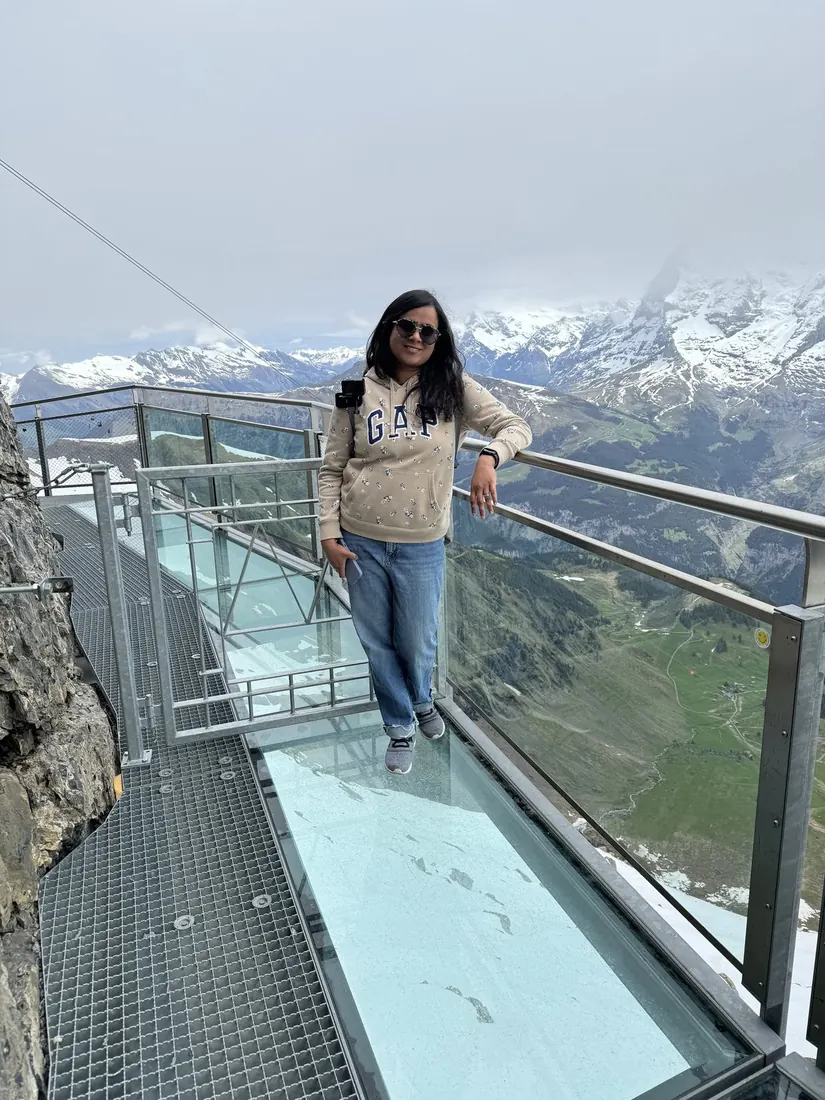
On the way down, we got off at Birg for the Thrill Walk: a steel walkway bolted to the cliff, with glass floor panels, wire-mesh tunnels and tightrope sections over a thousand-foot drop. Perfectly safe, but try telling your stomach that.
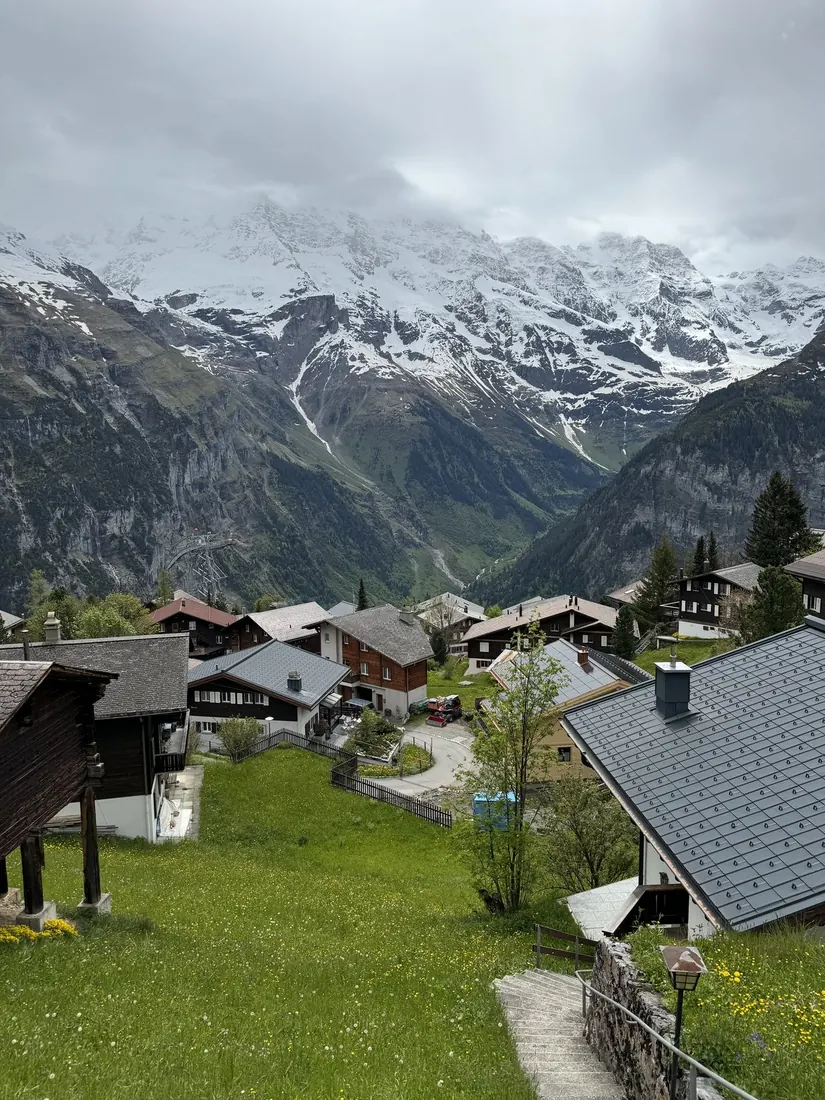
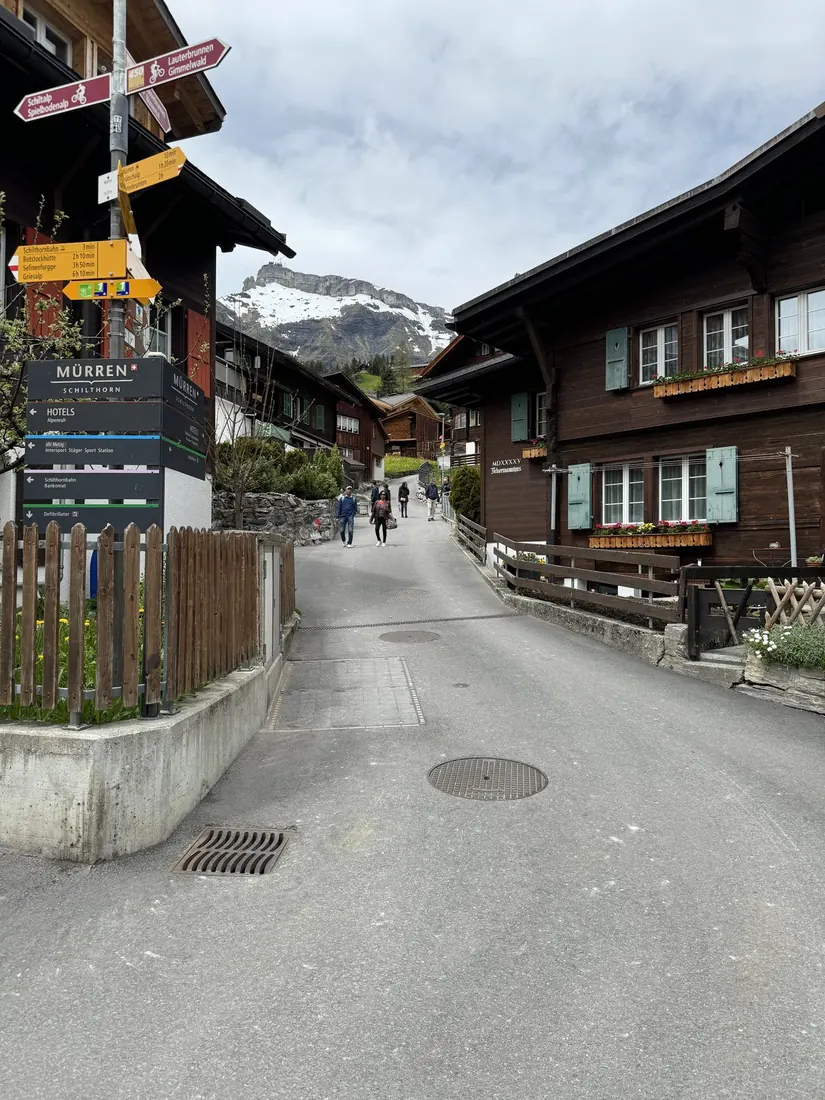
And now, the moment I’d been waiting for. At Mürren, a car-free village perched on the cliff edge, I wanted to hike the North Face Trail down to Gimmelwald. Arsha was… not on board. After the Rome marathon, her feet had a few questions about why we needed to walk more. I used all my charm. (She’ll tell you I used “persistence.”)
She said yes.
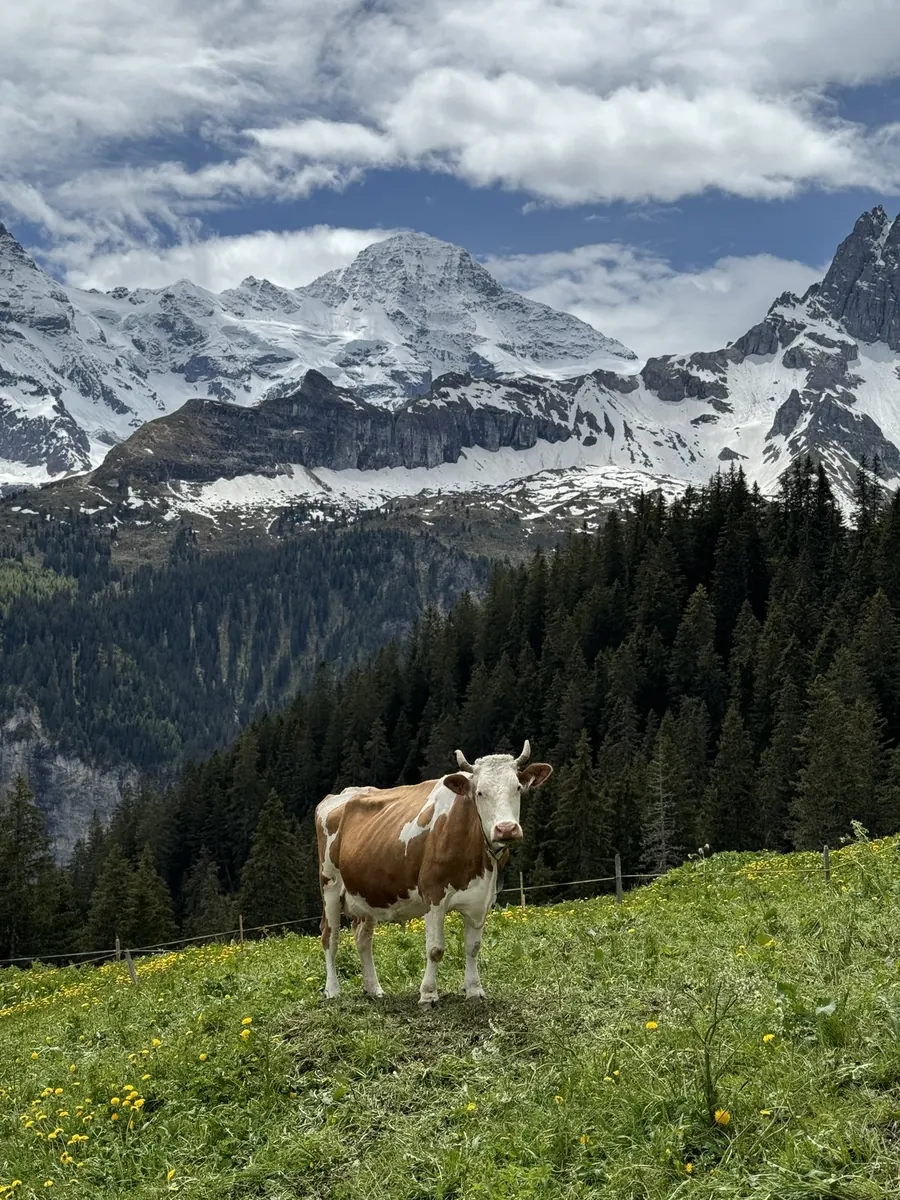
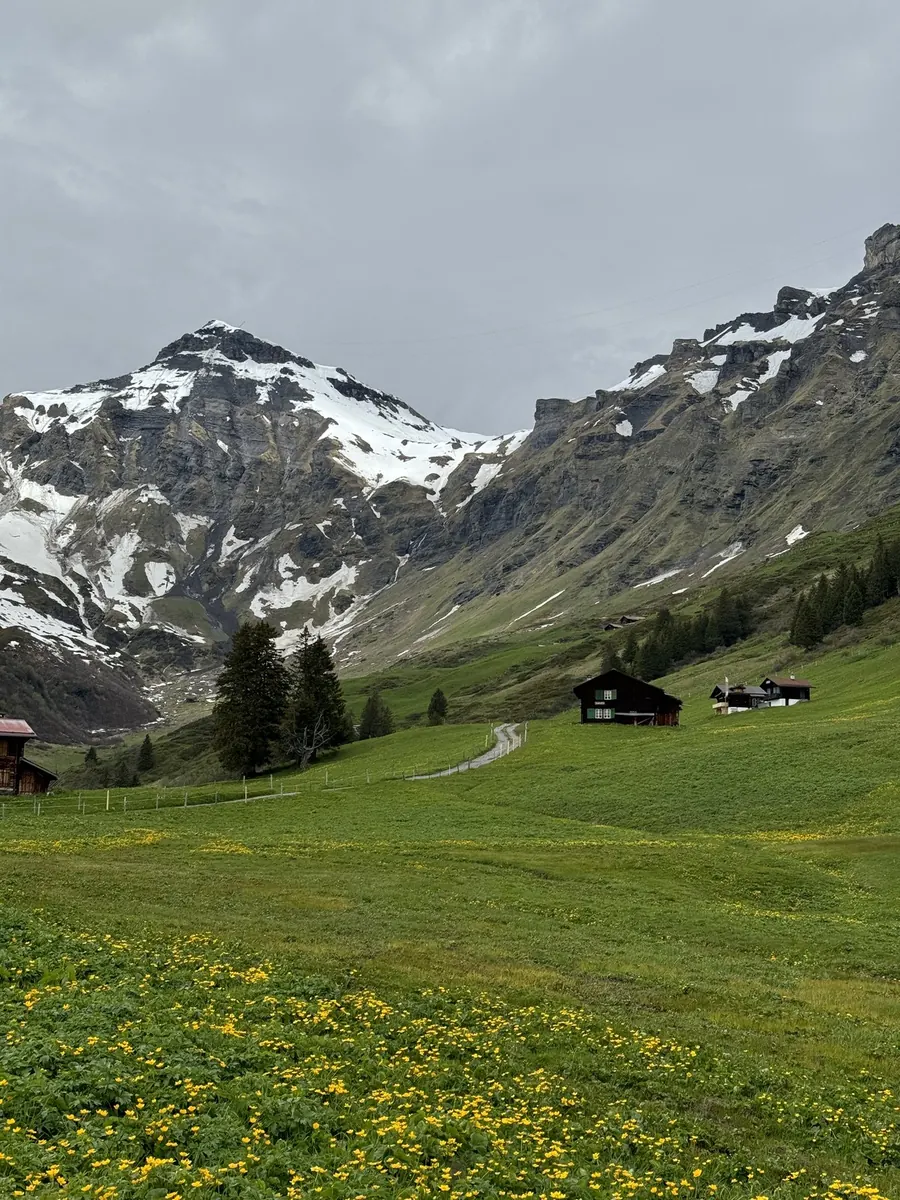
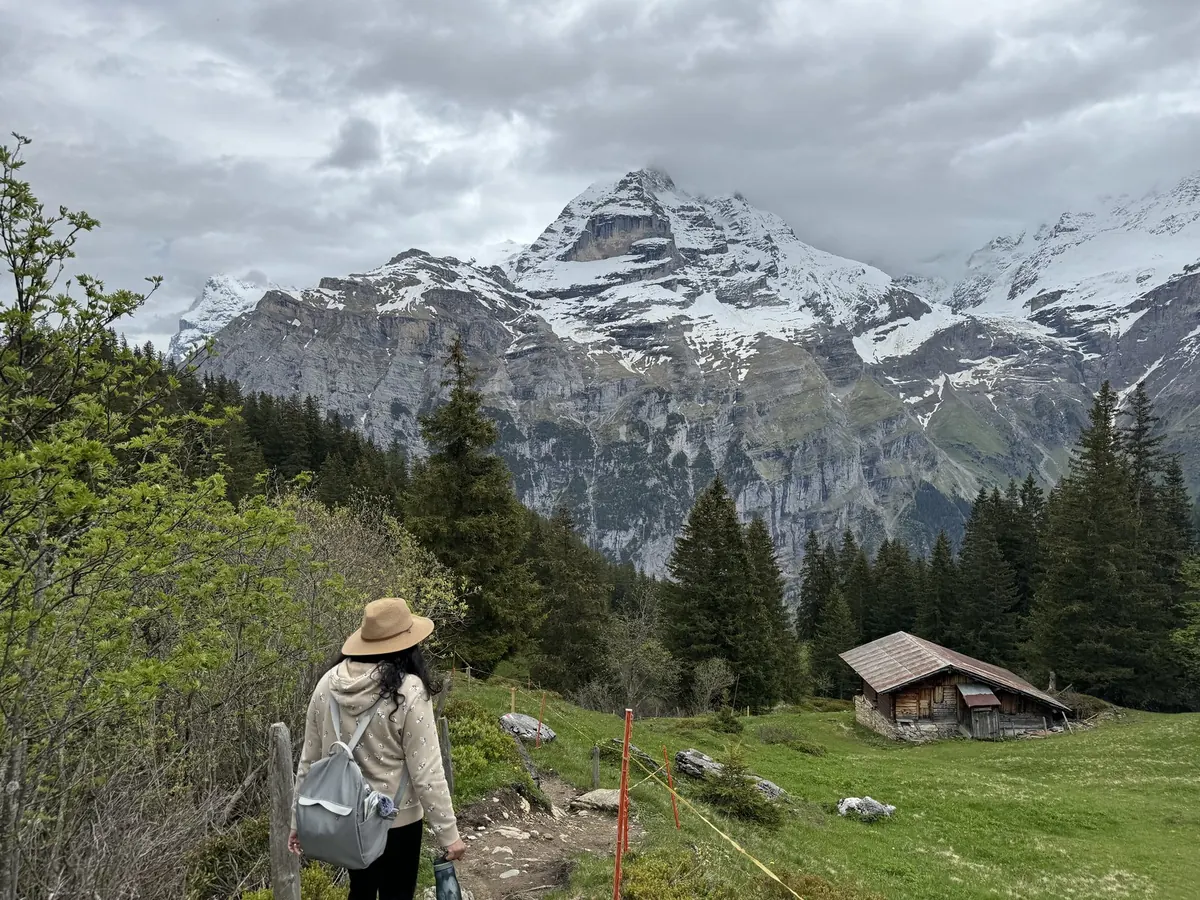
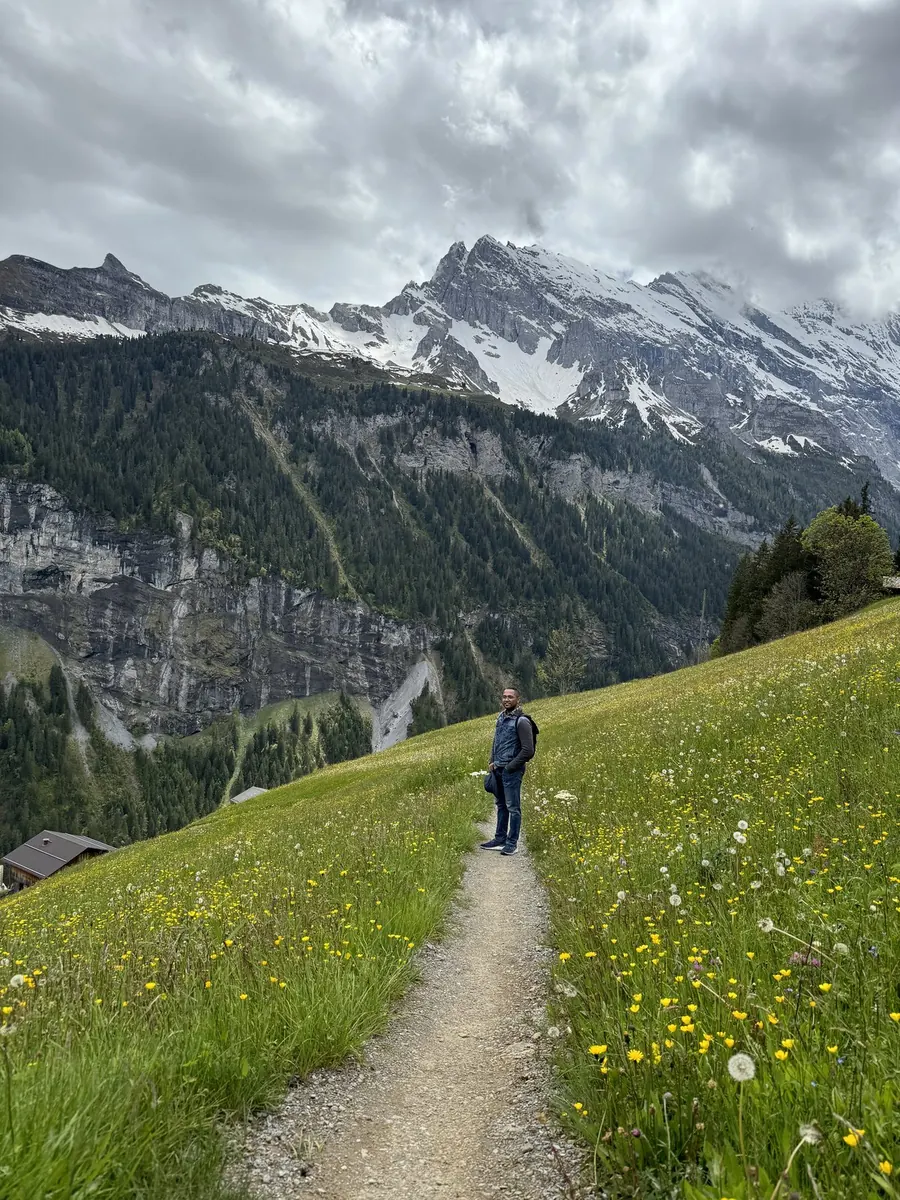
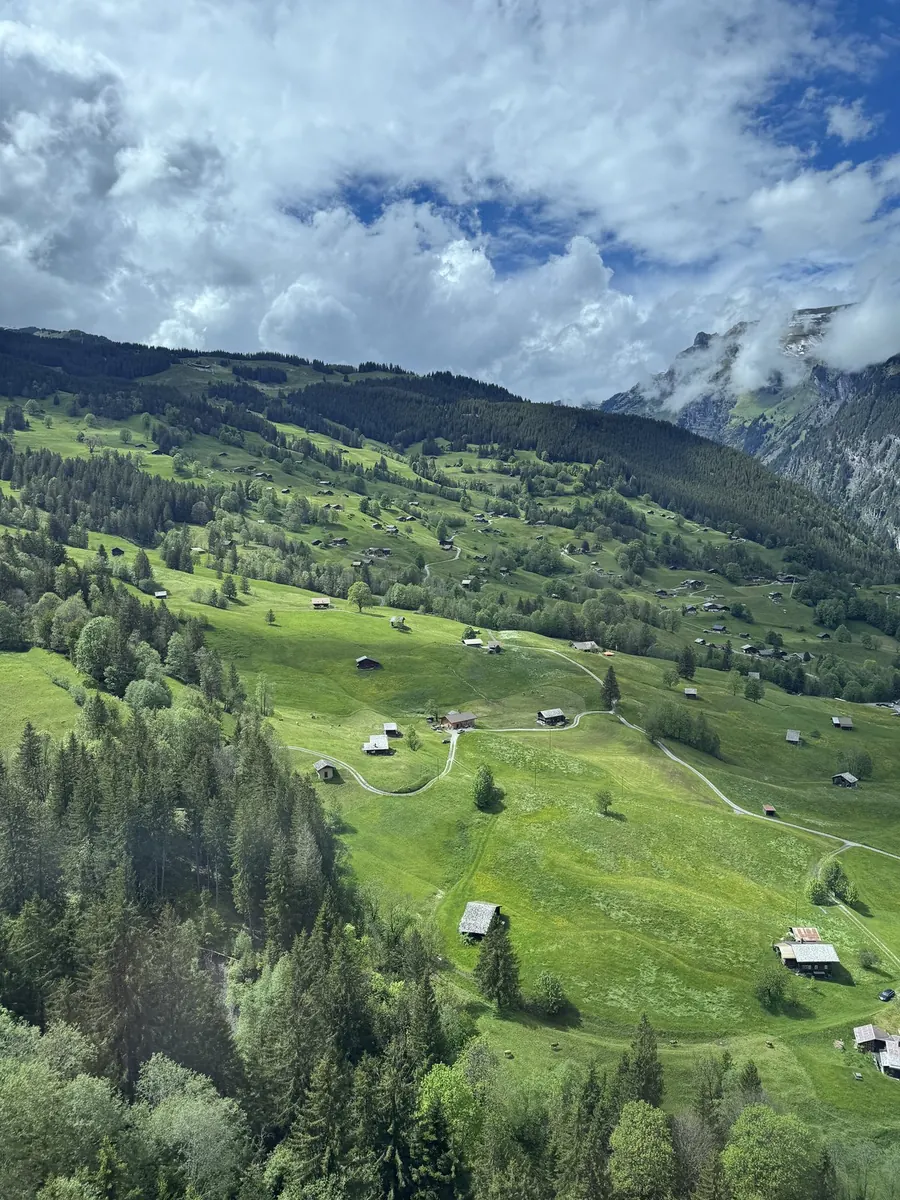
The first 40 minutes were uphill through pine woods. Then we cleared the tree line, and the world opened up. Meadows covered in yellow, purple, blue and white wildflowers. Swiss cows with clanging bells. Mountains in every direction. Hardly another human on the trail. The path even ran right behind a glacial waterfall, a curtain of water you walk behind, before dropping into Gimmelwald.
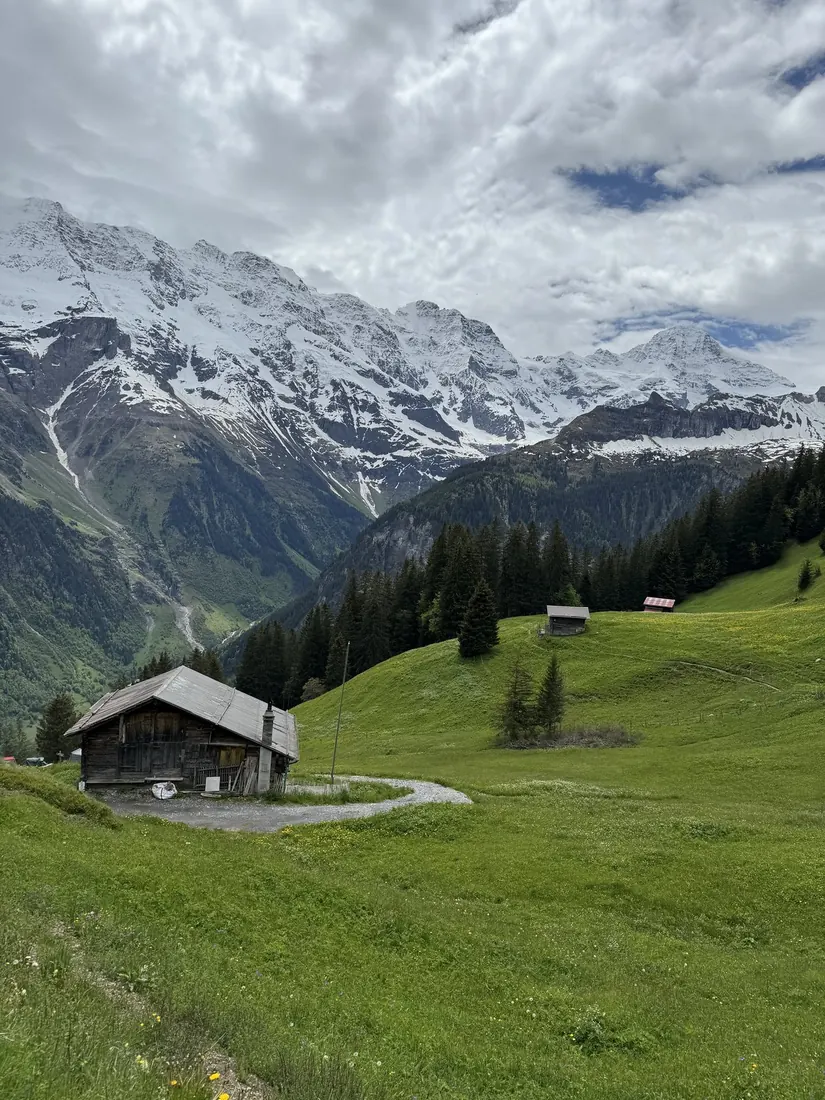
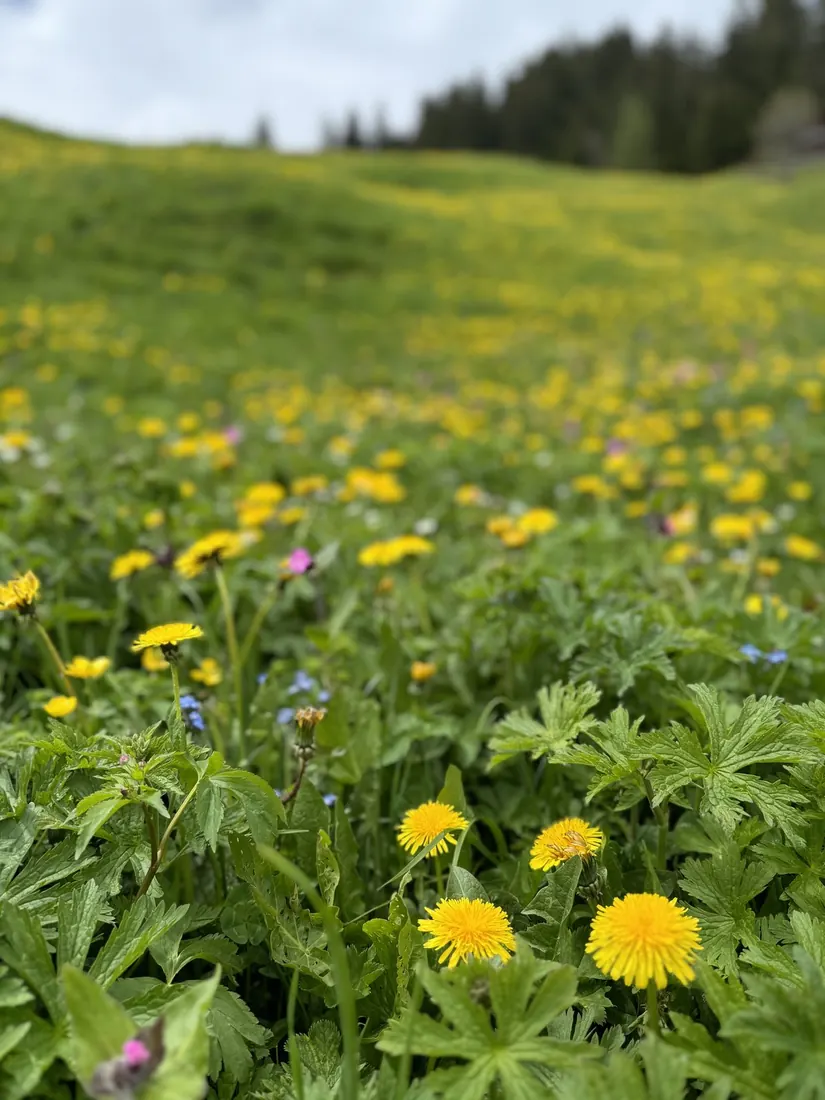
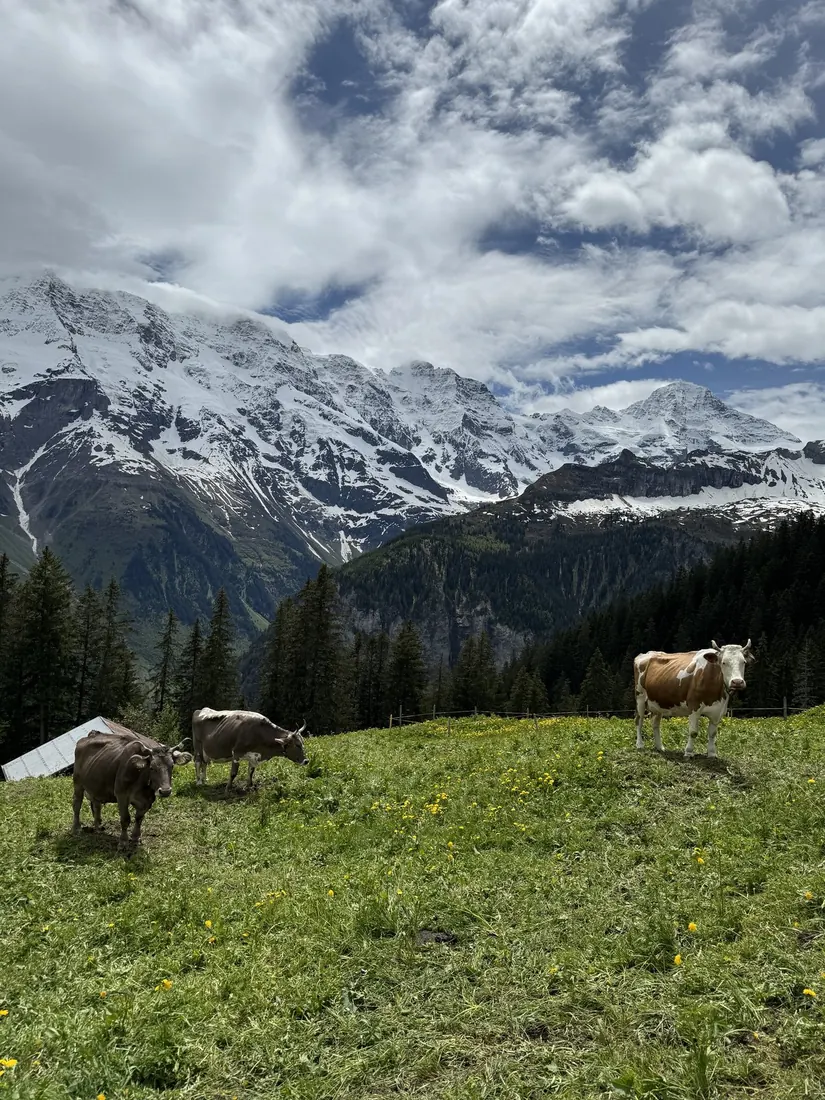
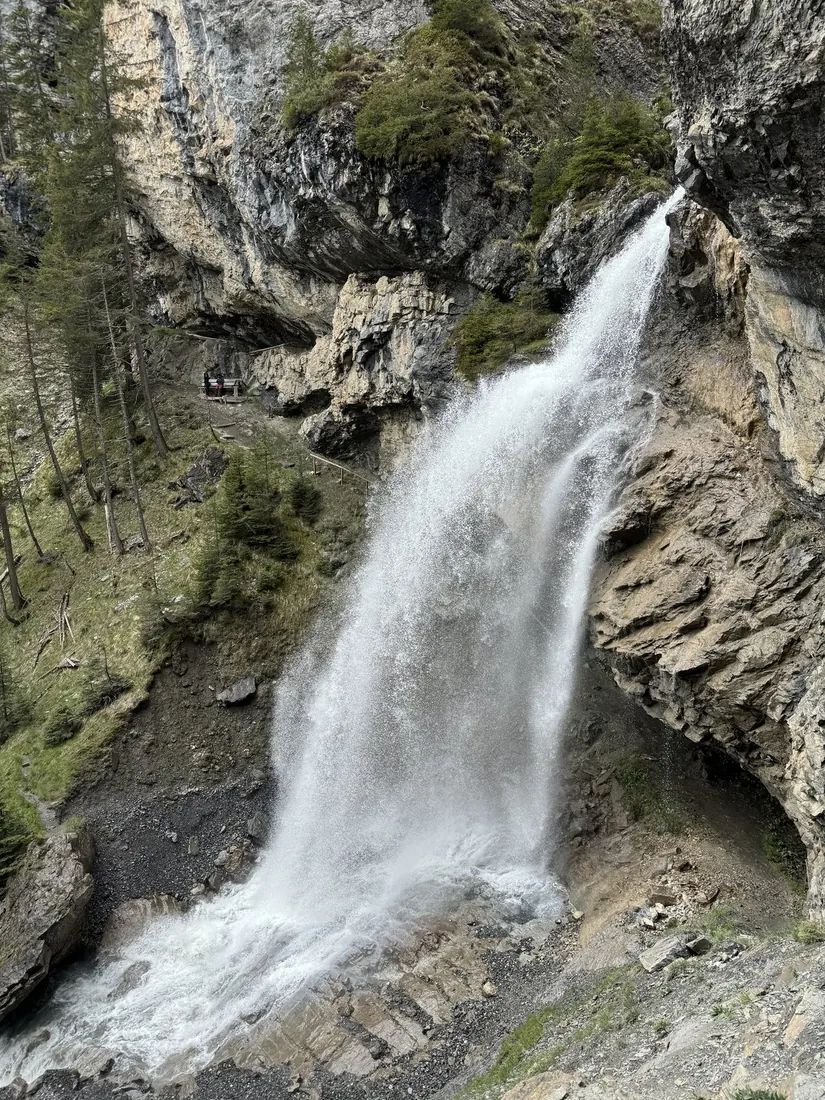
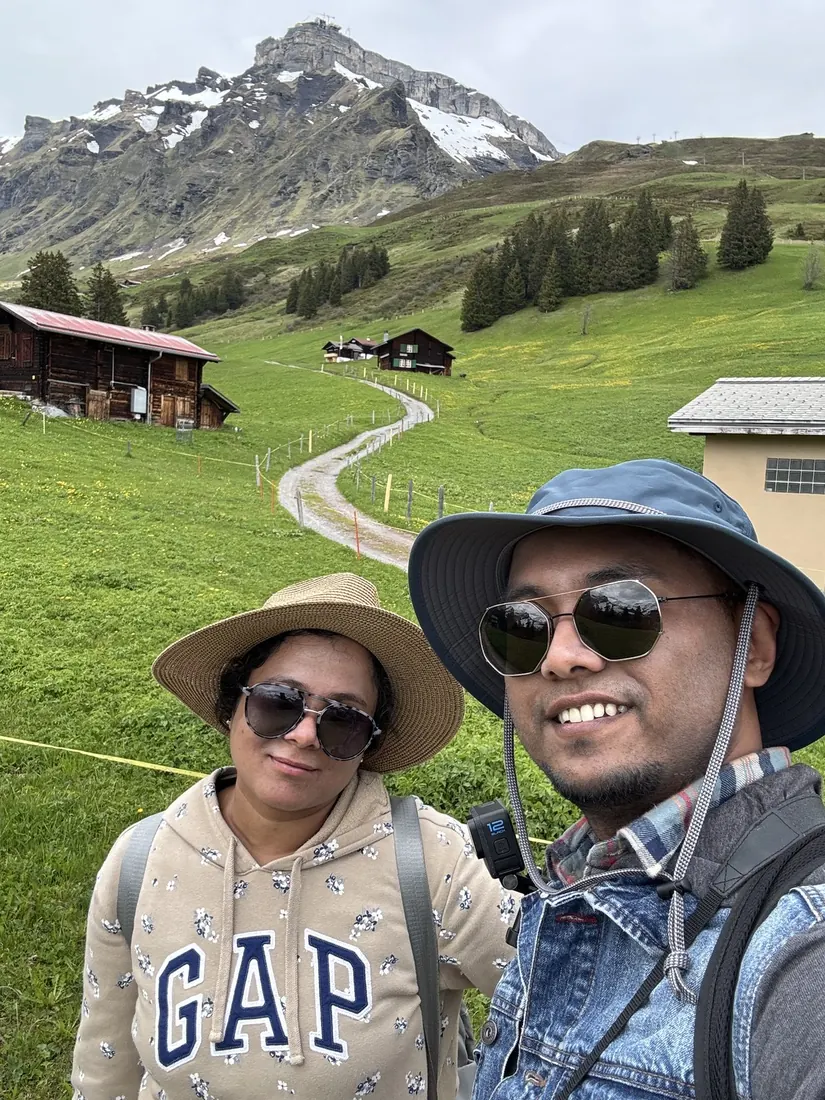
By the end, I could see it all over Arsha’s face: she was glowing. Completely rejuvenated, happy as a mountain goat. If she’d stayed stubborn, she’d have missed all of it. That’s Arsha in a nutshell: she’s not the one who does the deep dive, but if you can get her to try something new, she’ll trust you, come along, and then enjoy it more than anyone. I’ll take that over a travel partner who plans everything. (I already plan everything.)
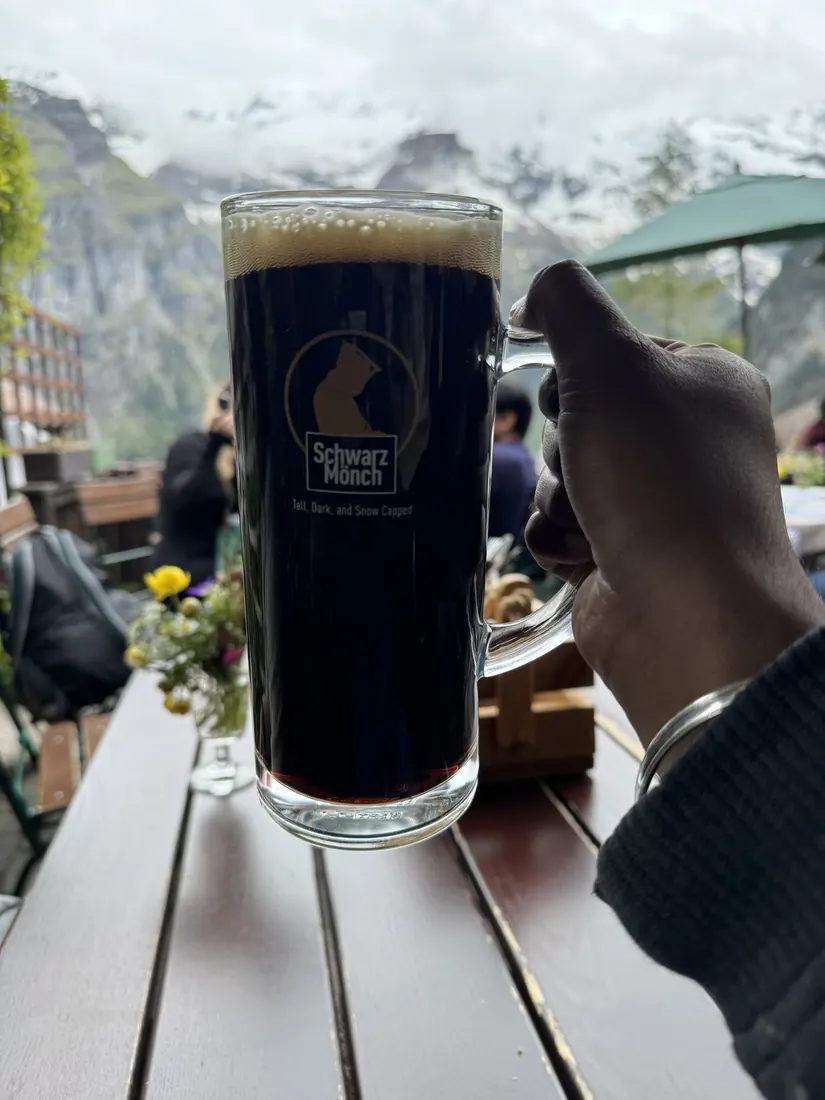
In Gimmelwald we stopped at Pension Gimmelwald for a pint of Schwarzmönch, a dark ale with a white head like a snowy peak, which is the right drink after a hike like that. The village is also famous for its honesty fridges: farm cheese and sausages by the road, take what you want, drop the cash in the box. Imagine that kind of trust.
Cable car to Stechelberg, bus to Lauterbrunnen, sausages for dinner at the chalet. And a bonus I couldn’t stop talking about: flawless 5G even on cliff edges and forest trails. Another 20,000 steps. Switzerland had just raised the bar, and the bar was already high.
I fell asleep that night with sore calves and a smile. The forecast for tomorrow was less sure of itself, which meant tomorrow was a gamble.
Static Hair, Scooters and Waterfalls
Thu, May 30 · Grindelwald and Lauterbrunnen
Rain was forecast, but the morning gave us a window, so we took it. Train to Grindelwald, an alpine town tucked right beneath the Eiger’s north face, then a gondola up to First (2,168 meters).
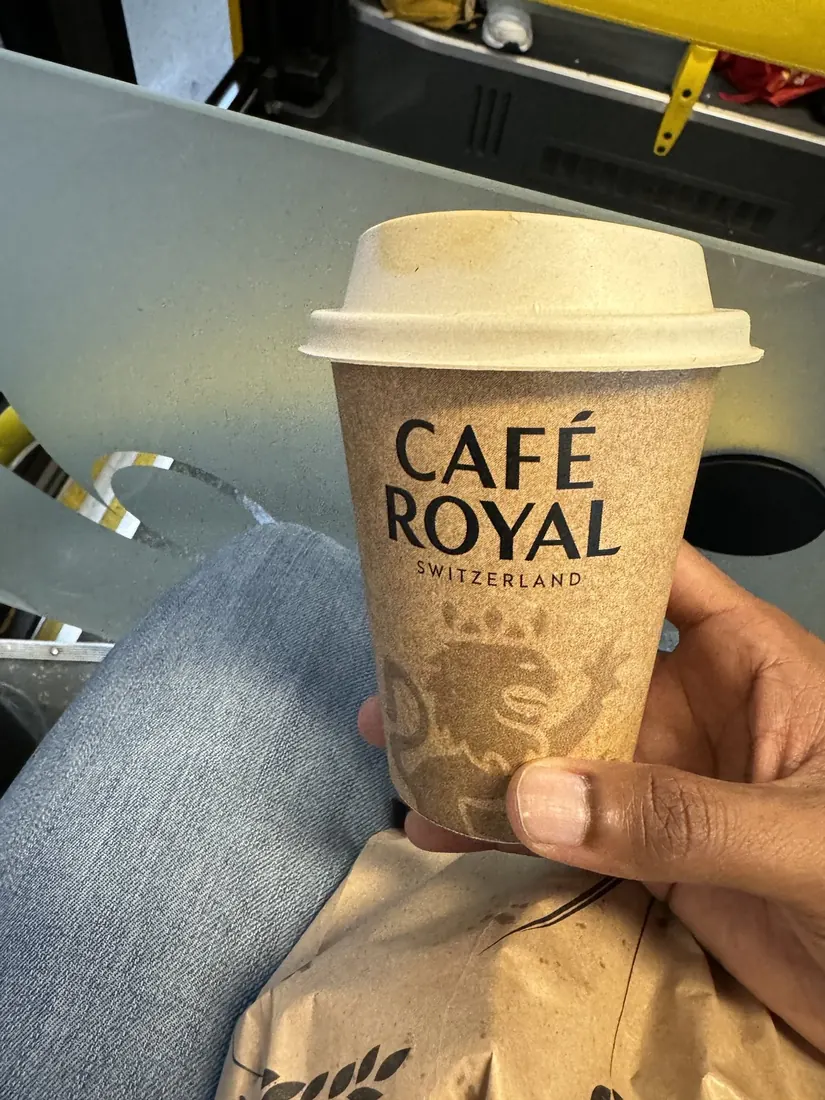
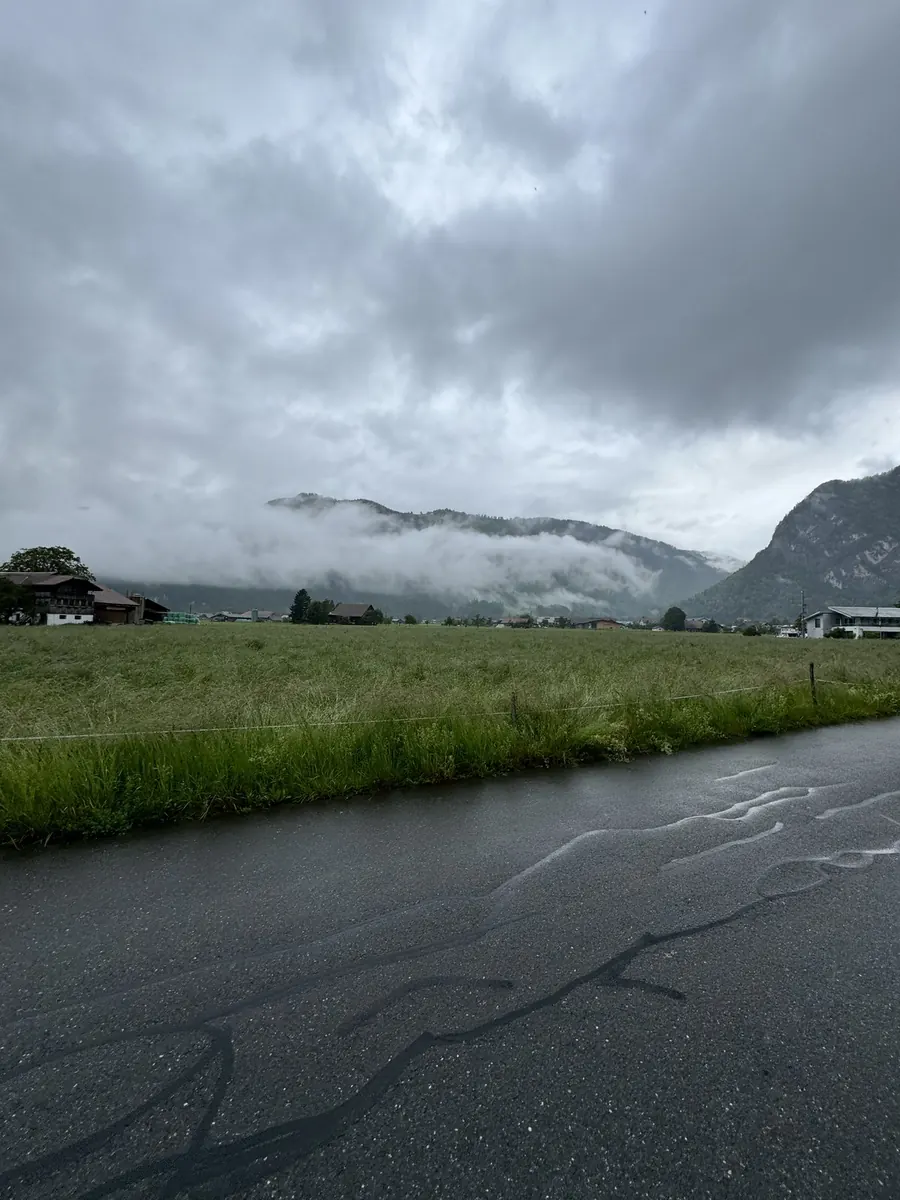
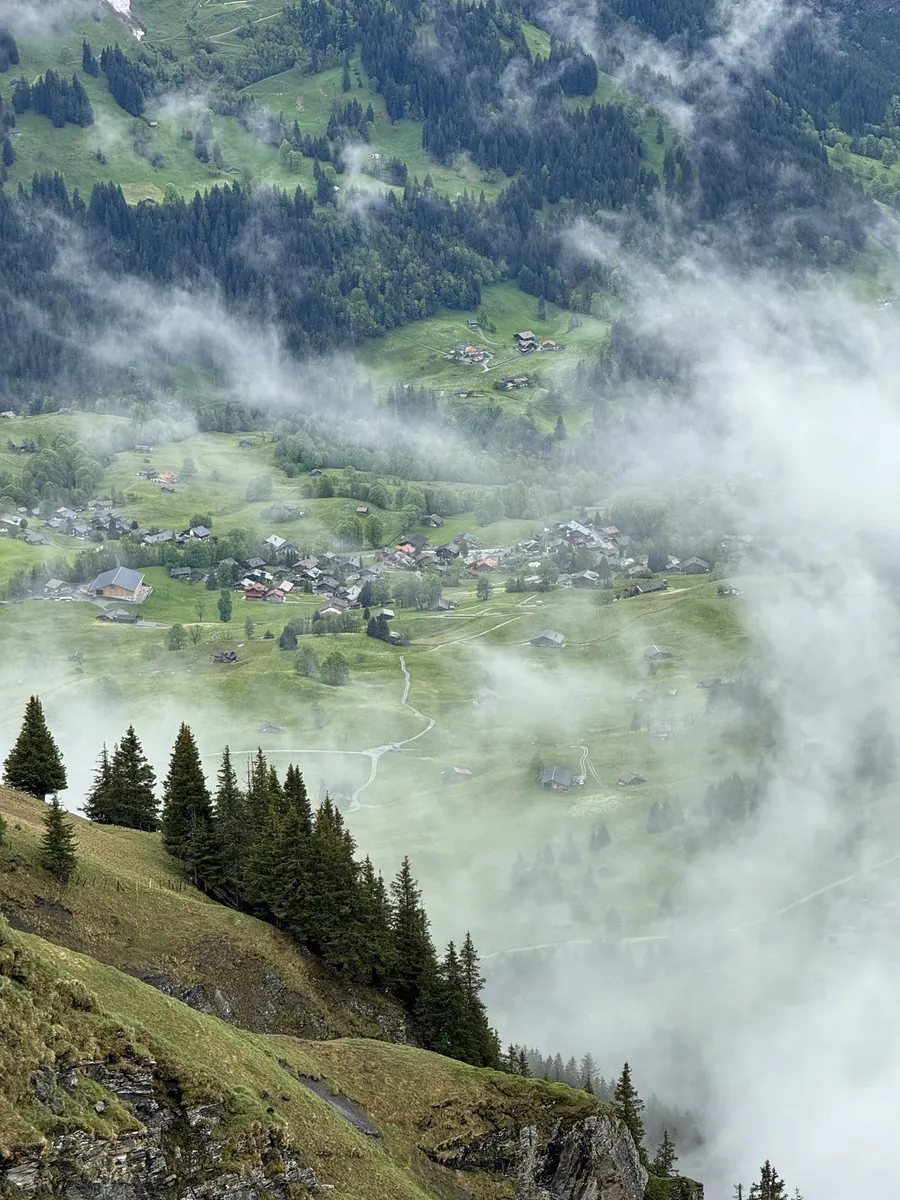
The window was narrow. When we left the chalet around 7:30 the road was wet, the meadows were steaming, and the mountains had clouds draped over their shoulders. We grabbed Café Royal coffees for the train, and as it followed the Lütschine valley the mist was lifting off the pine forests in slow, lazy strips.
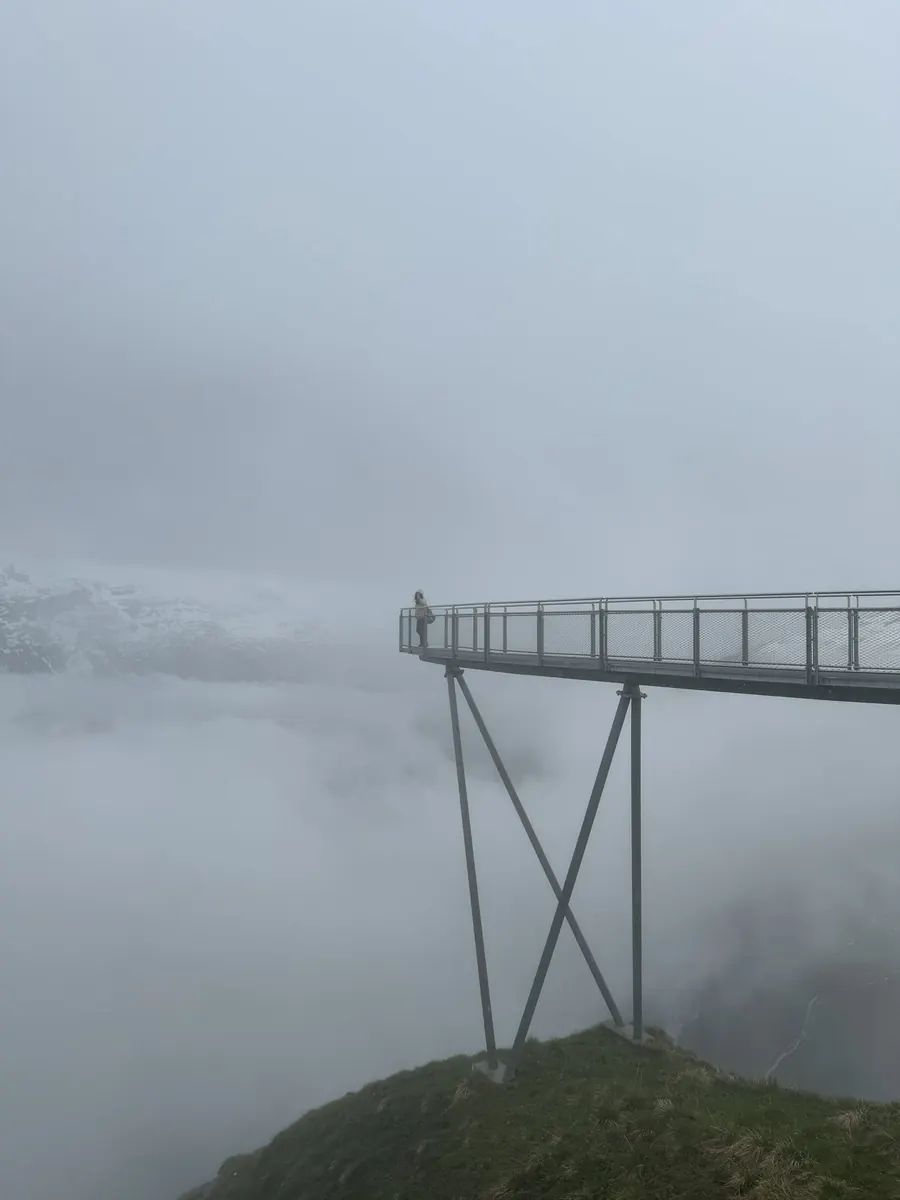
The First Cliff Walk is a single-file metal walkway clinging to the cliff, ending in a platform that juts 45 meters into thin air. The views were wide open for a glorious few minutes, and then clouds rolled over the ridge like someone pulling a curtain.
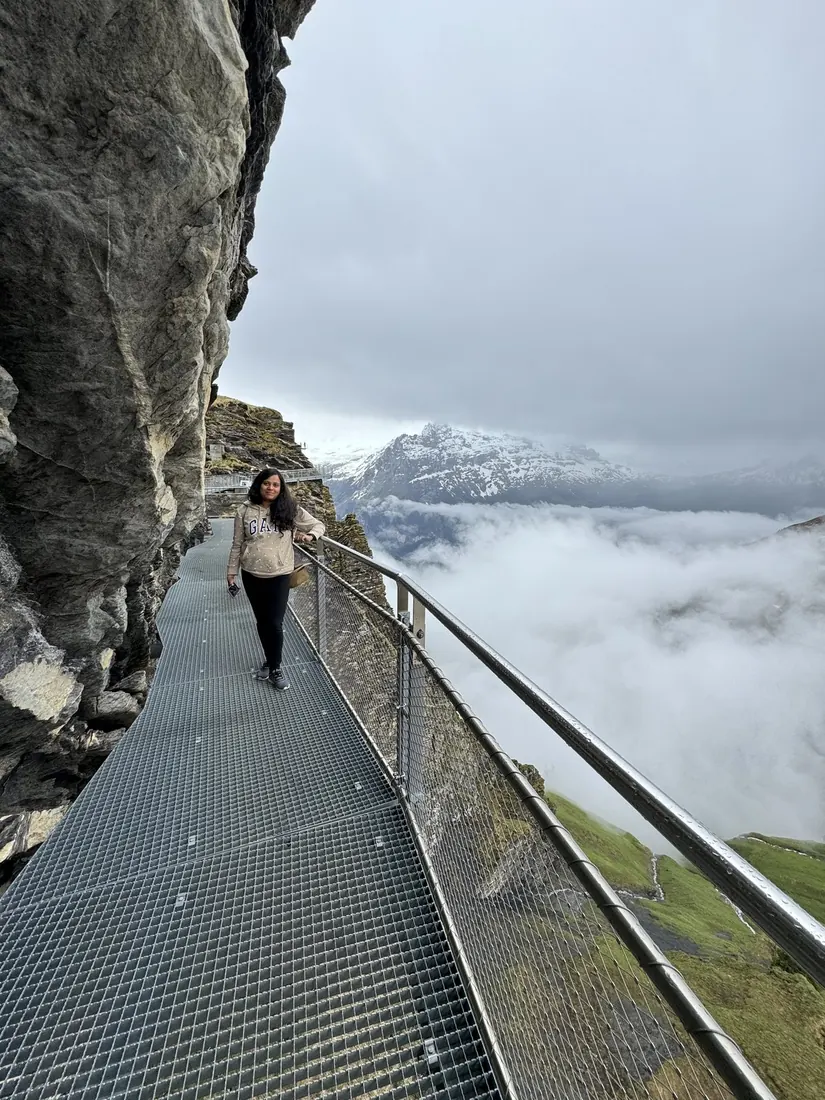
And then something odd. Leaning on the railing, I heard a buzzing, like a radio being tuned. I looked at Arsha, and her hair was standing straight up.
Static electricity!
A thunderstorm was charging up right over our heads. We made a very dignified run for the summit restaurant, ordered coffee, and watched the storm pass, then it cleared in about 20 minutes. Best “my hair is on fire” story I’ve got.
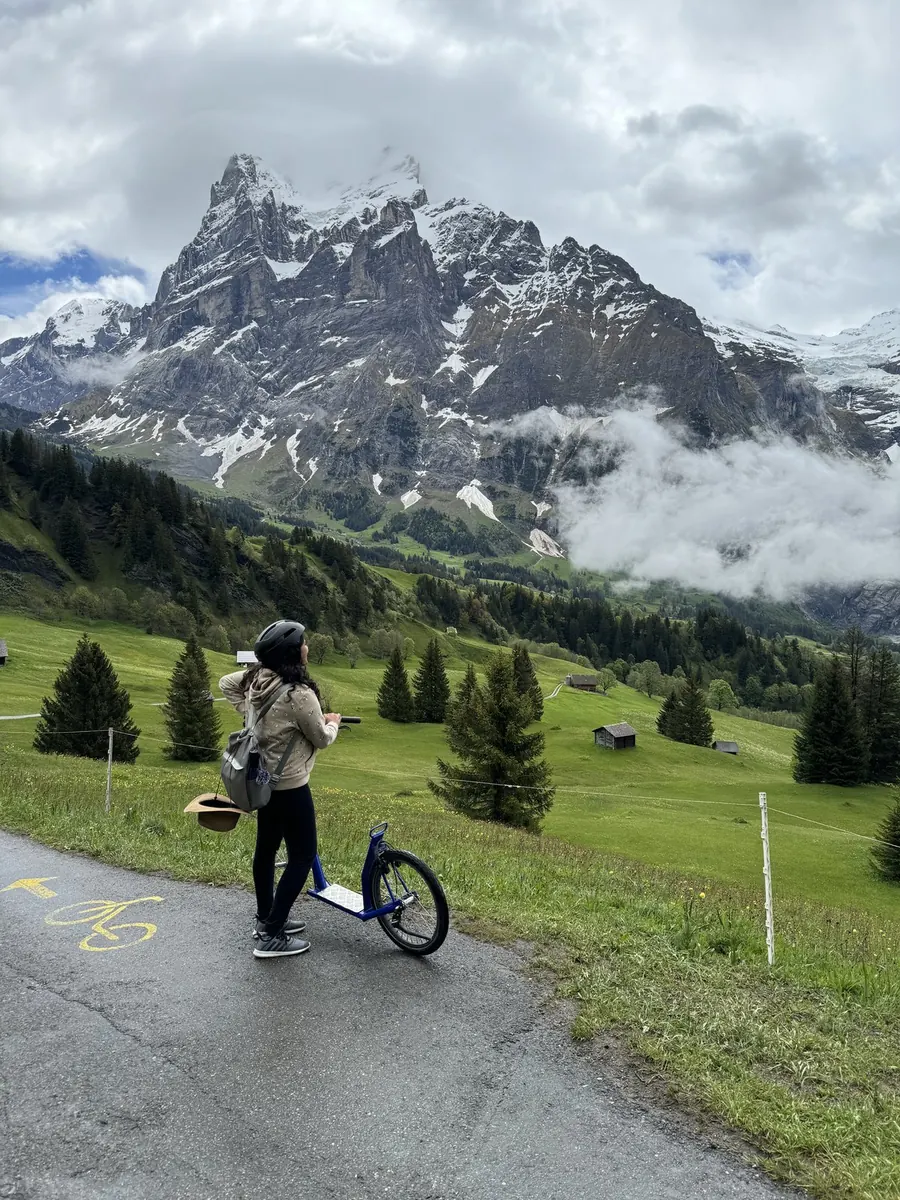
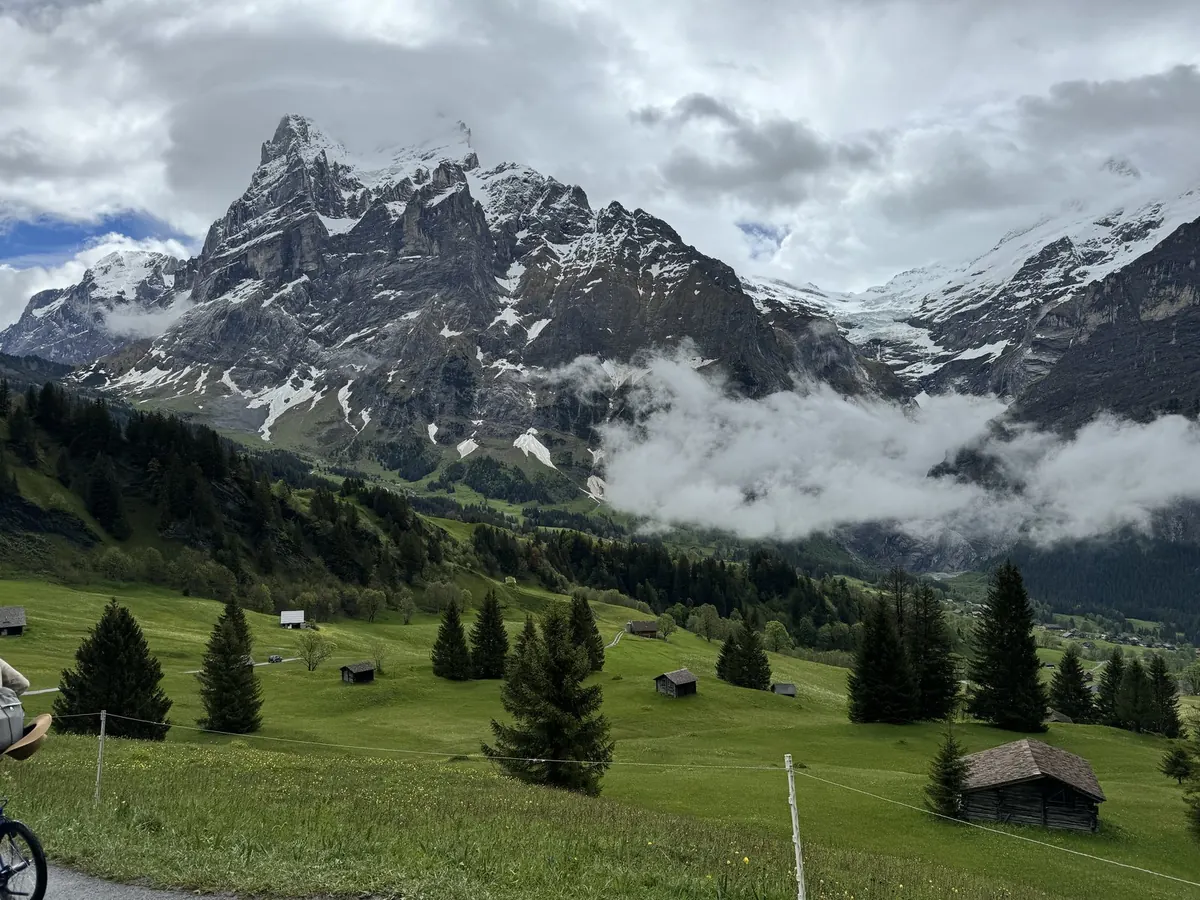
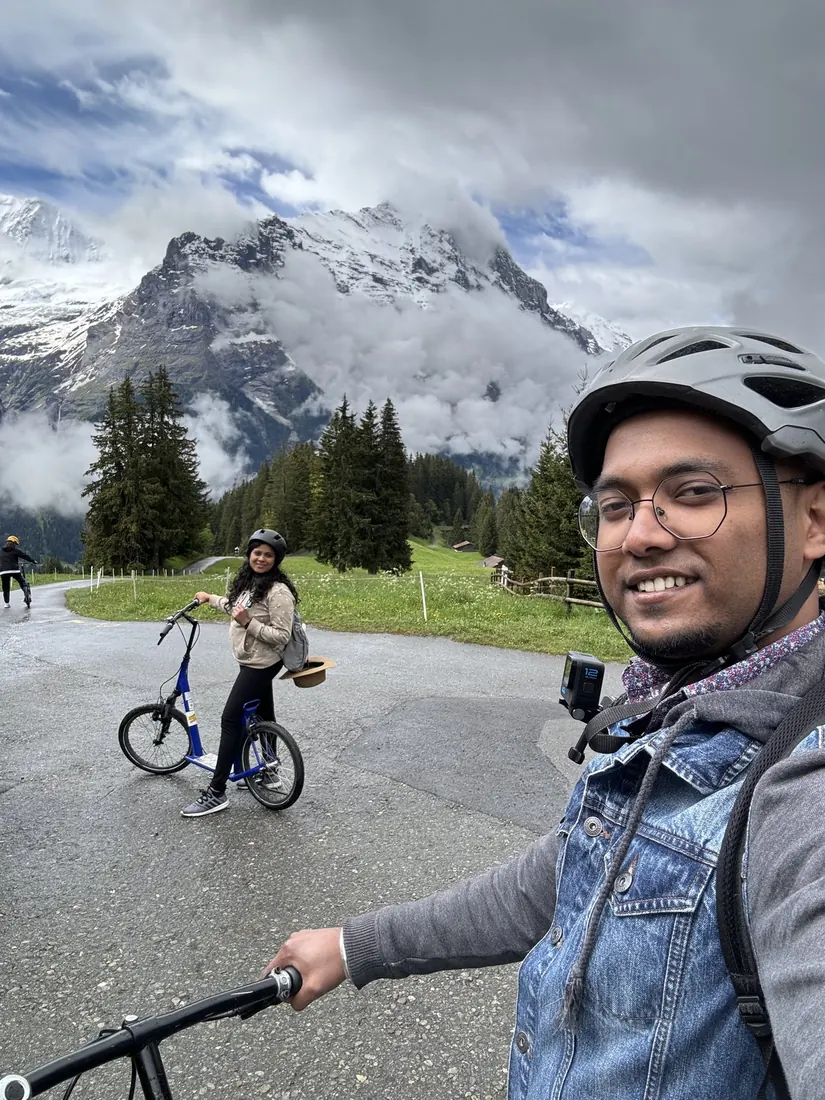
Then the best-named vehicle of the trip: the Trottibike. Imagine a big push-scooter with mountain-bike tires and hand brakes. You stand on it and roll downhill for 45 minutes with no pedaling, past wooden chalets, grazing cows and the Eiger looking over your shoulder. Pure, uncomplicated joy.
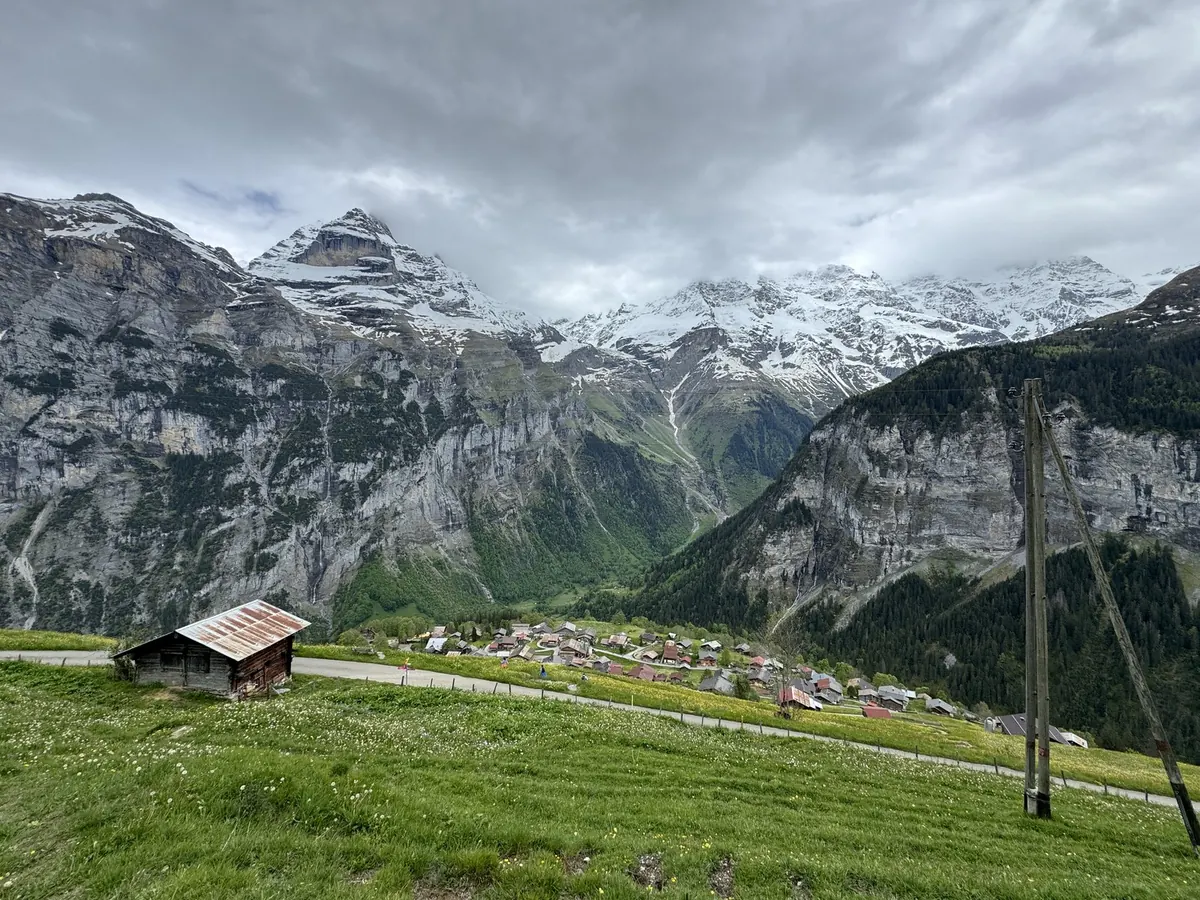
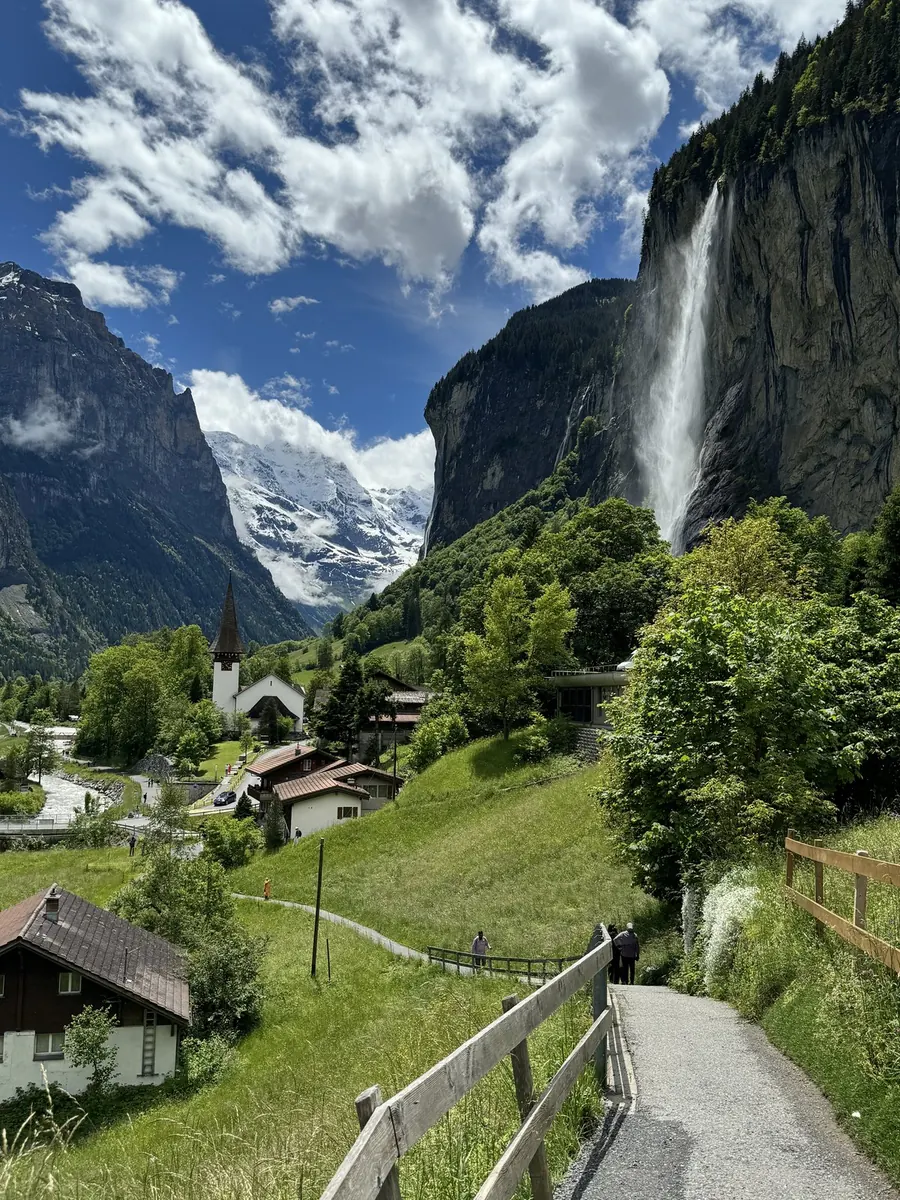
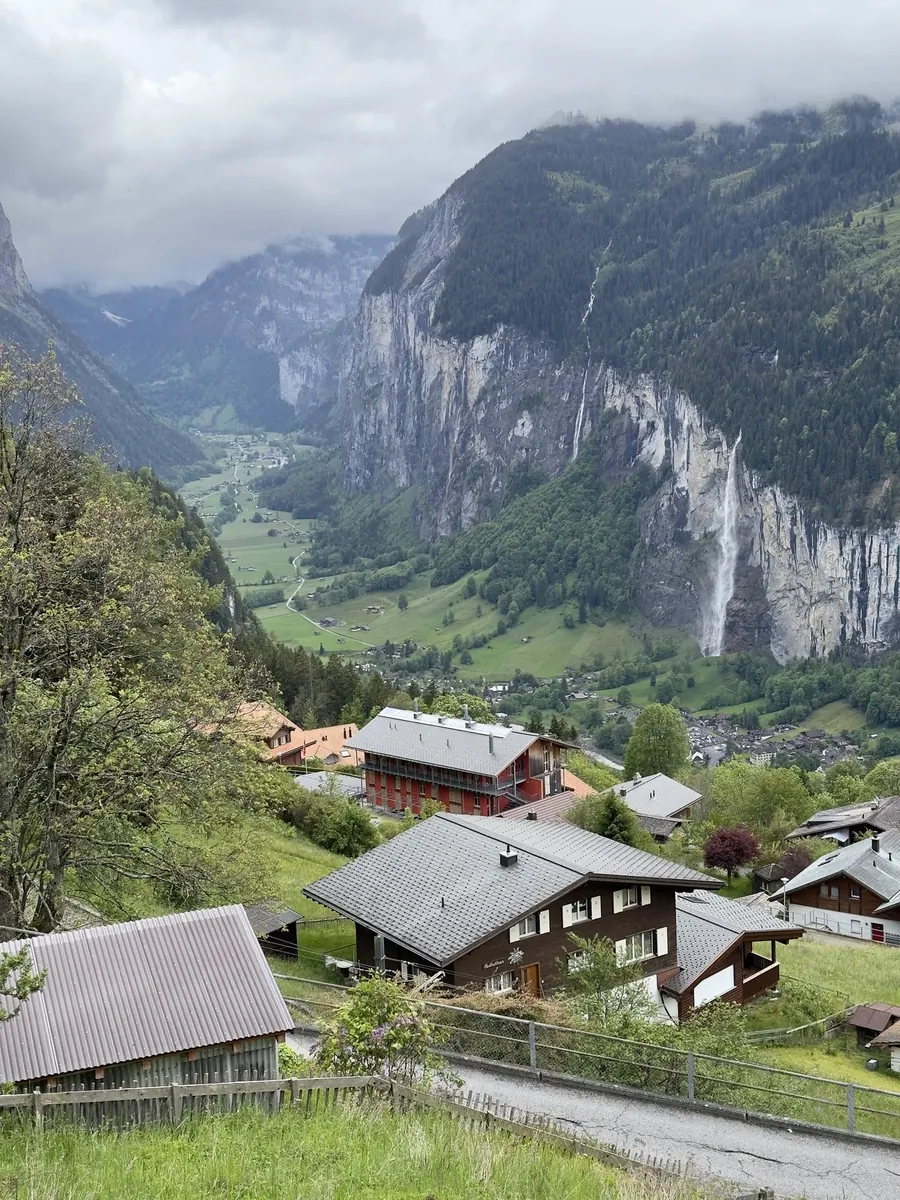
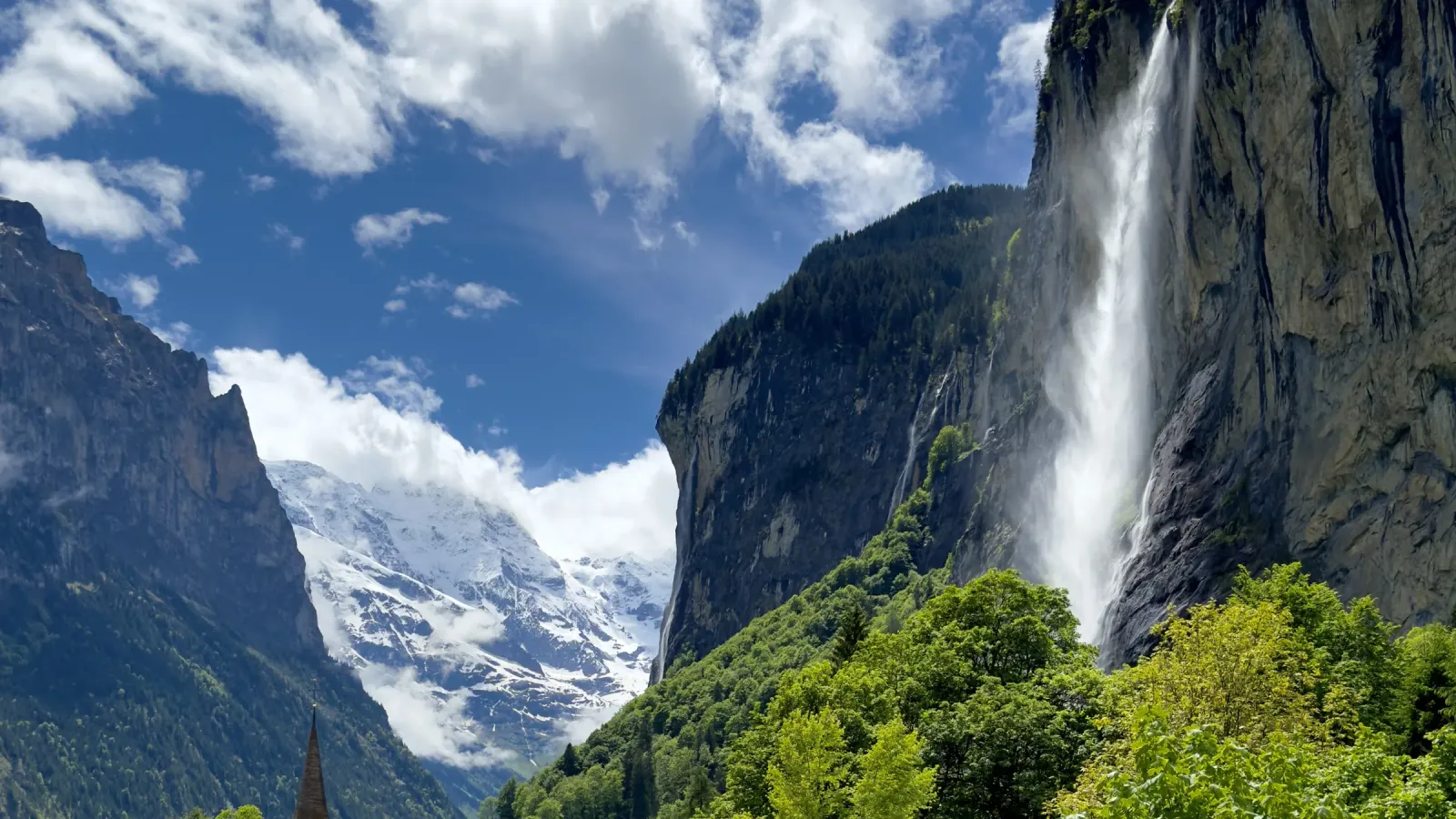
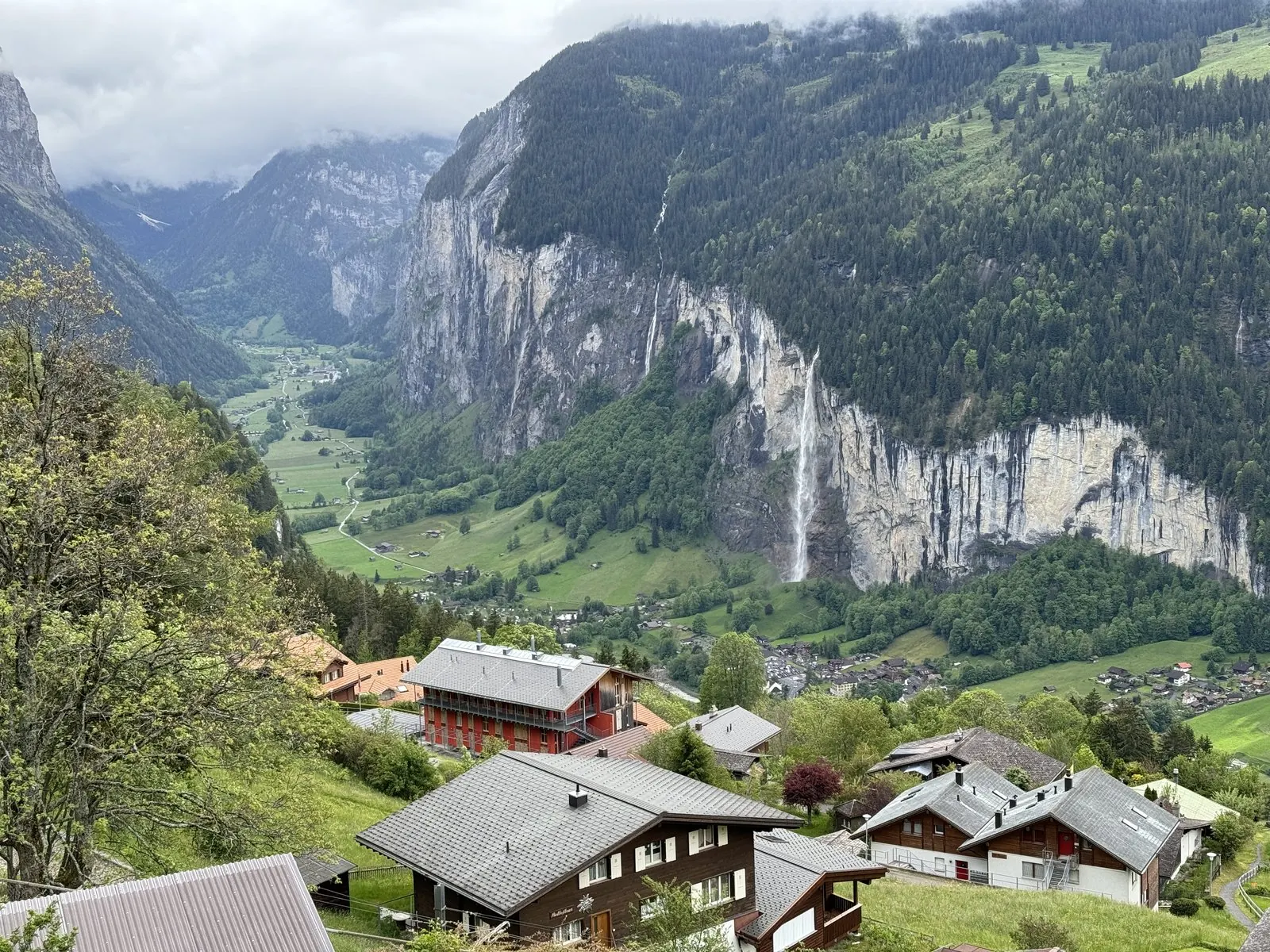
By midday the sky was blue again, and we headed to Lauterbrunnen. This was my dream location, and it did not disappoint. It’s a dramatic U-shaped valley, with 300-meter cliffs on both sides and about 72 waterfalls. Staubbach Falls drops almost 300 meters behind the village church, and the spray floats like mist.
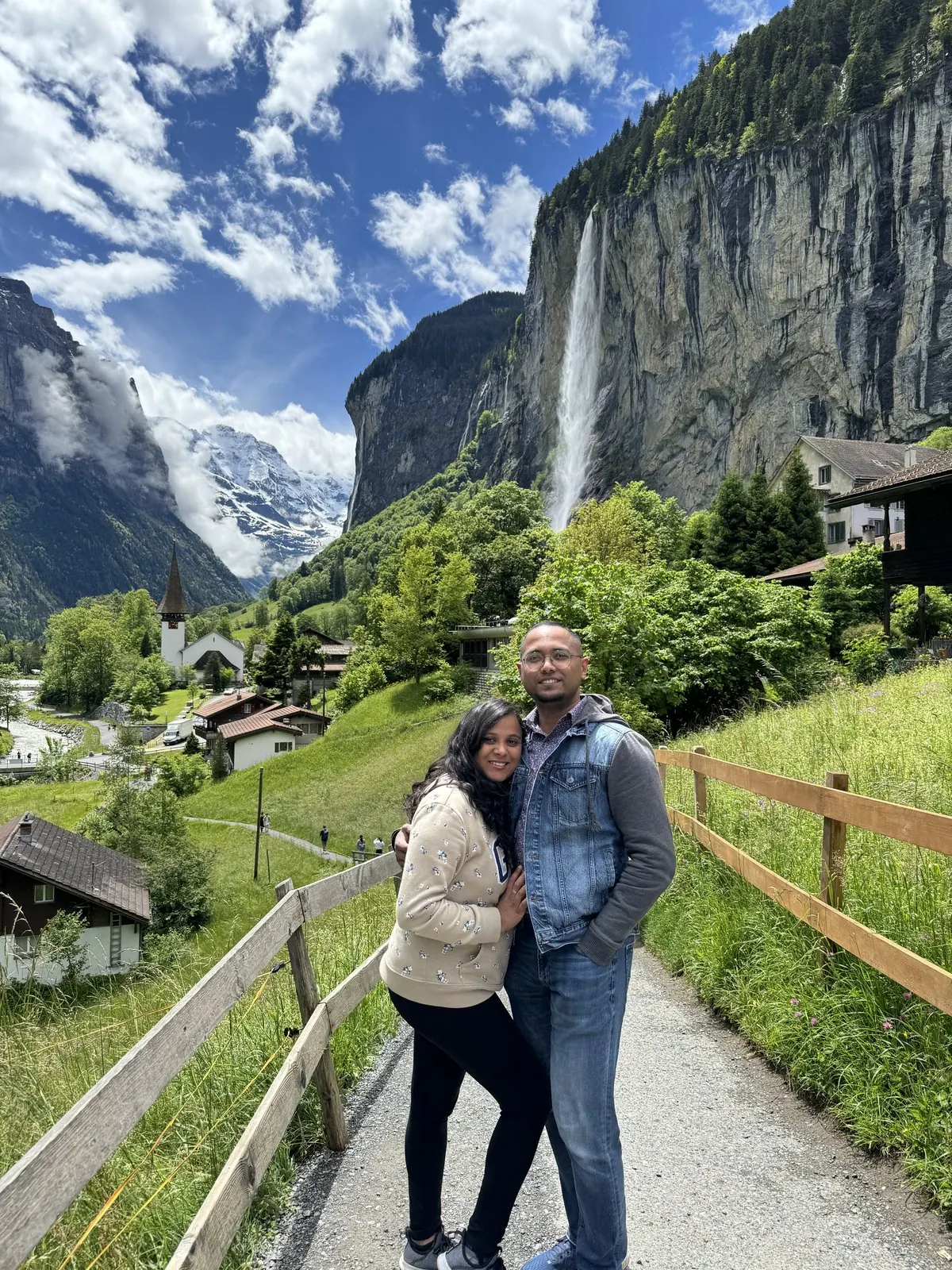
Seven minutes later I took the photo at the very top of this page.
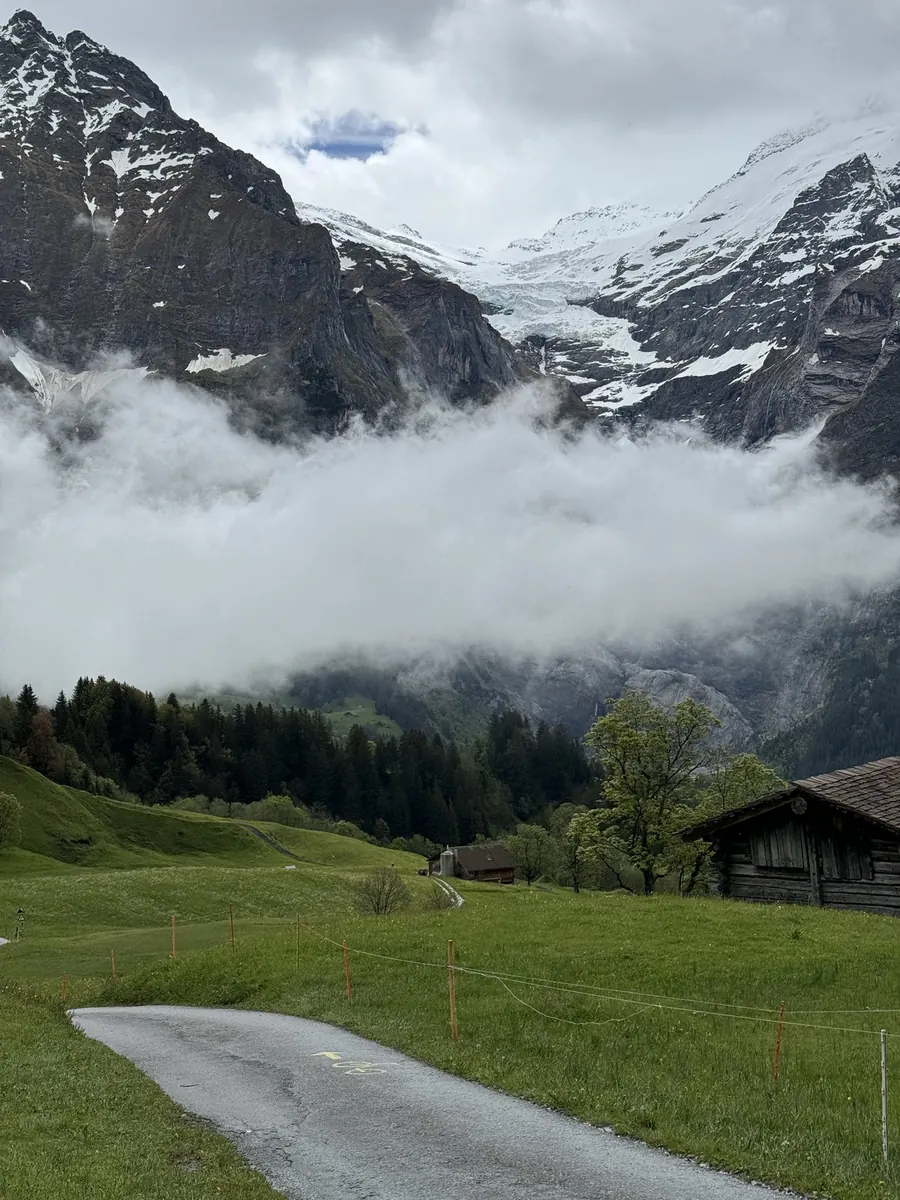
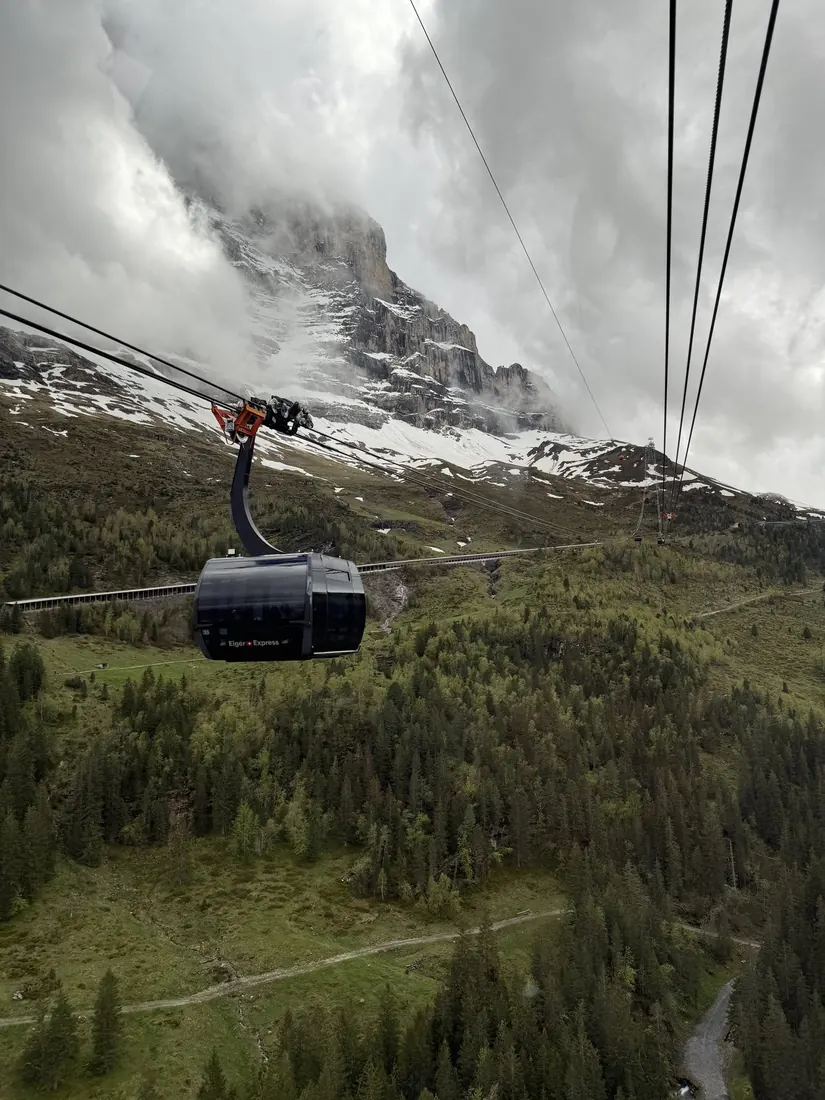
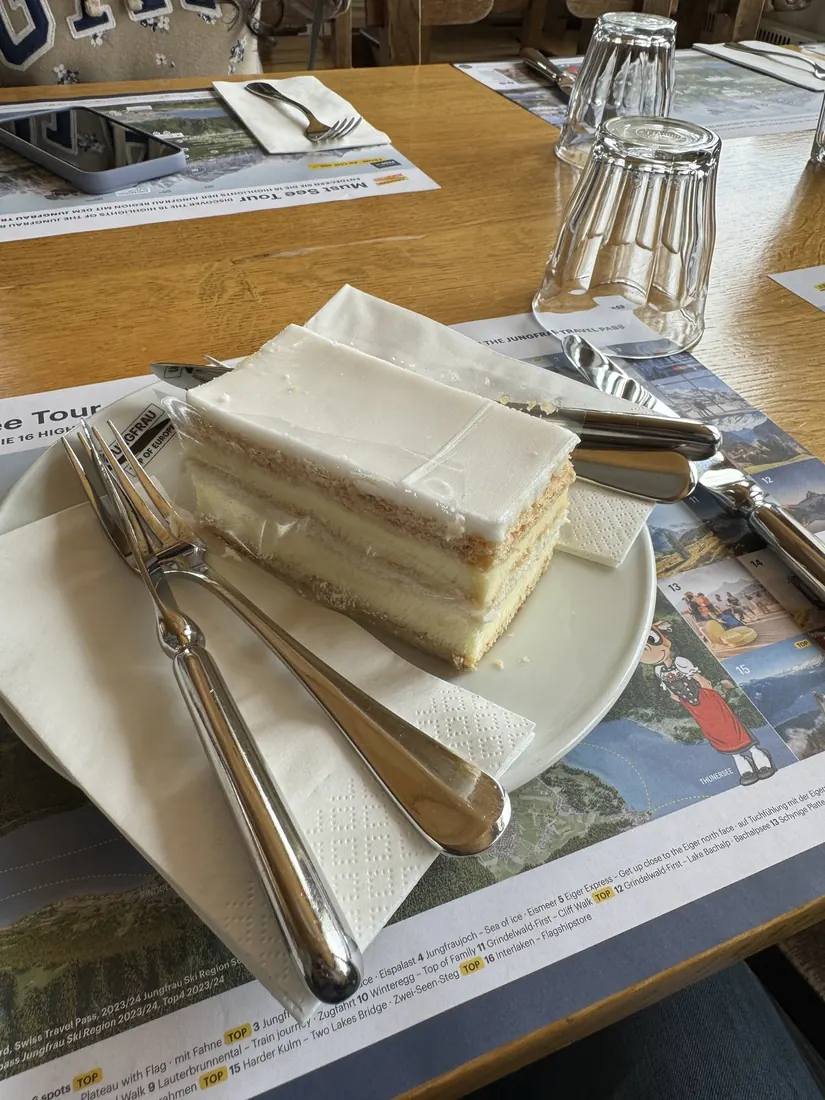
Next: the cogwheel train to Wengen, a cable car to Männlichen, and the Eiger Express gondola to Eigergletscher, right at the foot of the Eiger’s north face. At the mountain restaurant we ate the famous Swiss cream cake with a glacier in the window. Cake with a glacier. Remember that sentence.
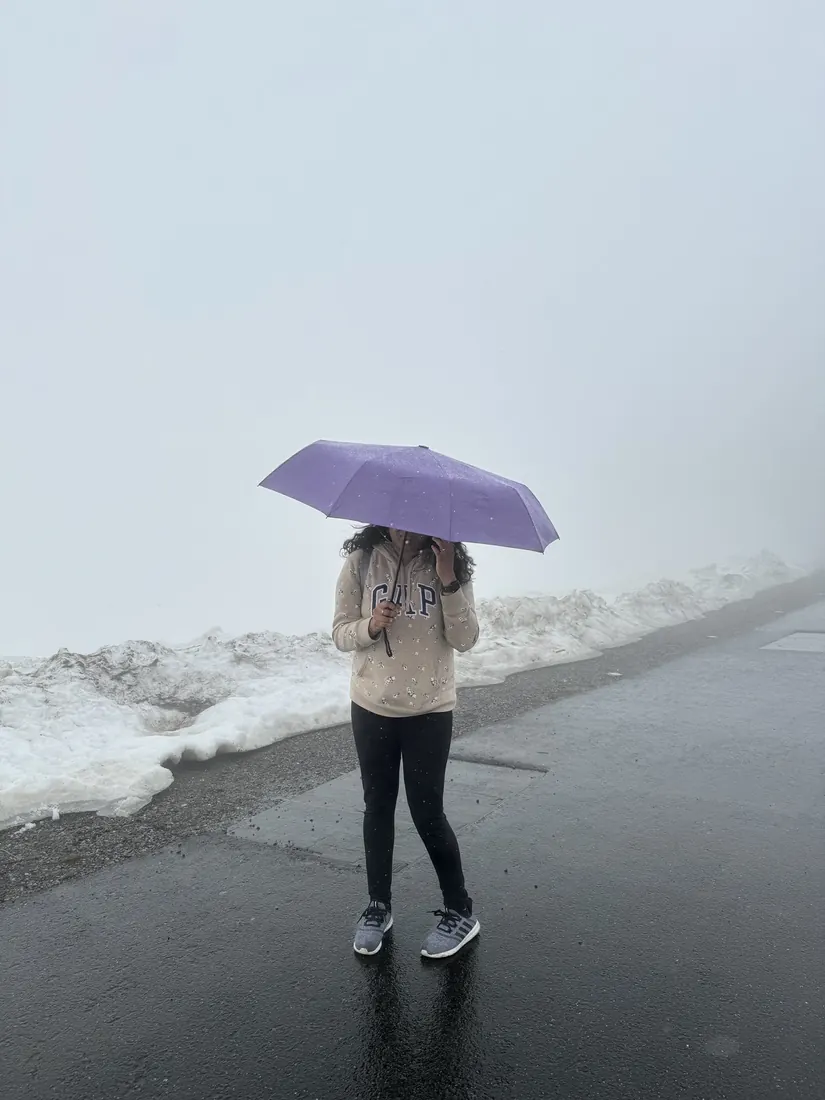
After the cake the clouds closed in, so we did the sensible thing and kept going. By 4:40 we were back on the Männlichen ridge in thick fog, with leftover patches of snow along the path and Miss Vibes under her purple umbrella, the same umbrella that would star in the Interlaken rain day. It felt like the mountain was giving us one last moody, cinematic scene before the valley view that came half an hour later.
On the way back down, we stopped in Wengen and sat at a spot looking down into the valley. I’ll be honest, I forgot myself again. The view took my breath clean away, and for a while I just sat there, completely, ridiculously happy.
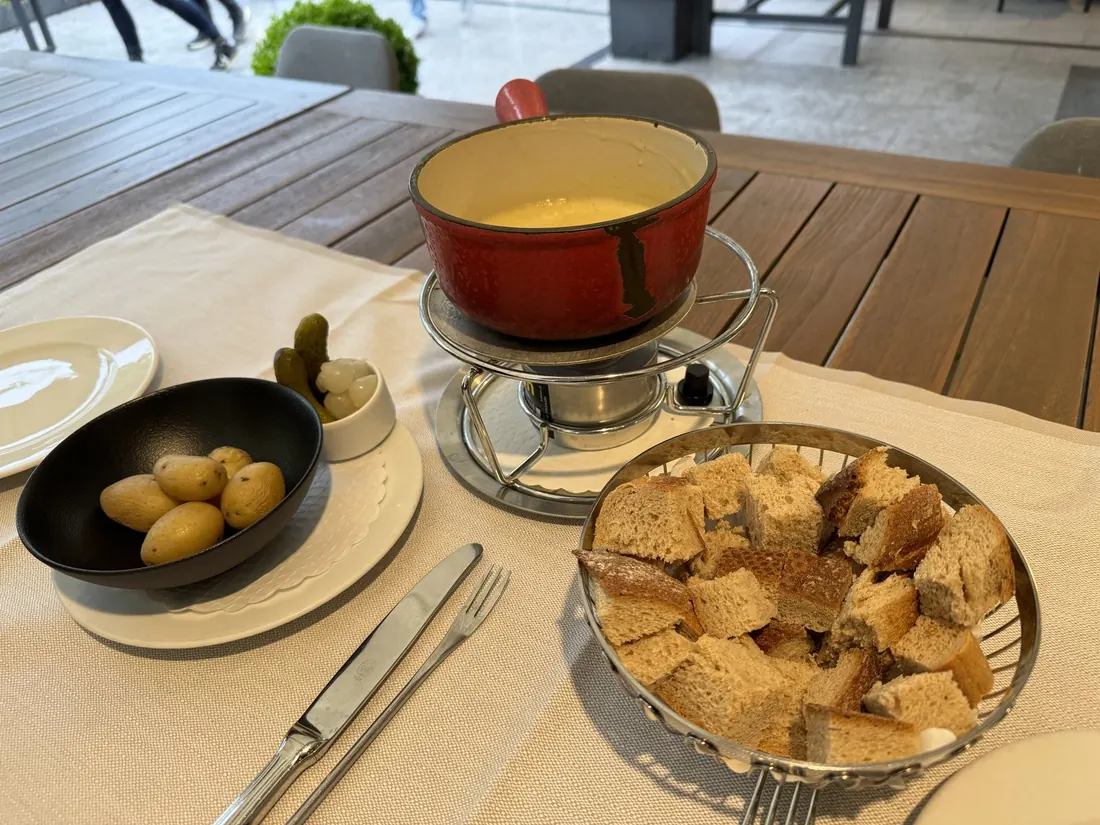
That evening in Interlaken: cheese fondue. A communal pot of melted Gruyère and Emmental, crusty bread, pickled onions and cornichons, a local Rugenbräu beer. After a chilly mountain day, it was the perfect ending, warm and silly and shared. The forecast for tomorrow said rain, all day. I stopped refreshing it and finished my fondue.
The Rain Day That Wasn't Bad at All
Fri, May 31 · Interlaken
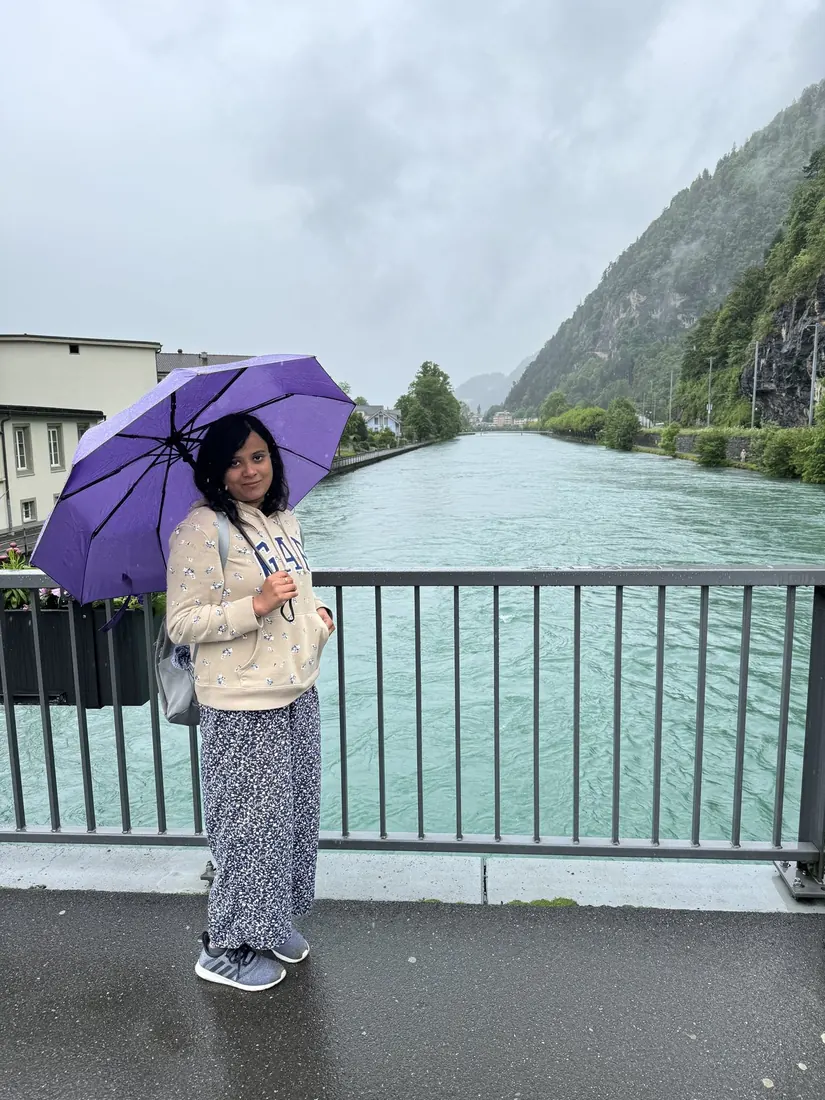
After days of dodging clouds like action heroes, the rain finally caught us. It came down from morning until night.
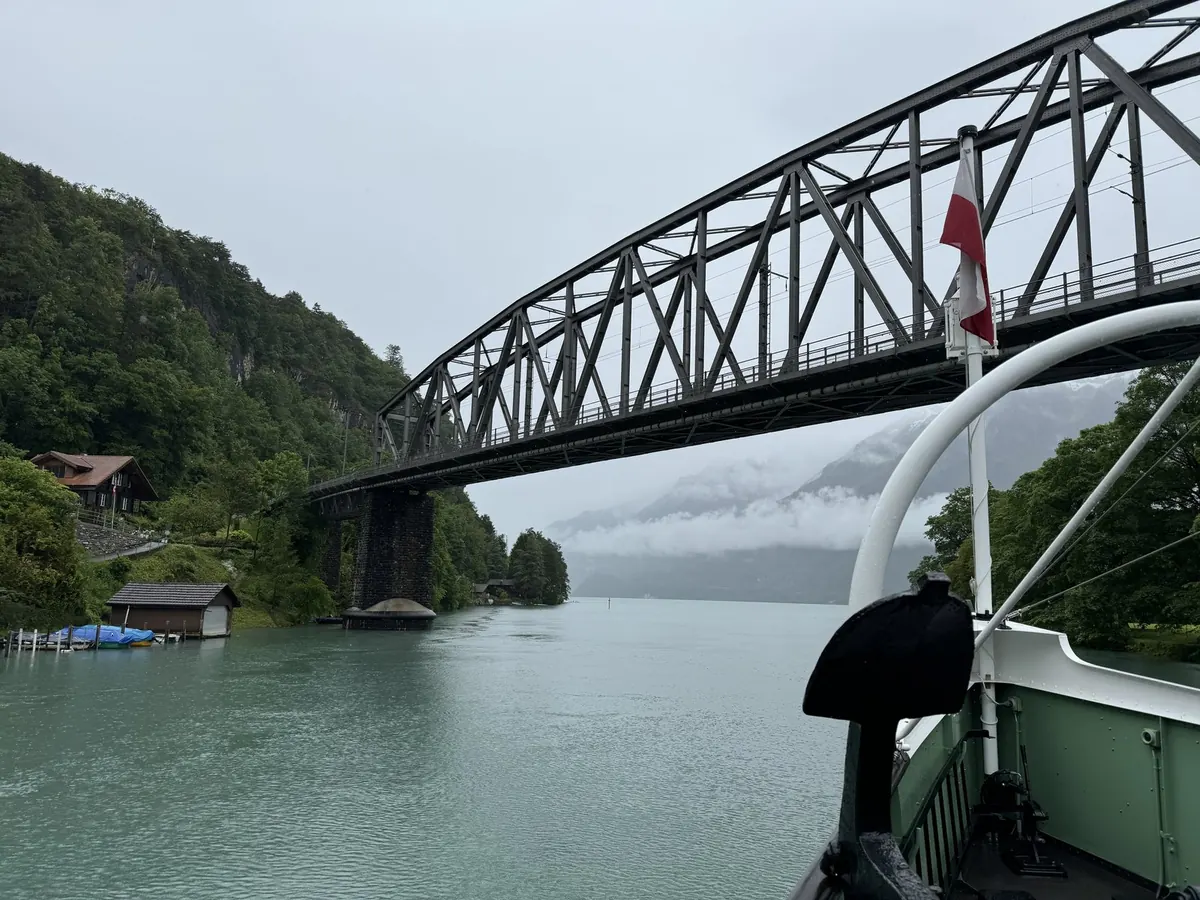
We rode to Lauterbrunnen just to check, found zero visibility, and rode right back, still on the same train. Instead of sulking, we used our pass for a boat cruise on Lake Brienz. Interlaken means “between the lakes” (inter lacus): Lake Thun on one side, Lake Brienz on the other. Brienz is the milky turquoise one, thanks to fine glacier silt floating in the water.
A two-hour round trip along the lake toward the woodcarving village of Brienz, under cover, with rain tapping on the windows. And it was beautiful in a quiet, moody way: cliffs dropping straight into turquoise water, dozens of temporary waterfalls streaming down the rocks, timber chalets along the shore. Sometimes the plan B is the best day.
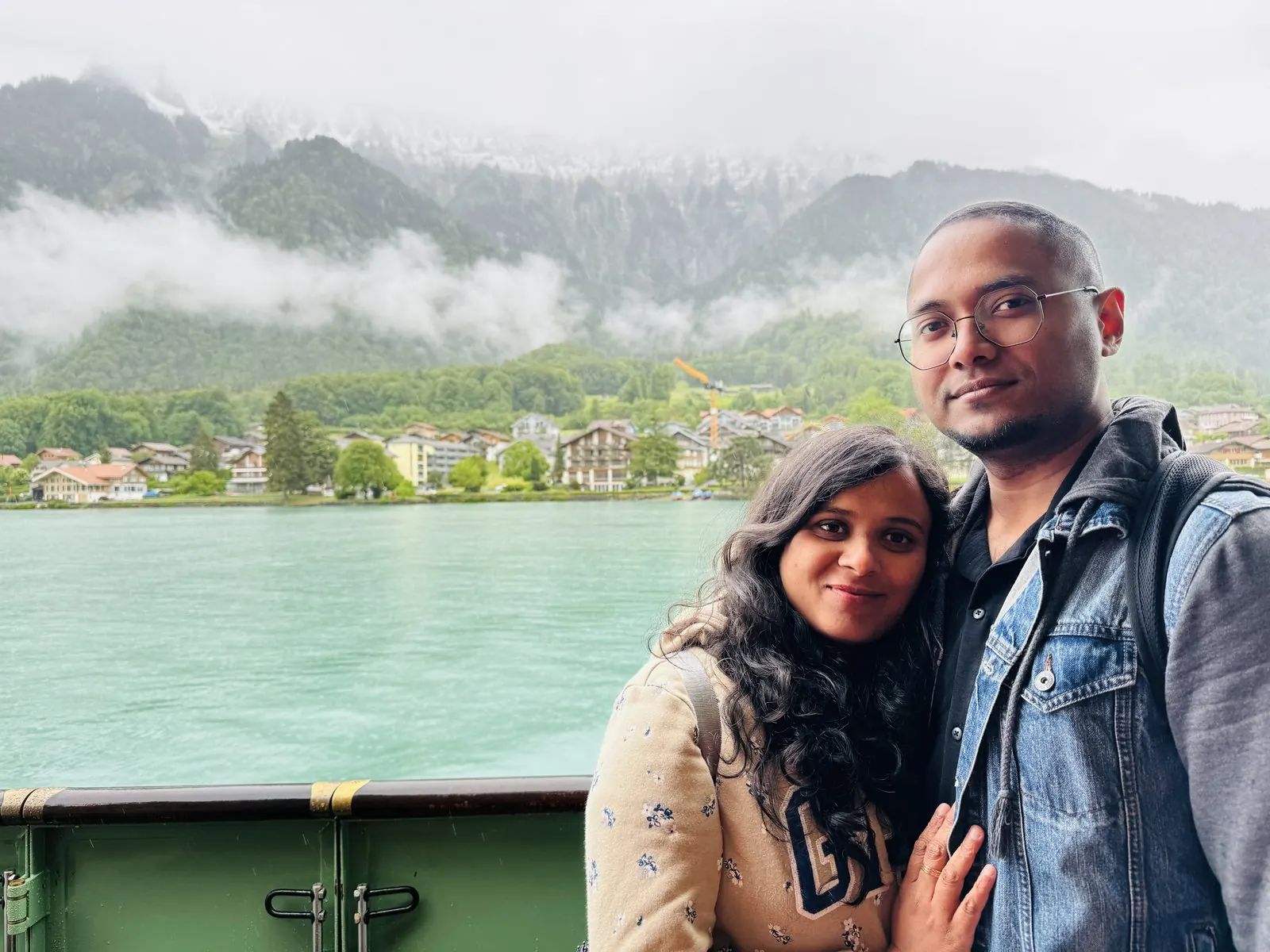
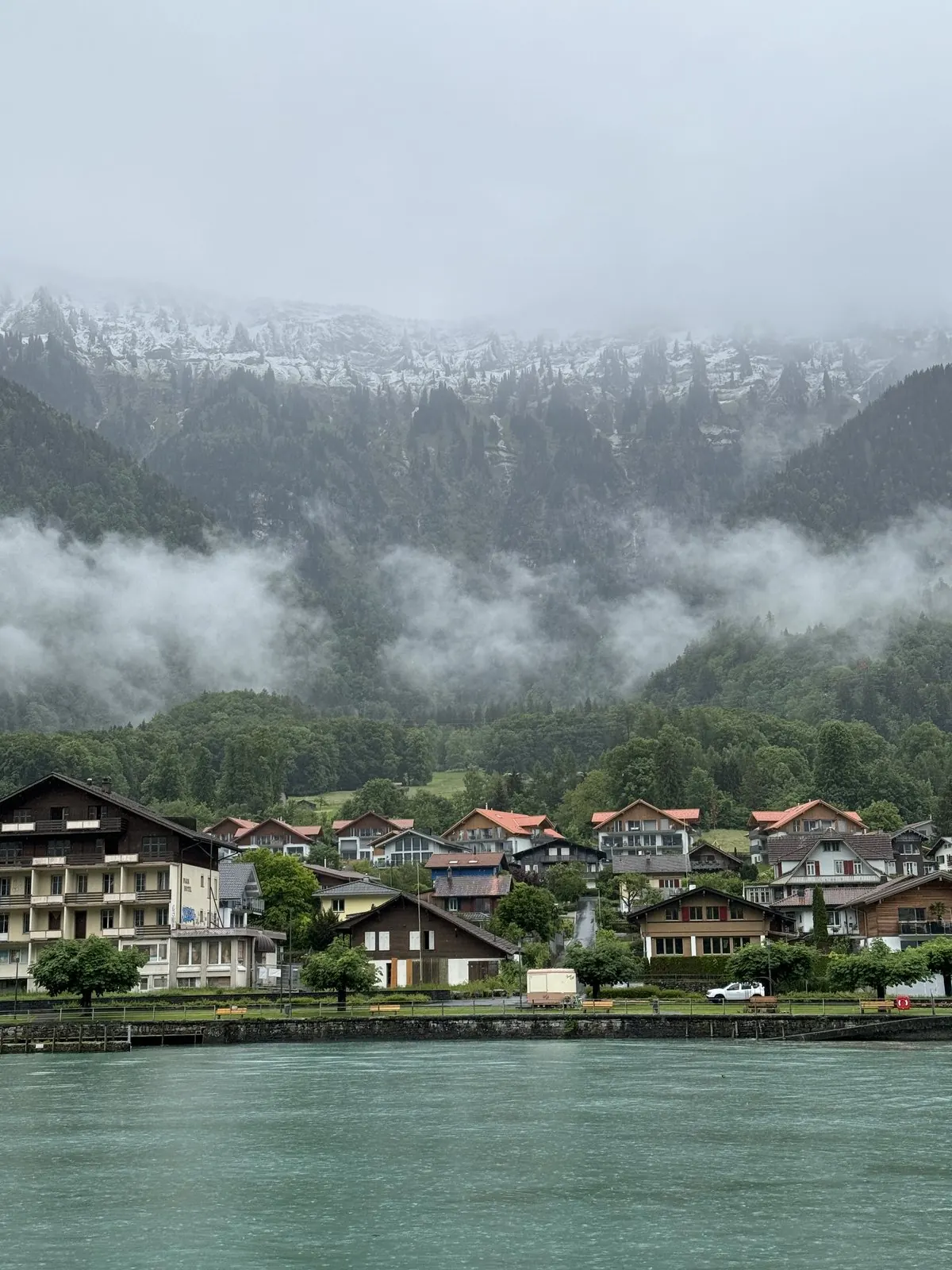
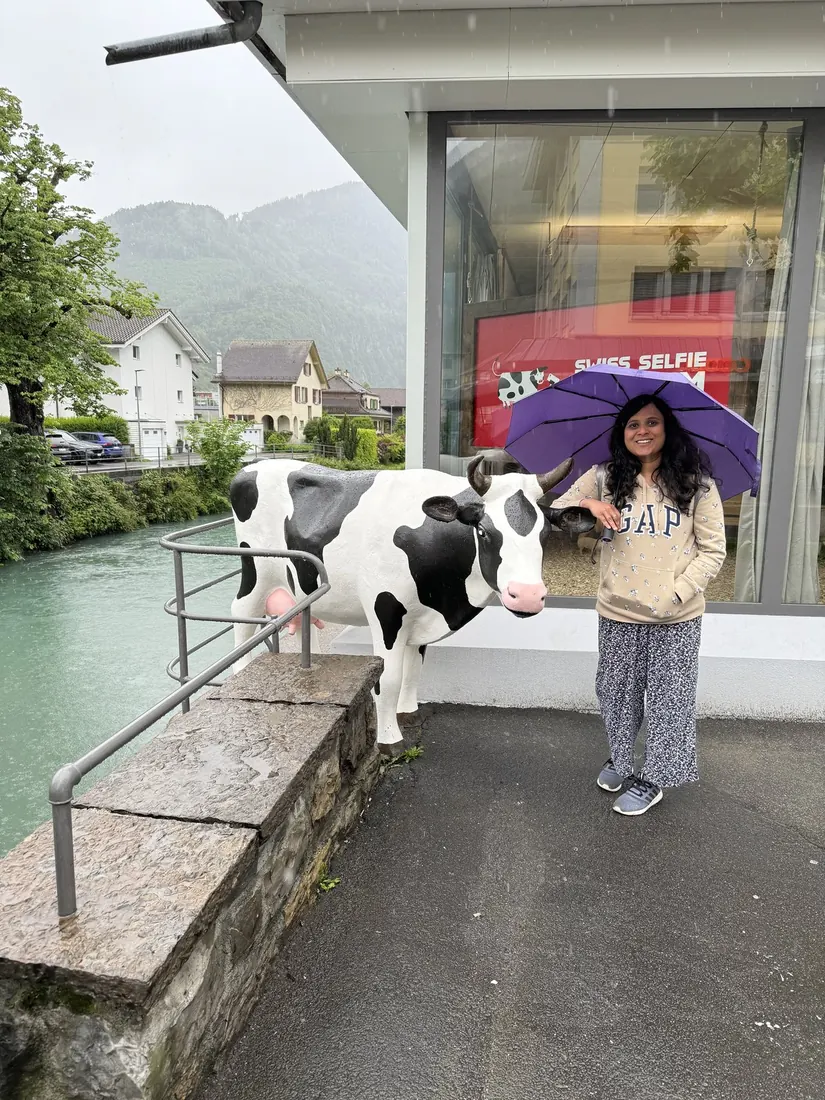
We spent the rest of the day in Interlaken: Miss Vibes and her purple umbrella posing beside a life-size cow statue on the river bridge, a supermarket raid for Swiss chocolate (hello, Ovomaltine Crunchy), and then packing, a little sad, a lot happy.
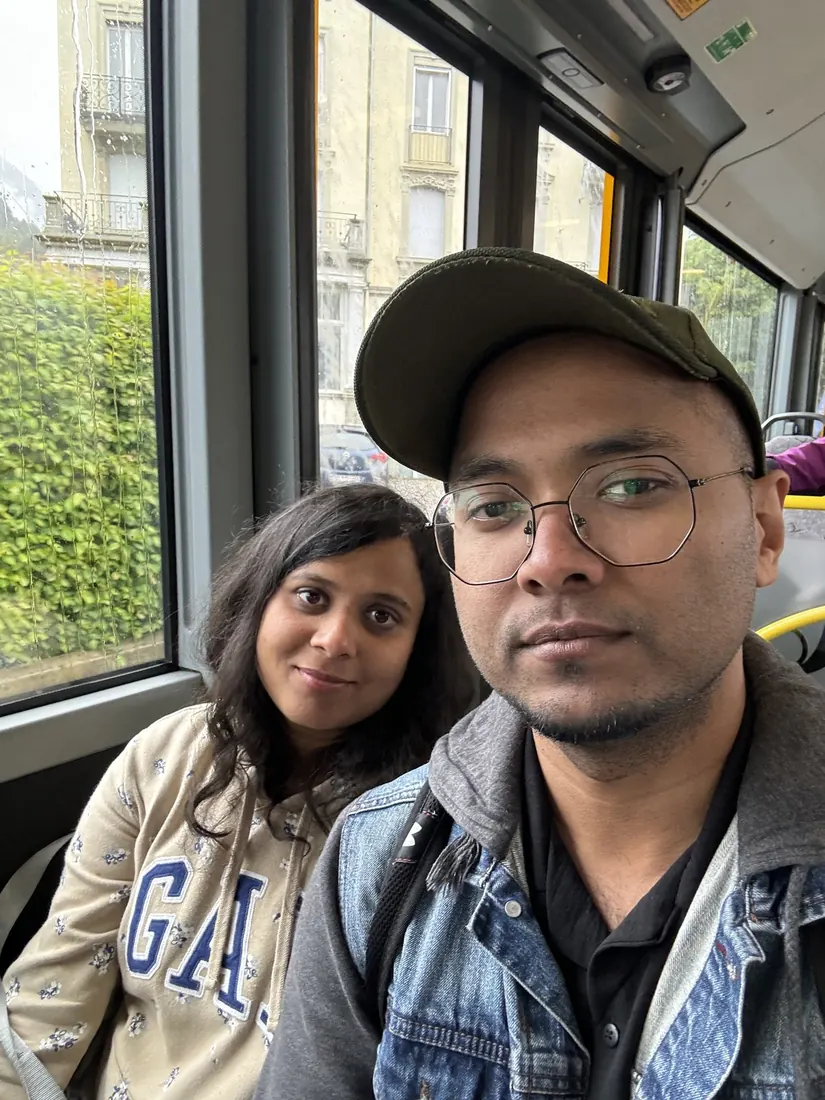
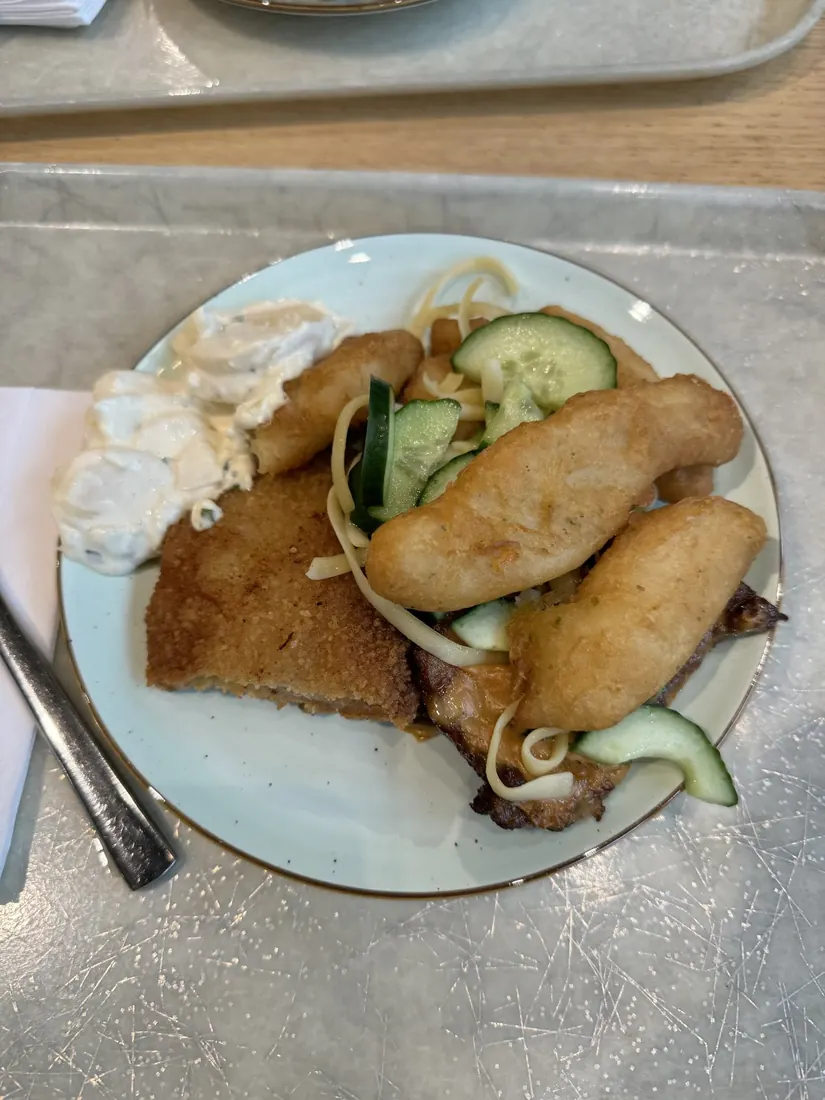
Between the cow statue and the packing there were smaller joys: the city bus with rain streaking the windows and both of us in hoodies, a self-service lunch tray of schnitzel and beer-battered fish with buttered noodles, cucumber salad and a dollop of creamy potato salad, and finally dinner back at the chalet, pasta at a wooden table with a window full of wet meadow. The guest card and the key sat on the table like a tiny souvenir of the week.
Tomorrow we’d say goodbye to the cows and take the train south, with one last city still waiting.
Cows, a Gelato and Milan on Foot
Sat, Jun 1 · Interlaken → Milan
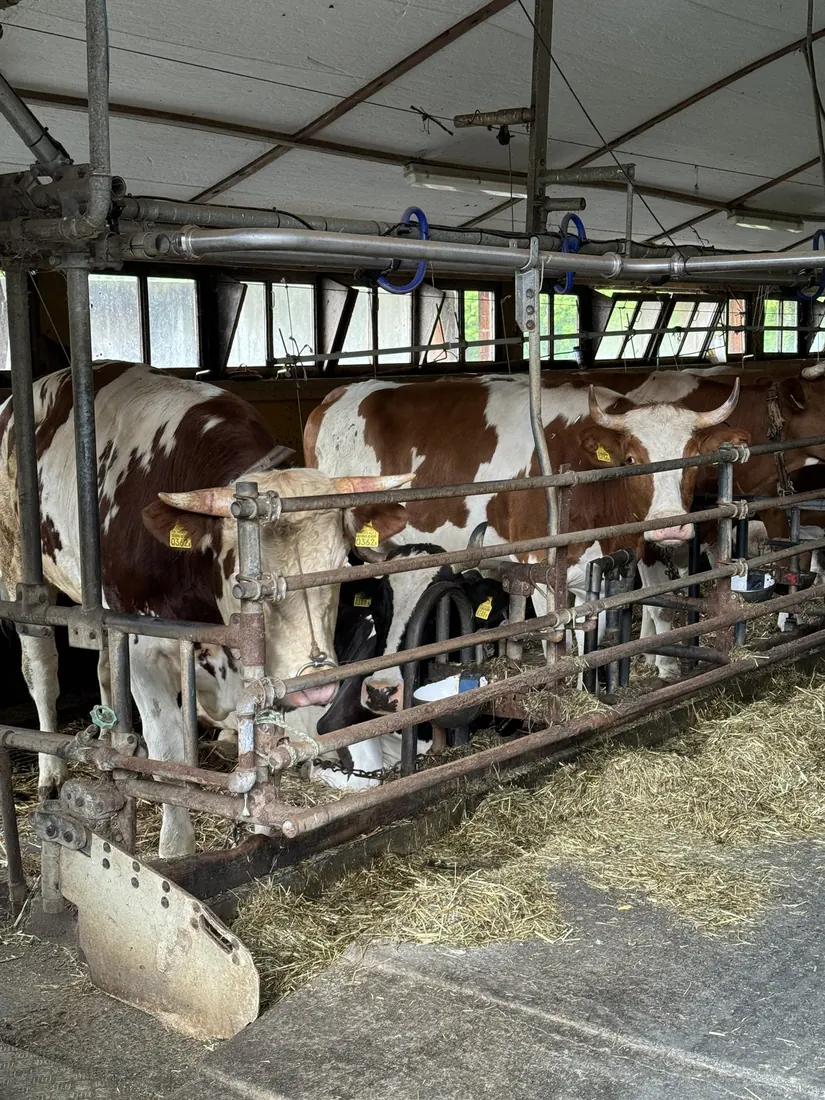
The morning at the chalet ended with a goodbye to the neighbors. We wandered over to the cowshed, a long barn of brown-and-white cows chewing hay with perfect calm, and then walked the meadow in a low, cloudy light. By 9:46 we were on the platform at Interlaken Ost: a morning train south to Milan for the last night, with the Alps still sliding past the window.
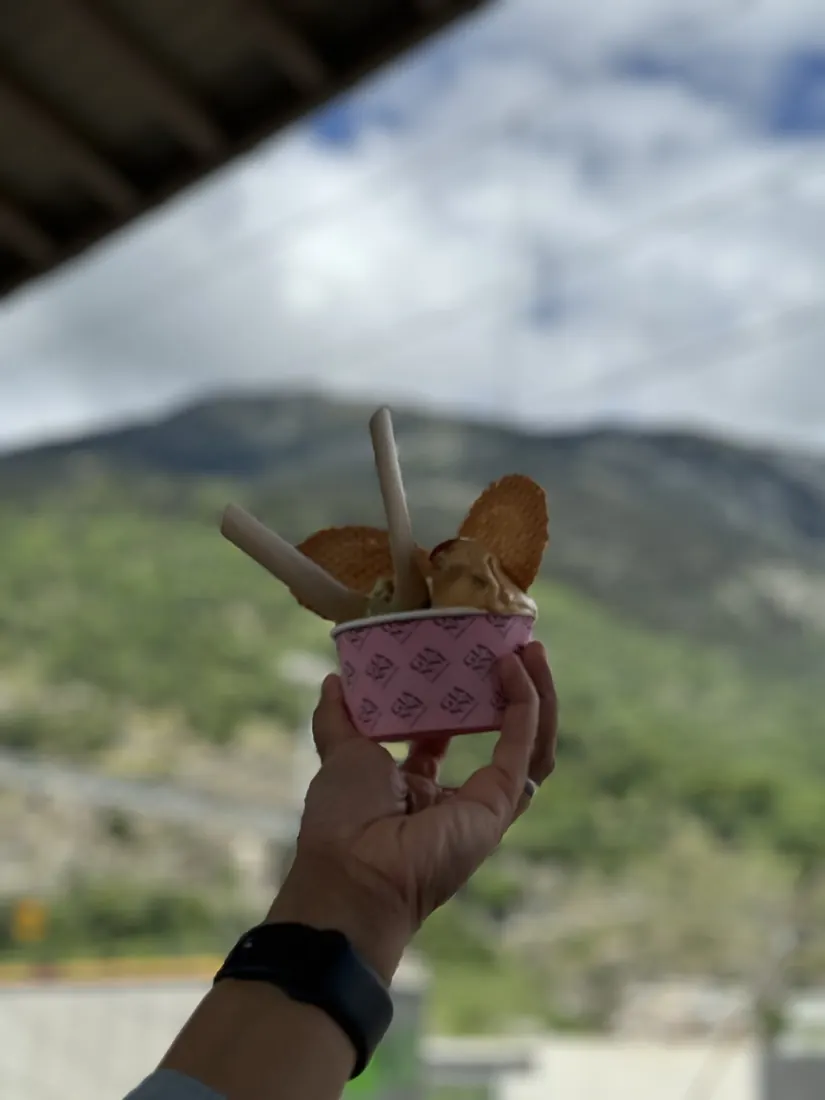
Around 12:30, at Brig, I was standing in the sun with a pistachio gelato in my hand and the Alps for a backdrop, which is the correct way to change trains.
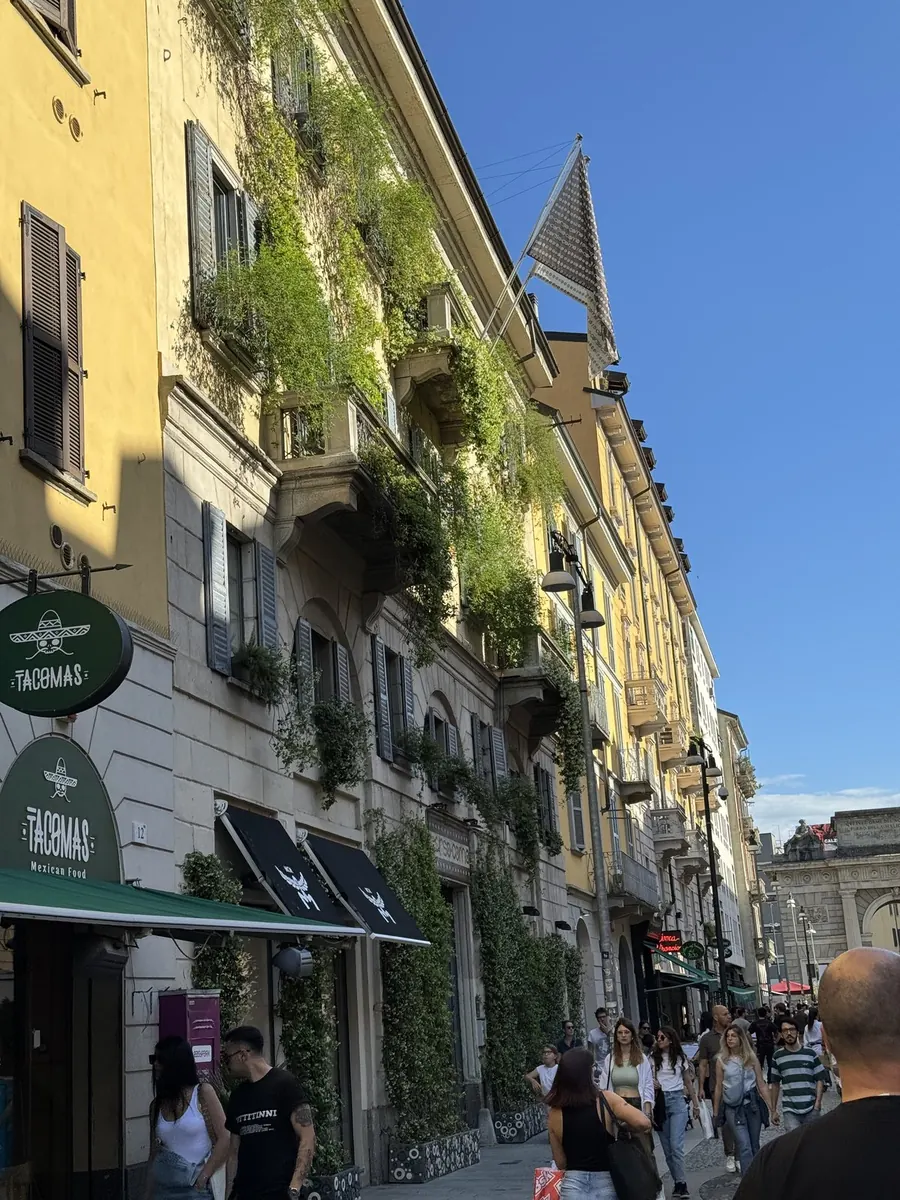
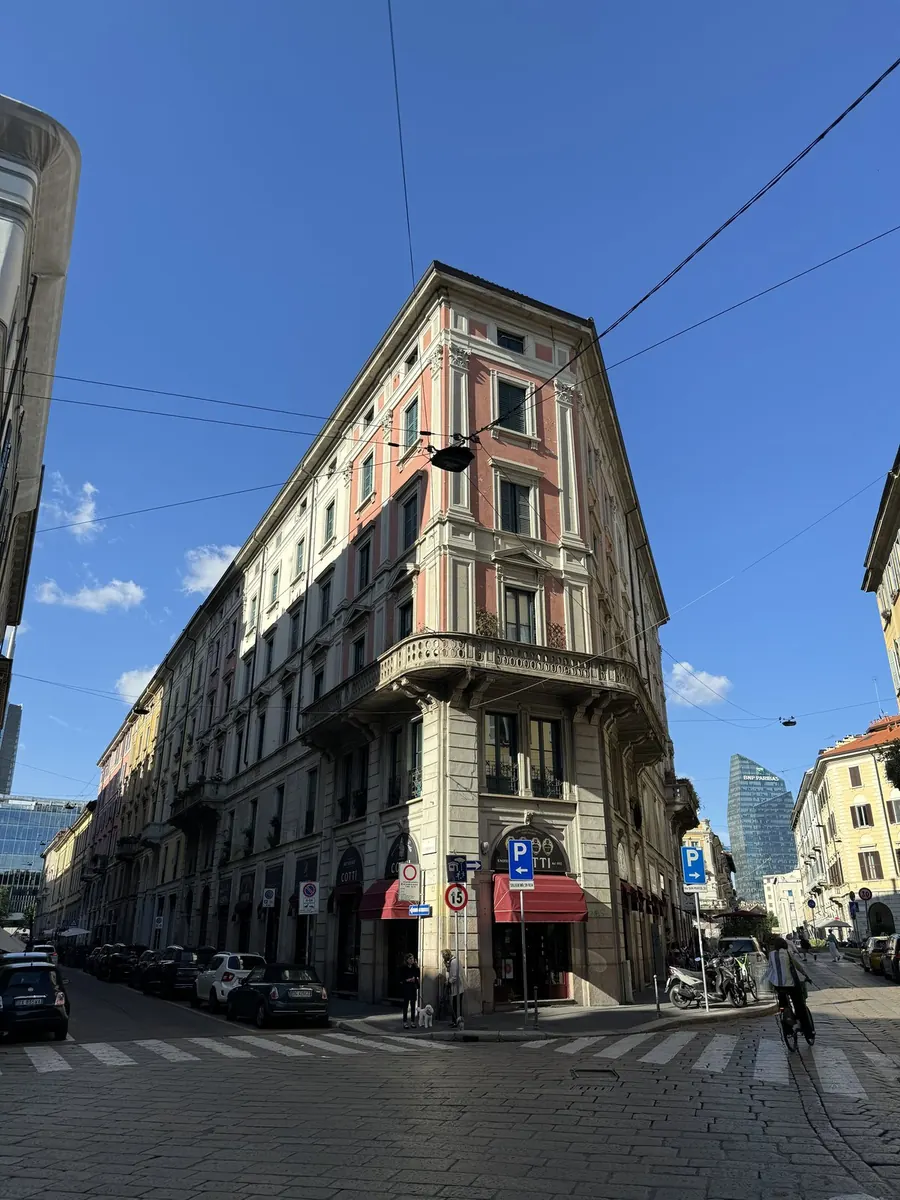
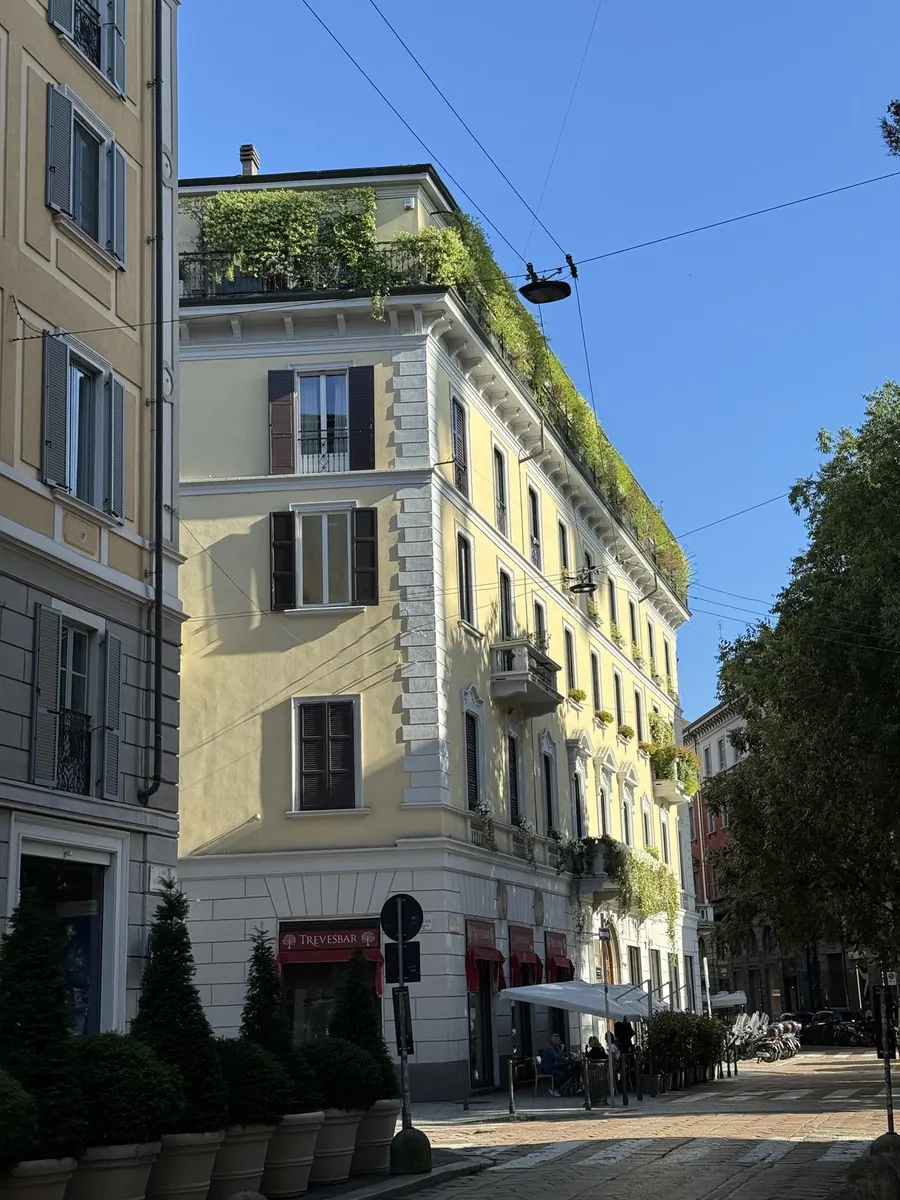
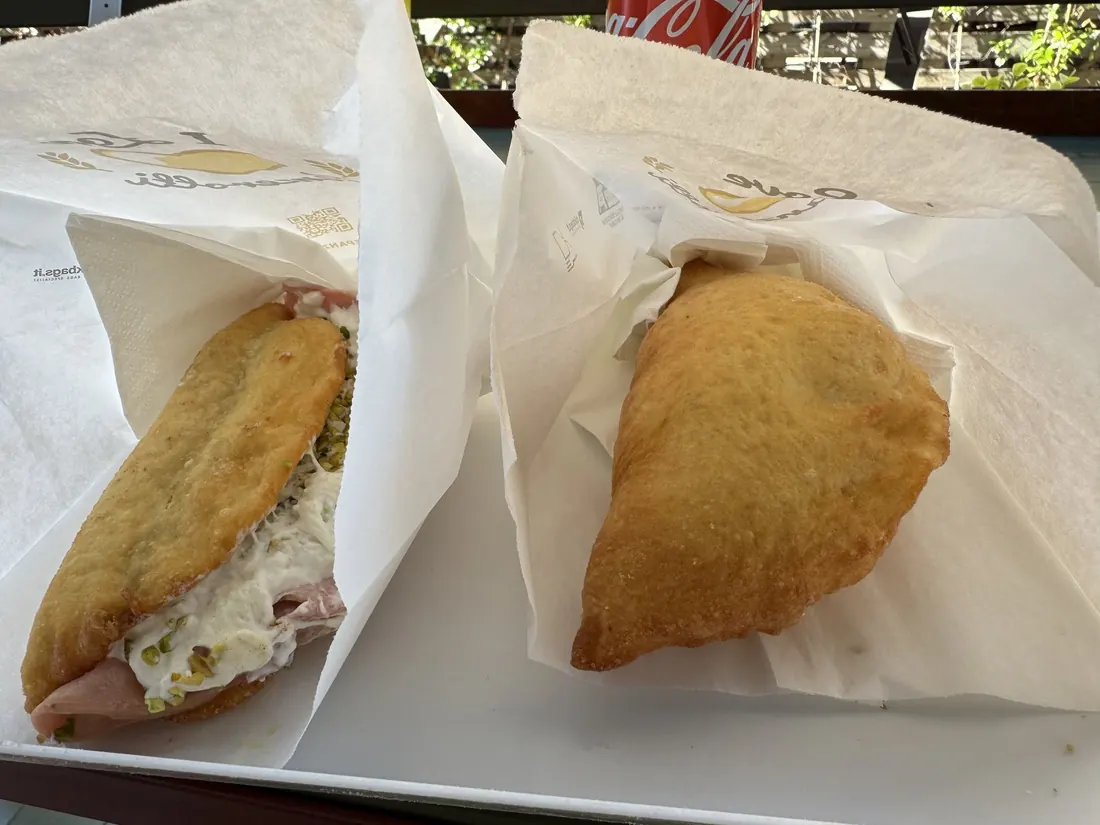
Poor Milan had the impossible job of following them. But it held its own. We got into Milan Centrale around 3 PM and set out on foot the way Milan likes it. First a panzerotti stop (fried pockets of mozzarella and tomato, eaten at an outdoor table next to a pot of red flowers), then up to the Bosco Verticale, two apartment towers dressed in trees, and across the glass-and-steel plaza of Piazza Gae Aulenti, where Miss Vibes posed like she owned the building. Down Corso Como, through a grand triumphal gate (Porta Nuova, I think), past a brick church with round windows, and through the courtyards of Brera.
- 17:25
- 17:40
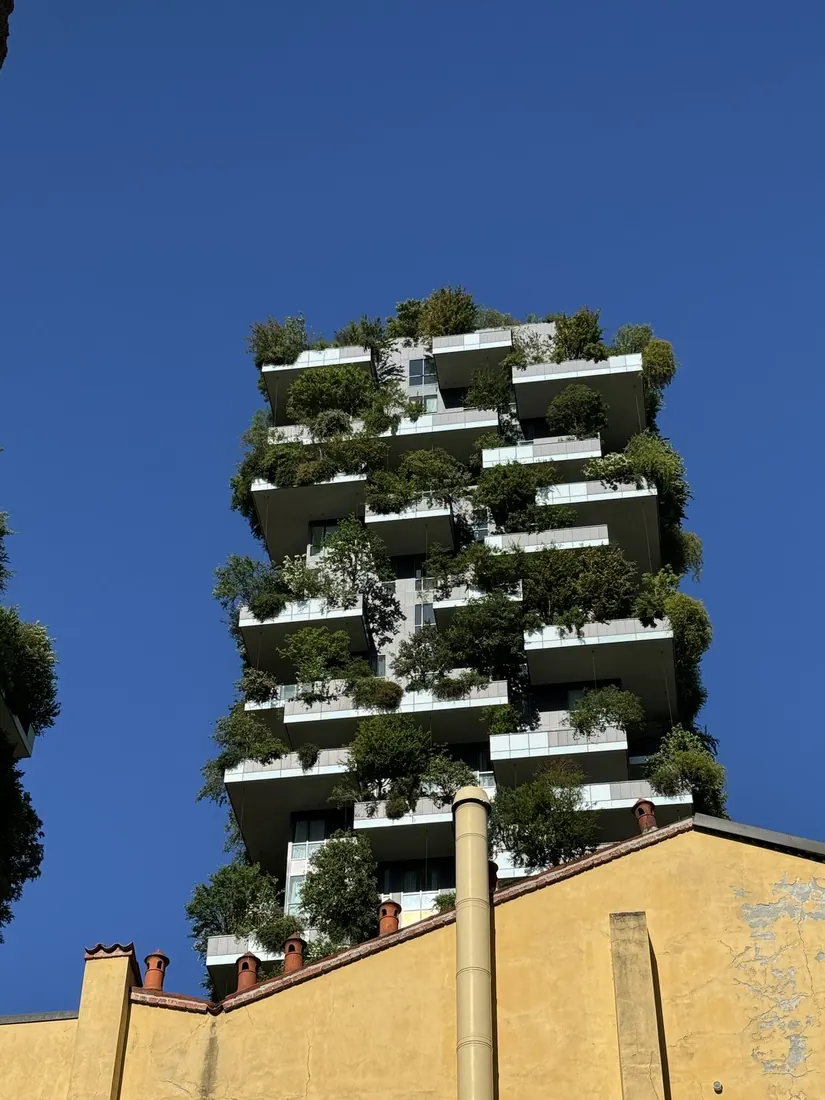
- 17:48
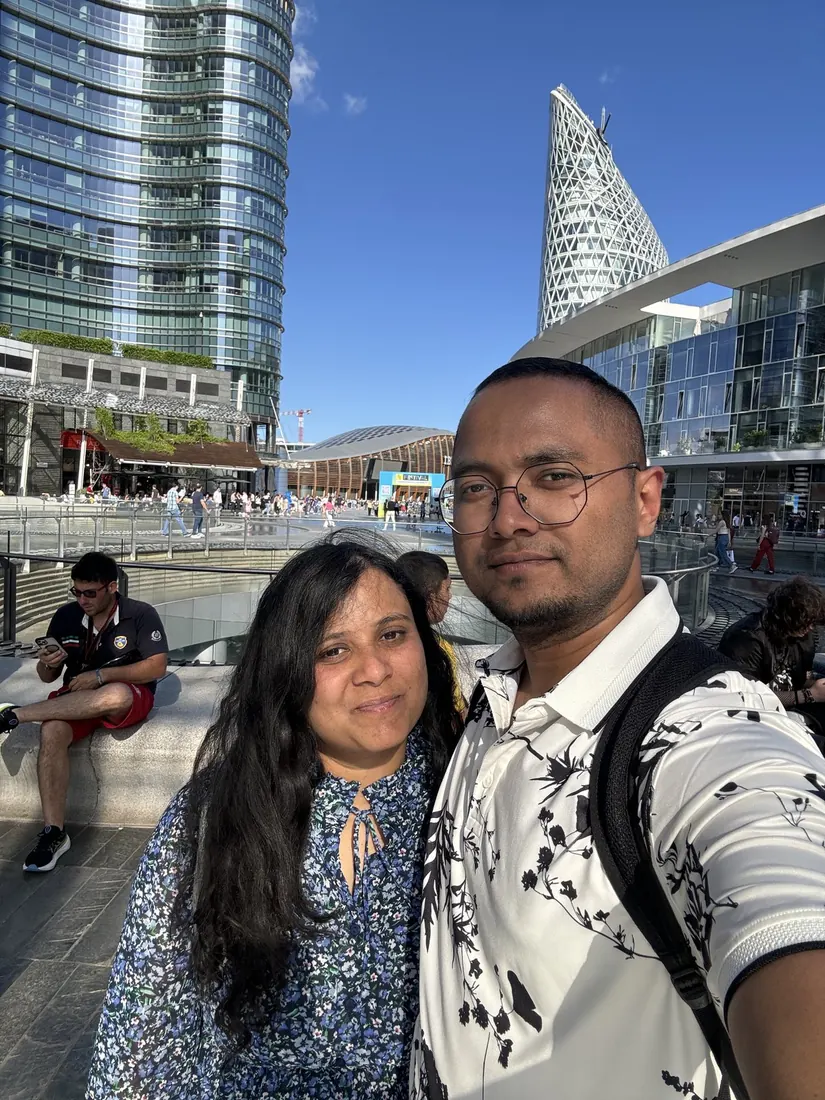
- 17:57
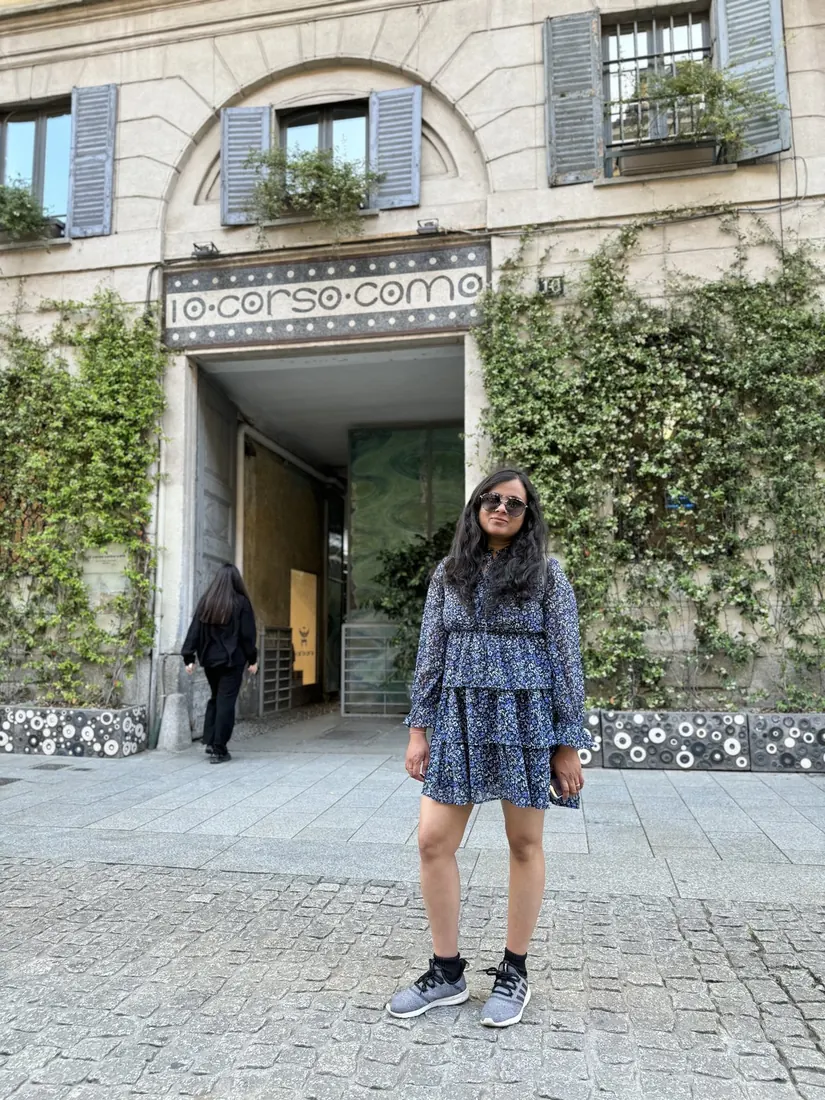
- 18:03
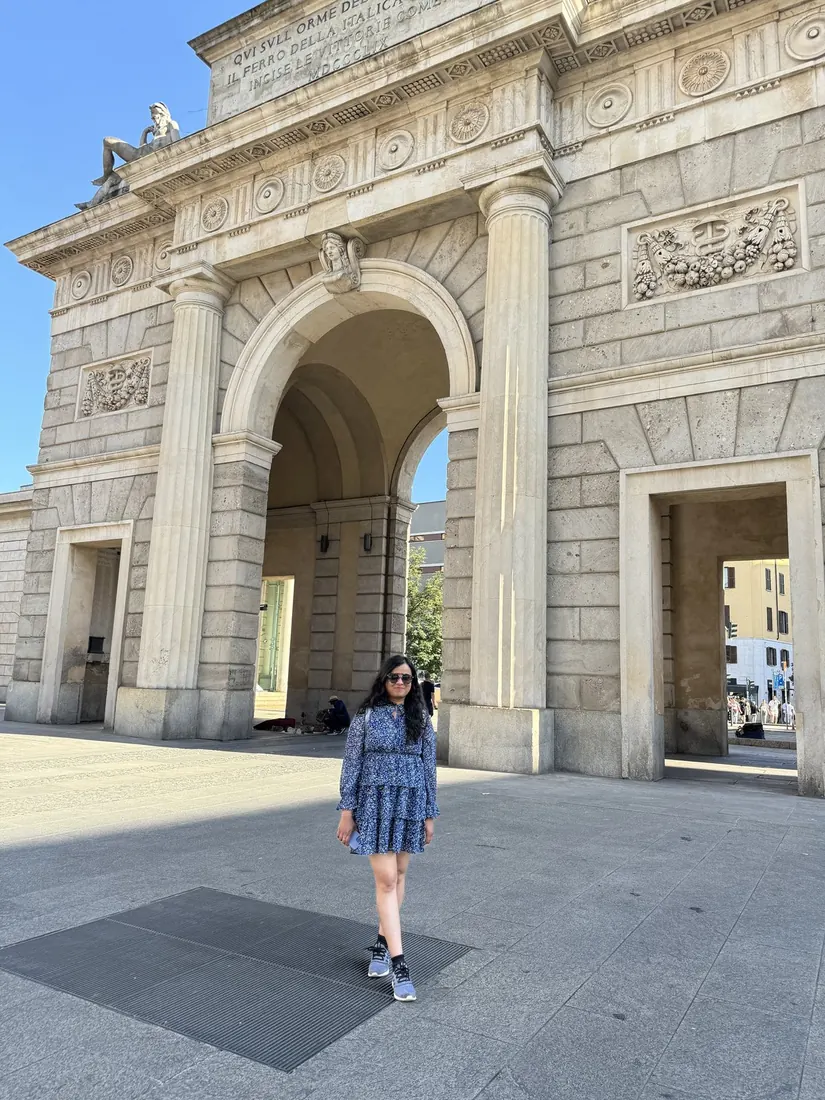
- 18:11
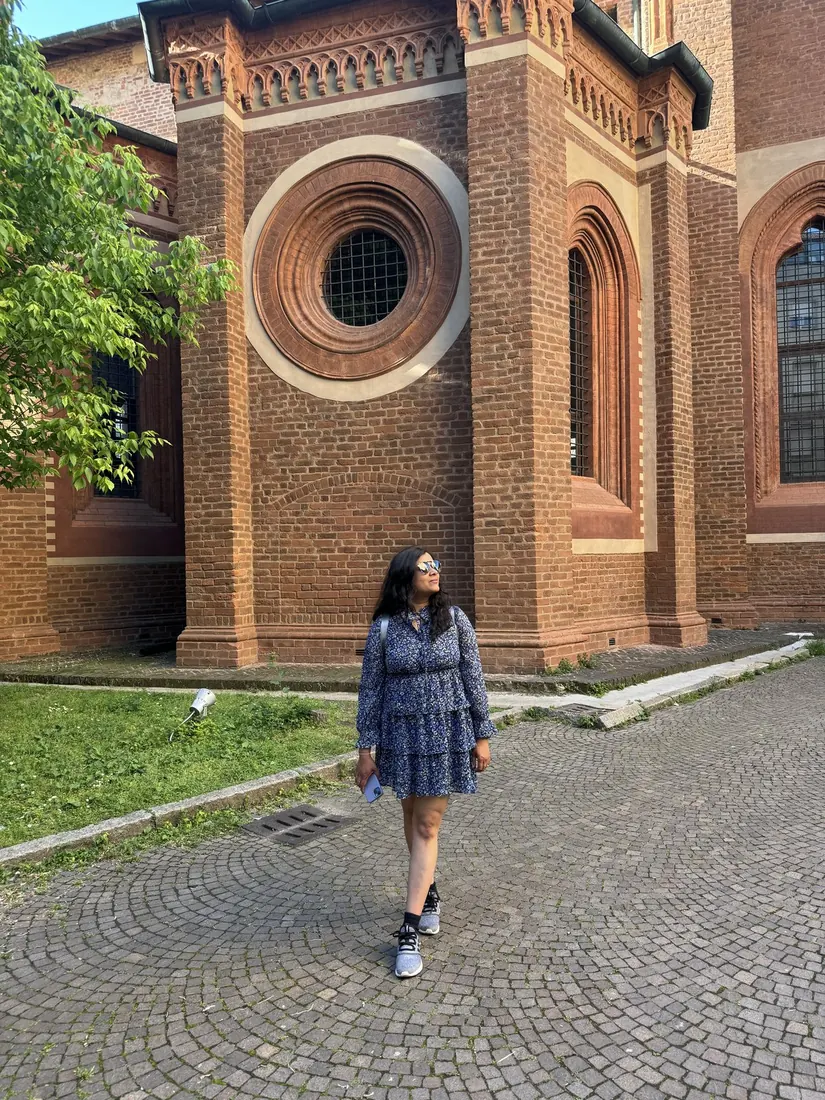
- 19:00
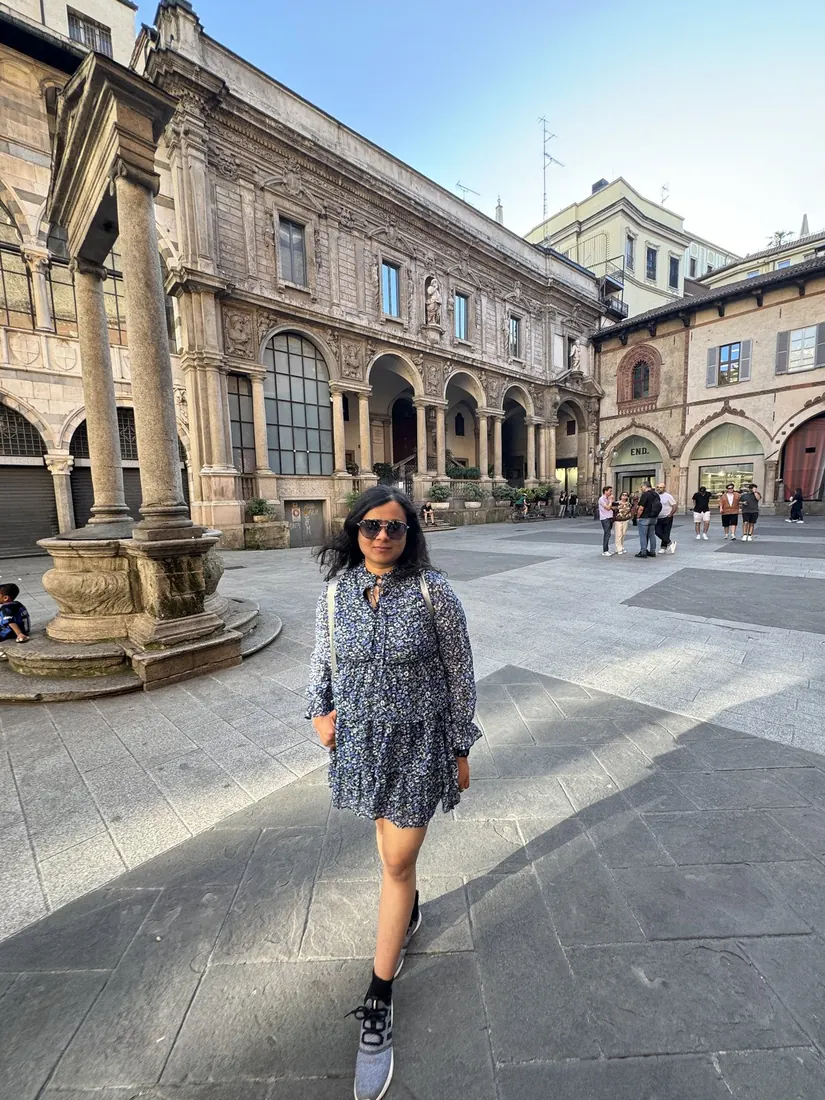
- 19:52
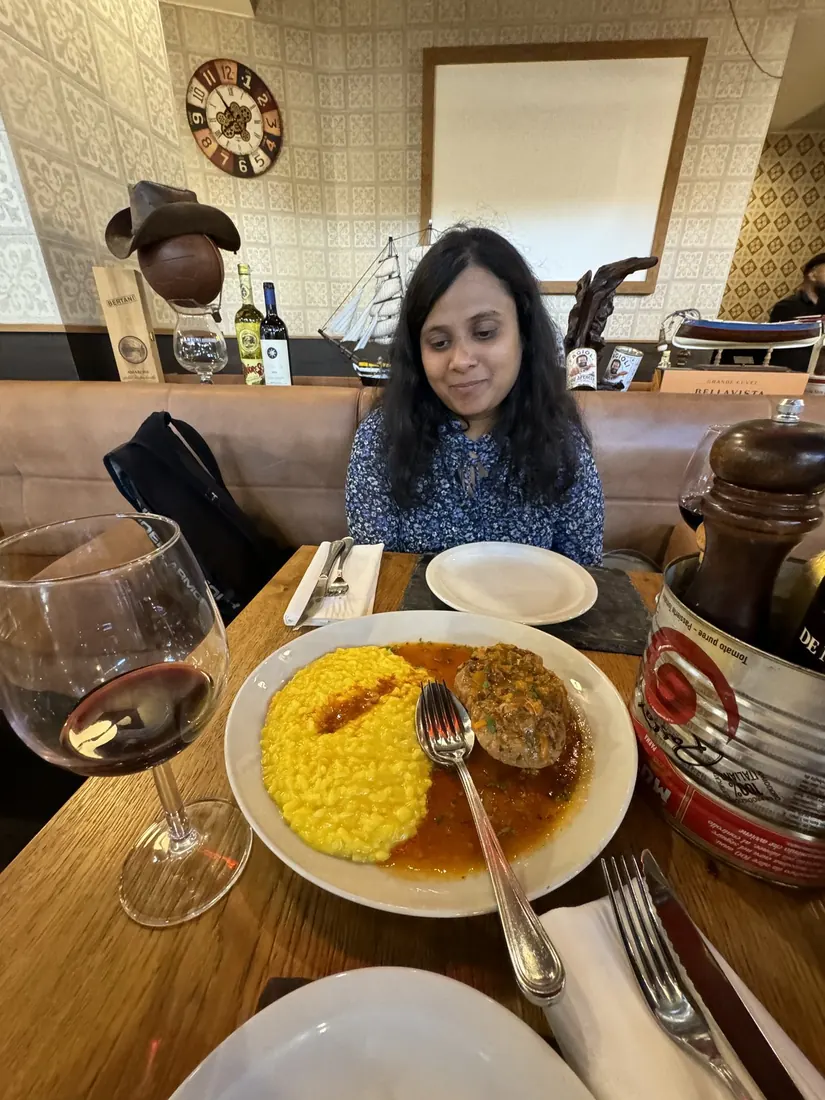
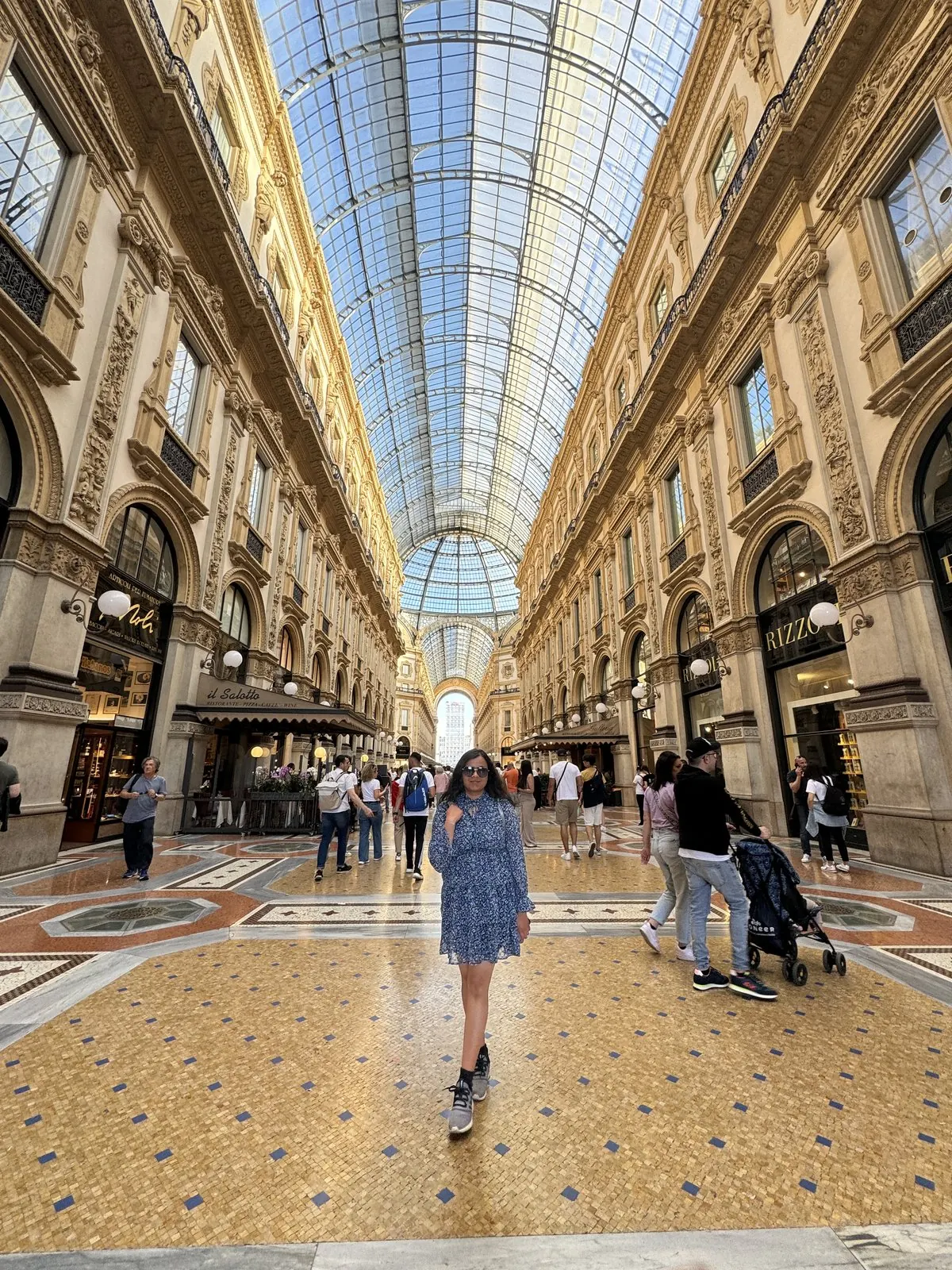
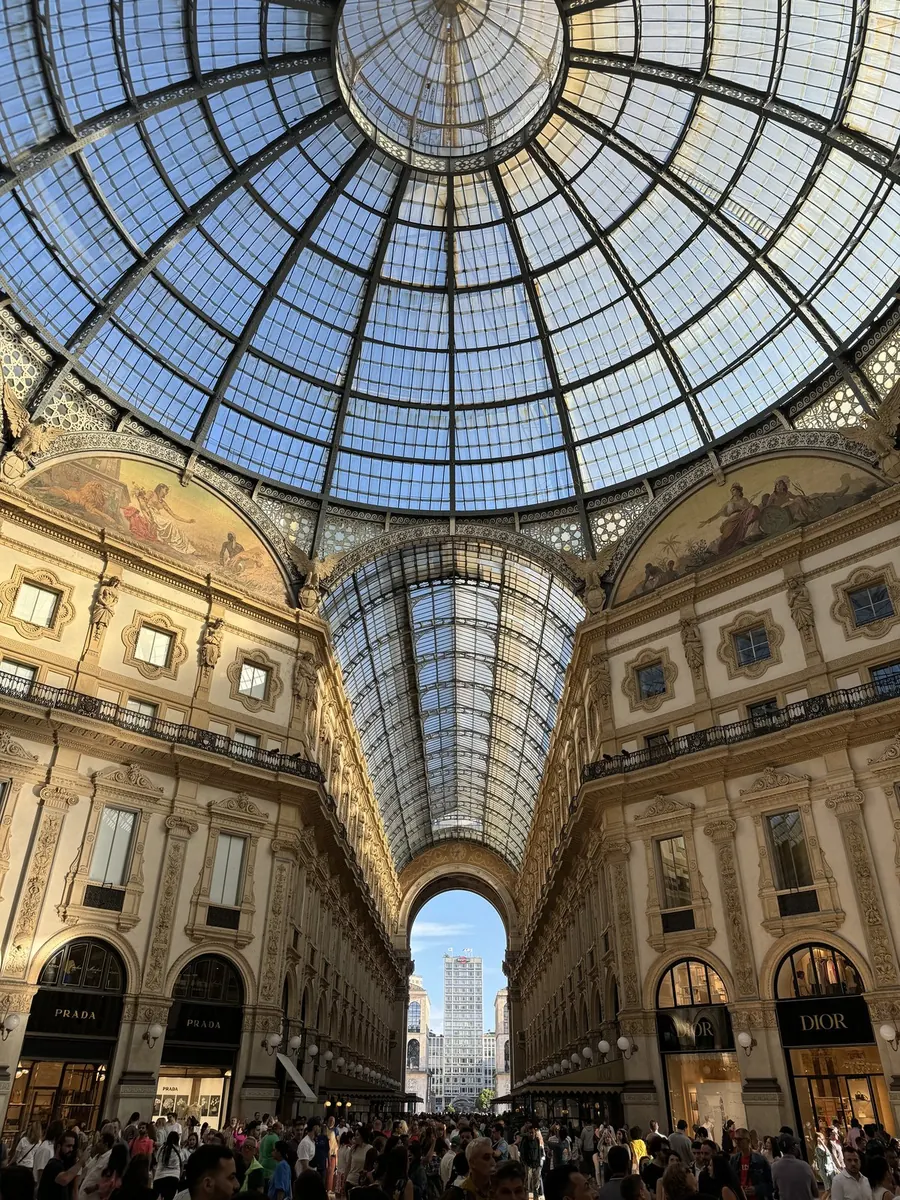
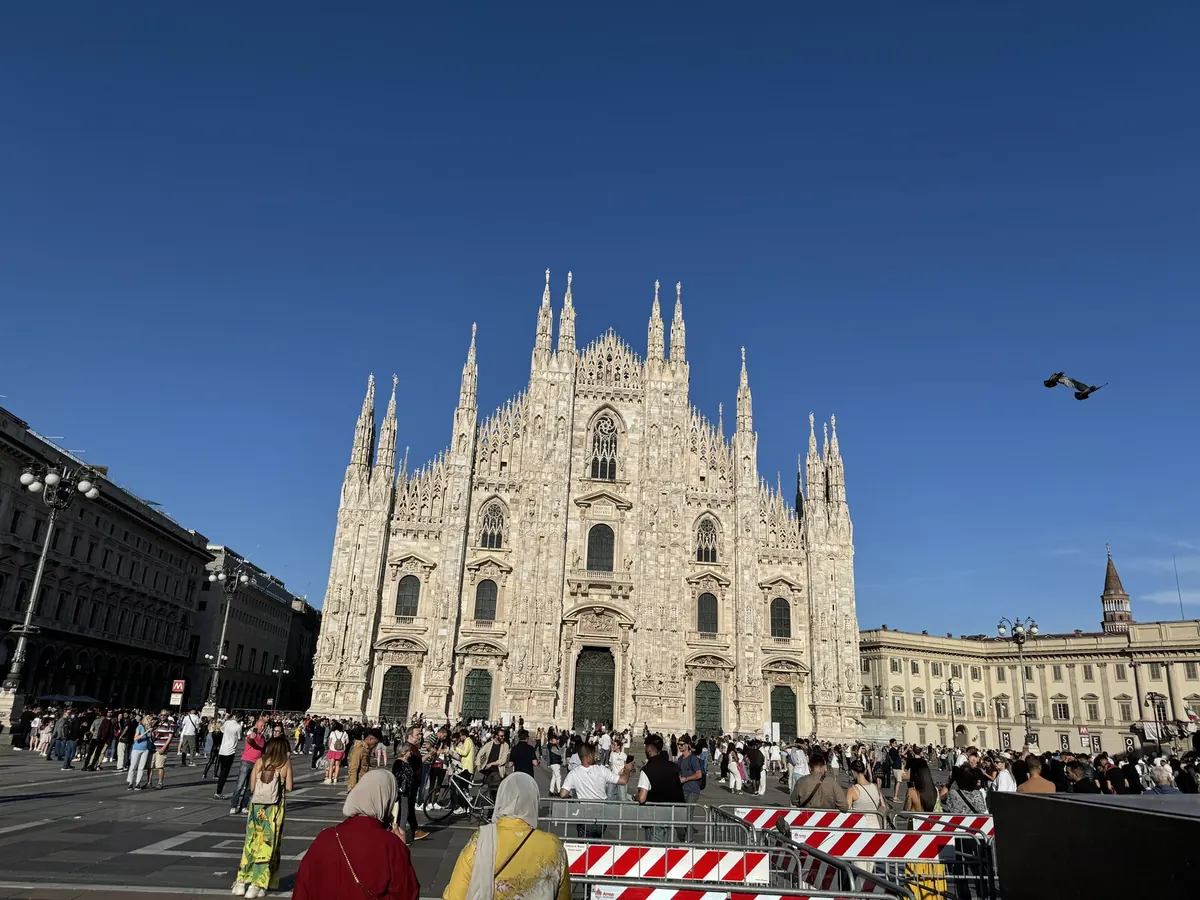
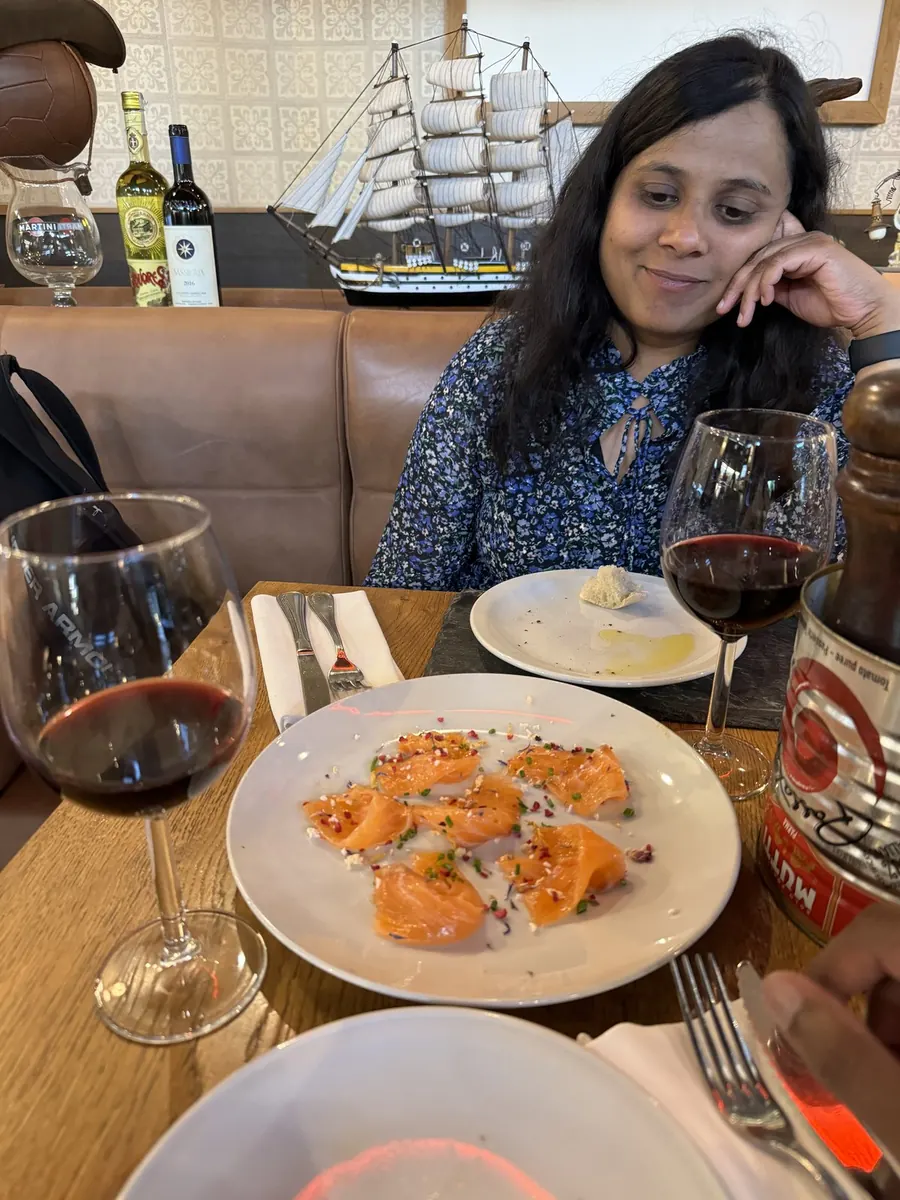
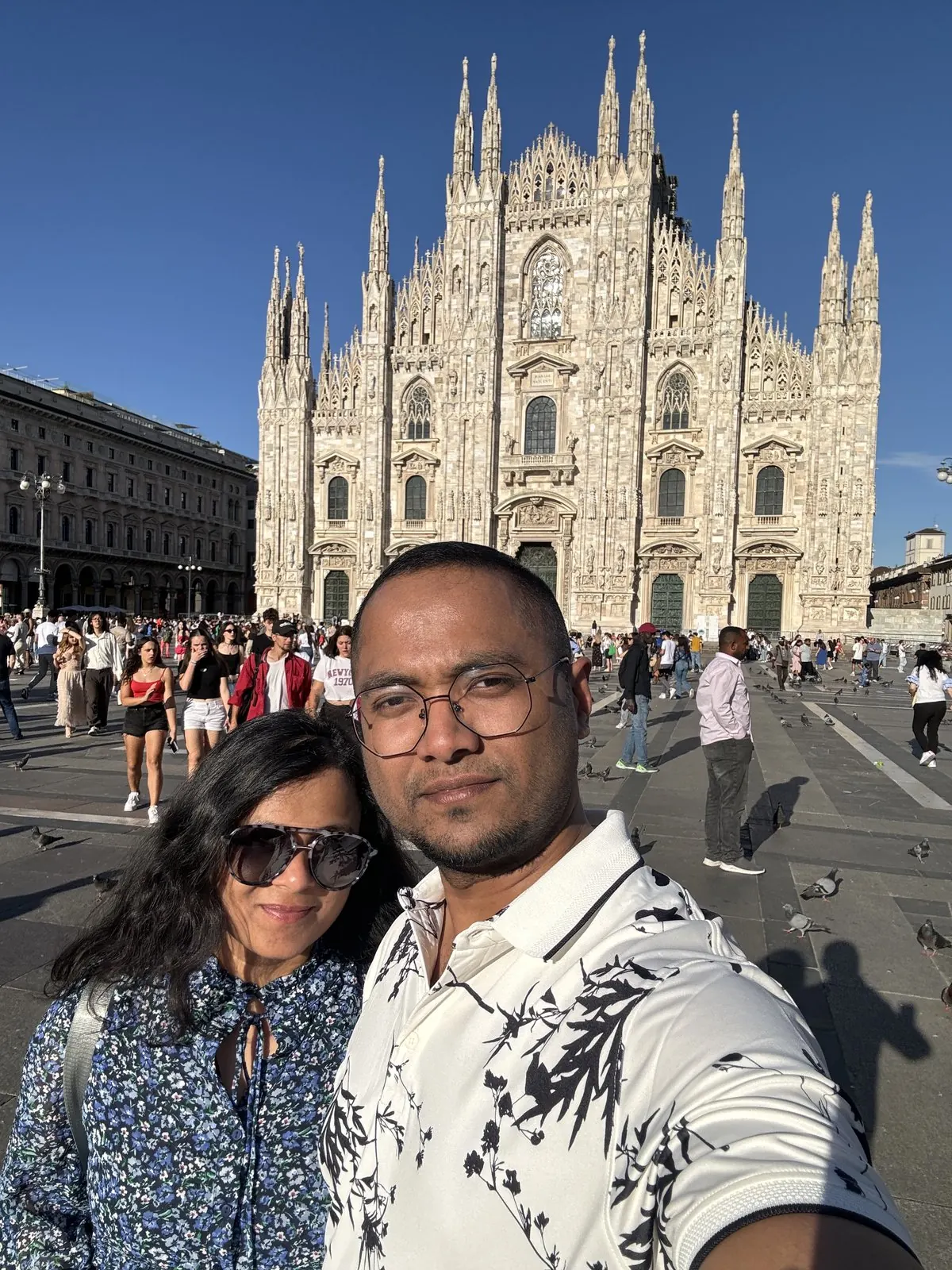
Then a slow stroll under the glass roof of the Galleria Vittorio Emanuele II, with the Duomo waiting at the end of it, glowing in the evening sun (from the outside, as we couldn’t get in, so the rooftop terraces stay on the list). A quiet arcaded square behind the cathedral, Piazza dei Mercanti, gave us a few last photos, and at 7:43 PM we sat down to a final dinner: salmon ravioli to start, and a plate of risotto alla milanese with an ossobuco on the side.
Home
Sun, Jun 2 · Milan → Malpensa → New York
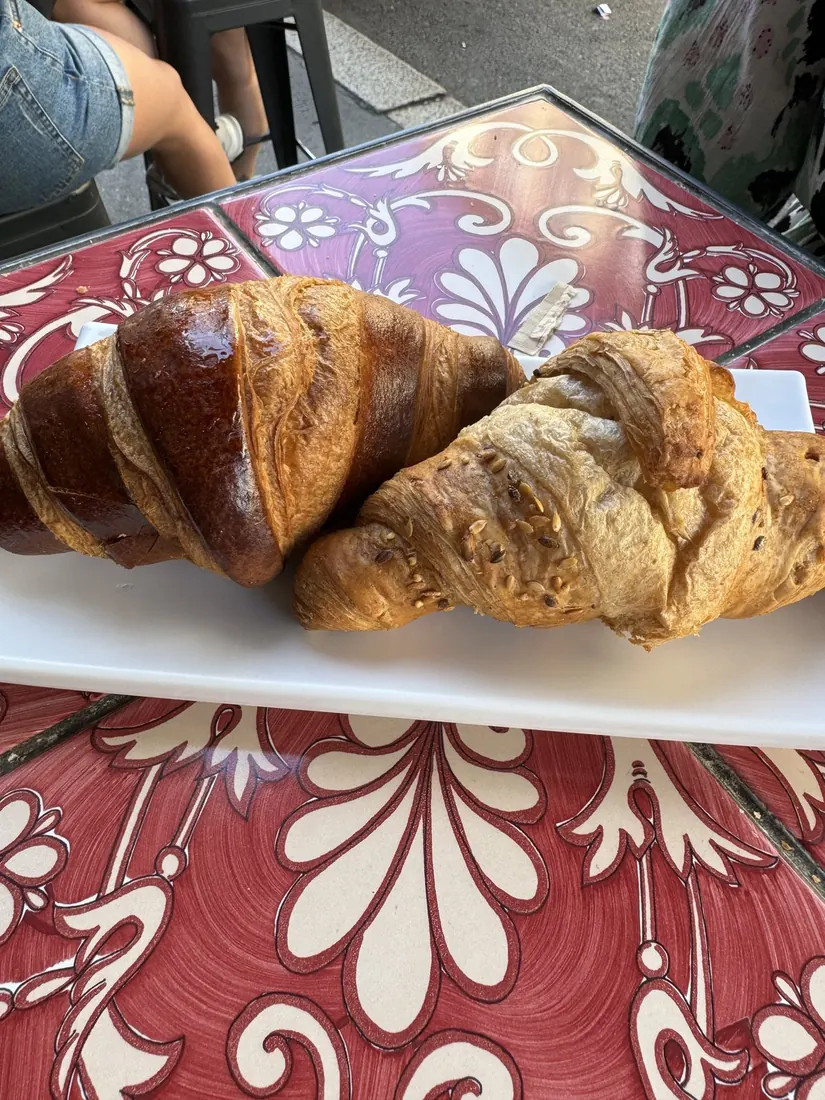
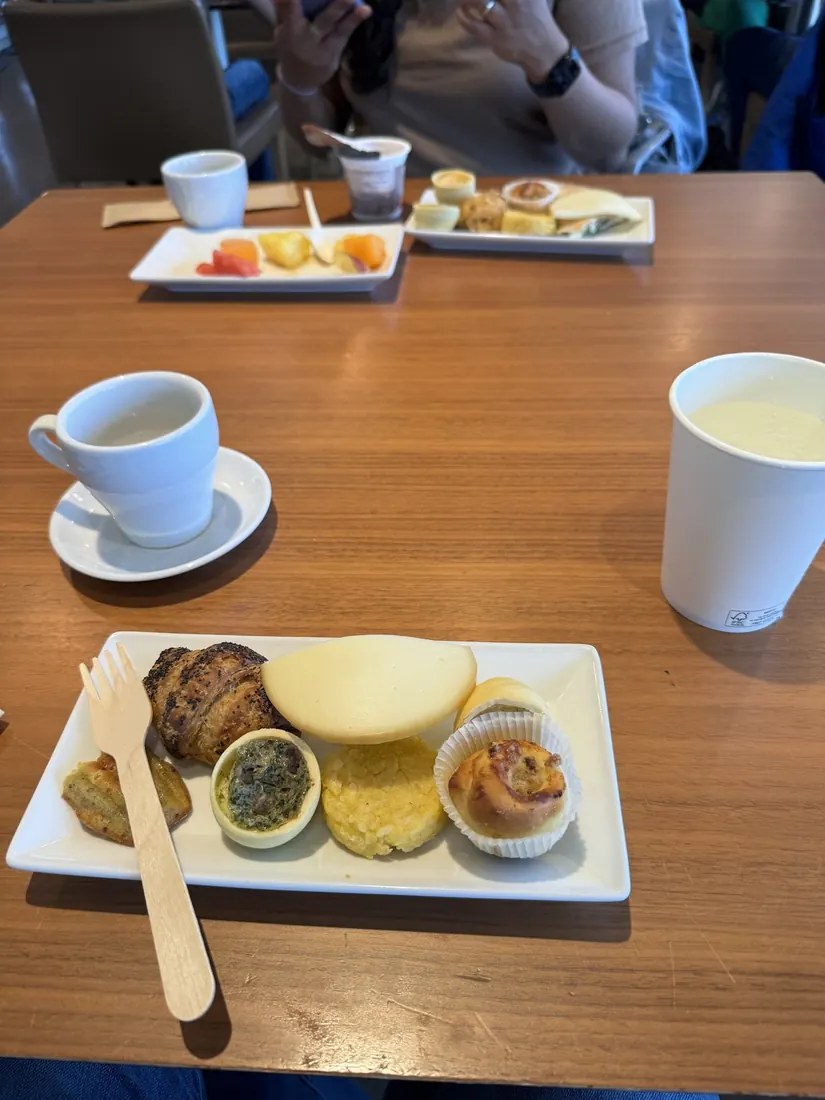
Last morning: croissants and cappuccinos at a café with a tile-patterned table, a final tidy of the Airbnb, and a transfer to Malpensa. We reached the airport at about 1:30 PM, had a pastry-and-soup lunch, and then it was Emirates flight EK205 home, due to leave at 4:10 PM, with a camera roll full of mountains, a phone full of supplì photos, and a tired, grinning wife.
What I’d tell you over chai
- Rome looks like a movie and behaves like India. Walk everywhere, eat supplì, book the Colosseum and Vatican a month ahead, and hold your bag.
- Florence is the exhale. One evening, one hill, one sandwich.
- Switzerland is where the trip turns unreal. Pick your peak by the weather, take the walk your travel partner doesn’t want to take, and skip the “must-do” if it means a better day.
- Never trust a 40-minute connection.
What surprised me? Rome. What disappointed me? Honestly, nothing. I wouldn’t change a thing, except to add days. Next time: Pompeii, Venice, and maybe the Dolomites, a landscape I know almost nothing about, which is exactly why I want to see it.
If I had to boil eleven days down to one idea, it’s that planning and vibes need each other. The spreadsheet got us the Colosseum at 9:58 and the Vatican Museums at 11. Miss Vibes got us a perfect Roman wall, a pistachio gelato on a station platform, and the courage to turn a late train into a lake view.
The plan gave us the skeleton; the detours gave us the story.
Italy gave us history, art and pasta. Switzerland gave us beauty and outdoor infrastructure that felt almost too perfect to be real. And somewhere between a keyhole in Rome and a waterfall in Gimmelwald, a planner and a reluctant hiker had the best trip of their lives.
Arrivederci. Uf Widerluege. See you on the next one.